23
This product is warranted against any faults in materials or manufacture for 3 years from the purchase
GDWH /LPLWDWLRQV RI ZDUUDQW\ LQFOXGH QRUPDO ZHDU DQG WHDU PRGLƬFDWLRQV RU DOWHUDWLRQV LQFRUUHFW VWRUDJH
FRUURVLRQ GDPDJH GXH WR DFFLGHQWV RU QHJOLJHQFH XVH IRU ZKLFK WKLV SURGXFW LV QRW VSHFLƬFDOO\ GHVLJQHG
SPECIFIC INFORMATION
INSTRUCTIONS FOR USE
Summary
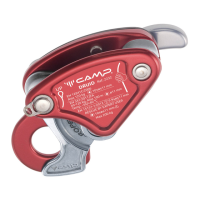
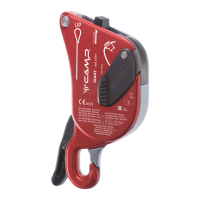
C.A.M.P. Druid and Druid Pro are intended to protect against risks of falling from a height when used as follows:
GHVFHQGHUV RIWKH ZRUNLQJ OLQH FHUWLƬHG LQ DFFRUGDQFH ZLWK VWDQGDUG (1 W\SH &
GHVFHQGHUV XVHG DV UHVFXH DQG SHUVRQDO SURWHFWLRQ HTXLSPHQW FHUWLƬHG LQ DFFRUGDQFH ZLWK VWDQGDUG (1
W\SH $
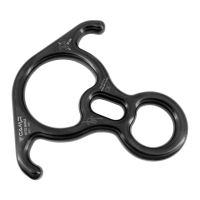
- belaying and rappelling devices for climbing and connected activities in compliance with standard EN 15151-
1:2012: braking devices with manually assisted locking. Druid: type 8, equipped with anti-panic locking device. Druid
Pro: type 6, not equipped with anti-panic locking device.
Compatibility
Rope
Druid and Druid Pro must be used solely and exclusively in combination with the following ropes (ƬJ):
(1 & XVH VHPLVWDWLF URSHV (1 $ ZLWK GLDPHWHU IURP WR PP
(1 $ XVH VHPLVWDWLF URSH (1 $ ZLWK GLDPHWHU IURP PP W\SH &$03/LWKLXP PP $UW
&$03 ,ULGLXP PP $UW
(1 XVH G\QDPLF VLQJOH URSH (1 ZLWK GLDPHWHU IURP WR PP
'XULQJ WKH FHUWLƬFDWLRQ SURFHVV WKH IROORZLQJ URSHV ZHUH XVHG &$03 /LWKLXP PP &$03 ,ULGLXP PP,
&RXVLQ 7UHVWHF 6SHOXQFD PP &$03 4XDVDU PP &$03 0DJQRQ PP :DUQLQJ WKH VWDWHG GLDPHWHU
RI URSHV RQ WKH PDUNHW PD\ KDYH D WROHUDQFH RI XS WR PP %UDNLQJ HƪHFWLYHQHVV DQG HDVH RI JLYLQJ VODFN
can vary depending on the diameter, construction, wear and tear, and surface treatment of the rope and other
variables, such as: frozen, muddy, wet, dirty ropes, etc. At each use the user must familiarise him or herself with the
EUDNLQJ HƪHFW RI WKH GHYLFH RQ WKH URSH DQG HQVXUH WKDW WKH URSH LV LQ JRRG FRQGLWLRQ (QVXUH WKDW WKH ORZHU HQG RI
the rope has stitching or a stop knot. The device may heat up during descent and damage the rope: take care. Safe
operation of the device is connected to the rope conditions: if the rope is damaged it must be replaced.
Harness
- EN 12841C use: use with full body fall arrest harness EN 361 + EN 813.
(1 $ XVH XVH ZLWK (1 DQGRU (1 DQGRU (1 DQGRU (1 KDUQHVVHV
- EN 15151-1 use: use with EN 12277 and/or EN 813 harnesses.
Carabiner
Exclusive use of carabiners with locking gate.
(1 & DQG (1 $ XVH (1 FODVV % FDUDELQHUV
(1 XVH (1 FODVV % RU ; FDUDELQHUV
Anchoring
7KH DQFKRUV XVHG PXVW FRPSO\ ZLWK (1 RU EH NQRZQ WR KDYH UHVLVWDQFH JUHDWHU WKDQ N1 )RU (1 & DQG
EN 341/2A uses anchoring must always be placed above the user. Avoid any slack on the rope: the device is not
suitable to arrest falls. Any dynamic overload may damage the work rope. Anchoring may be below the user and is
able to sustain falls solely and exclusively in the case of climbing progression during EN 15151-1 use of the device.
Connection to the anchoring point must be arranged in such a way so as not to impede descent.


 To Next Page
 Loading...