
 Need help?
Do you have a question about the CAMPAGNOLO Ekar RD21 and is the answer not in the manual?
Lists the tools required for the disassembly process of the Ekar jockey cage.
Lists the tools required for the assembly process of the Ekar jockey cage.
This document outlines the procedure for replacing the jockey cage of the Campagnolo Ekar rear derailleur (model RD21-EK13), a critical component for maintaining optimal shifting performance and chain tension on a bicycle. The manual is specifically intended for professional mechanics, emphasizing the need for specialized knowledge, appropriate tools, and sufficient experience to ensure proper installation and prevent potential malfunctions, accidents, or injuries.
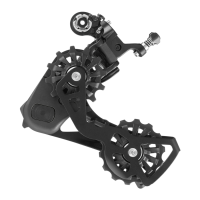
The jockey cage is an integral part of the rear derailleur system, responsible for guiding the chain onto the correct cog of the cassette and maintaining proper chain tension. It houses the jockey wheels, which are crucial for smooth and precise gear changes. The Ekar rear derailleur, designed for gravel and adventure cycling, incorporates a robust jockey cage to withstand demanding conditions and ensure reliable operation. Replacing the jockey cage is a maintenance task that addresses wear and tear, damage, or the need for component upgrades, ensuring the derailleur continues to function effectively. The process involves disassembling the existing cage, installing a new one, and carefully reassembling the components, paying close attention to spring tension, torque specifications, and the application of thread-locking compounds.
The Campagnolo Ekar rear derailleur, with its replaceable jockey cage, is designed for high-performance cycling, particularly in gravel and off-road environments. The ability to replace the jockey cage extends the lifespan of the entire derailleur, offering a cost-effective solution compared to replacing the entire unit. The design of the jockey cage and its attachment mechanism are engineered for durability and precise operation. The spring-loaded mechanism within the derailleur, which the jockey cage interacts with, ensures quick and responsive gear changes. The system is designed to handle a wide range of gear ratios, characteristic of gravel biking, providing smooth transitions across the cassette. The use of specific torque values for fasteners ensures that the cage is securely mounted without over-stressing the components, which is vital for the derailleur's long-term reliability and consistent performance during rides.
The replacement of the jockey cage is a key maintenance feature that allows for the servicing of a critical wear component. The manual details a step-by-step process, starting with the careful unloading of the spring tension, which is a crucial safety measure due to the spring-loaded nature of the derailleur. The procedure involves removing several fasteners, including a left-hand thread screw and nut, highlighting the importance of specialized tools like Allen wrenches, Torx wrenches, and fixed wrenches of specific sizes (3mm, T15, 30mm, 8mm). The manual explicitly warns against using incompatible tools from other manufacturers, emphasizing the precision engineering of Campagnolo components.
Key steps in the maintenance process include:
Disassembly:
Assembly:
The manual stresses the importance of using thread-locking compounds like Loctite 2701 and Loctite medium 243 at specific points to ensure the secure fastening of components and prevent loosening during operation. Torque specifications are provided for various fasteners, underscoring the precision required for proper assembly. The repeated warnings about the spring-loaded nature of the derailleur and the left-hand threads on certain components highlight the potential hazards and the need for careful attention during the maintenance process. This detailed guidance ensures that professional mechanics can perform the replacement safely and effectively, restoring the derailleur to its optimal working condition.
 General
| Model | Ekar RD21 |
|---|---|
| Speeds | 13-speed |
| Cage Length | Medium |
| Compatibility | Campagnolo Ekar |
| Material | Aluminum |



 To Next Page