EasyManua.ls Logo

Campbell Hausfeld TL1002 - User Manual

Campbell Hausfeld TL1002
4 pages
Print Icon
To Next Page IconTo Next Page
Loading...
– 1 –
READ CAREFULLY BEFORE ATTEMPTING TO ASSEMBLE, INSTALL, OPERATE OR MAINTAIN THE
PRODUCT DESCRIBED. PROTECT YOURSELF AND OTHERS BY OBSERVING ALL SAFETY INFORMA-
TION. FAILURE TO COMPLY WITH INSTRUCTIONS COULD RESULT IN PERSONAL INJURY AND/OR
PROPERTY DAMAGE. RETAIN INSTRUCTIONS FOR FUTURE REFERENCE.
Description
Do-It-Yourself (DIY) impact wrenches are air tools
designed for removing and installing nuts and bolts
such as lug nuts, exhaust system clamps, etc.
Unpacking
When unpacking this product, carefully inspect for any
damage that may have occurred during transit. Make
sure any loose fittings, bolts, etc., are tightened before
putting this product into service.
General Safety Information
This product is a part of a high pressure system and the
following safety precautions must be followed at all
times along with any other existing safety rules.
1. Read all manuals included with this product care-
fully. Be thoroughly familiar with the controls and
the proper use of the equipment.
2. Only persons well acquainted with these rules of
safe operation should be allowed to use the
air tool.
DO NOT EXCEED MAXIMUM OPERATING PRES-
SURE OF THE AIR TOOL (90 PSI). THE AIR TOOL
COULD EXPLODE AND RESULT IN DEATH OR
SERIOUS PERSONAL INJURY.
3. Do not exceed any pressure rating of any compo-
nent in the system.
4. Disconnect the air tool from air supply before
changing tools or attachments, servicing and dur-
ing nonoperation.
5. Always wear safety glasses during operation.
6. Do not wear loose fitting clothing, scarves, or neck
ties. Loose clothing may become caught in moving
parts and result in serious personal injury.
7. Do not wear jewelry when operating any tool.
Jewelry may become caught in moving parts
and result in serious personal injury.
8. Do not depress trigger when connecting the air
supply hose.
General Safety (Continued)
9. Always use attachments designed for use with air
powered tools. Do not use damaged or worn attach-
ments.
DO NOT USE HAND-TOOL SOCKETS. USE IM-
PACT-QUALITY SOCKETS ONLY. HAND-TOOL
SOCKETS ARE "GLASS-HARD" AND WILL SHAT-
TER AND CAN CAUSE SERIOUS PERSONAL IN-
JURY IF USED WITH AIR TOOLS.
10. Never trigger the tool when not applied to a work
object. Attachments must be securely attached.
Loose attachments can cause serious injury.
11. Protect air lines from damage or puncture.
12. Never point an air tool at oneself or any other
person. Serious injury could occur.
13. Check air hoses for weak or worn condition before
each use. Make sure all connections are secure.
RELEASE ALL PRESSURE FROM THE SYSTEM
BEFORE ATTEMPTING TO INSTALL, SERVICE,
RELOCATE OR PERFORM ANY MAINTENANCE.
14. Keep all nuts, bolts and screws tight and ensure
equipment is in safe working condition.
15. Do not put hands near or under moving parts.
Operation
LUBRICATION
Proper lubrication is the owner's responsibility. Failure
to lubricate the air tool properly will dramatically shorten
the life of the tool and will void the warranty.
This impact wrench REQUIRES lubrication BE-
FORE the initial use and BEFORE and AFTER each
additional use.
Impact wrenches require lubrication throughout the life
of the tool and must be lubricated in two separate areas:
DANGER
!
!
WARNING
!
!
WARNING
!
!
CAUTION
!
OPERATING INSTRUCTIONS
MODELS TL1002, TL1017 AND TL1049
IMPACT WRENCH
IN230000AV 9/93
CAMPBELL
HAUSFELD

Questions and Answers

Summary

General Safety

General Safety Precautions

Essential safety rules for operating impact wrenches, including personal protection and tool handling.

Critical Safety Warnings

Emphasizes crucial warnings regarding socket compatibility, air lines, and safe tool operation practices.

Lubrication

Lubrication Requirements

Outlines the essential lubrication procedures for the impact wrench's air motor and mechanism.

Operation and Maintenance

Air Motor Lubrication

Detailed steps for daily lubrication of the air motor, including safety warnings before operation.

Impact Mechanism Lubrication

Monthly lubrication procedure for the impact mechanism, with steps for oiling and draining.

Speed Adjustment

Guidelines for adjusting the impact wrench's speed regulator for removing or installing nuts.

Air Hose Hook-up

Recommended air hose connection diagram and advice on hose size and fittings for optimal performance.

Storage Precautions

Instructions for proper lubrication before storing the impact wrench to maintain its condition.

Troubleshooting

General Troubleshooting

Guide for diagnosing and correcting common issues like slow operation or moisture expulsion.

Impact Mechanism Troubleshooting

Solutions for problems such as slow or non-existent impacts, focusing on lubrication and settings.

Limited Warranty

Warranty Coverage Details

Information on the one-year limited warranty, including coverage, exclusions, and purchaser responsibilities.

Summary

General Safety

General Safety Precautions

Essential safety rules for operating impact wrenches, including personal protection and tool handling.

Critical Safety Warnings

Emphasizes crucial warnings regarding socket compatibility, air lines, and safe tool operation practices.

Lubrication

Lubrication Requirements

Outlines the essential lubrication procedures for the impact wrench's air motor and mechanism.

Operation and Maintenance

Air Motor Lubrication

Detailed steps for daily lubrication of the air motor, including safety warnings before operation.

Impact Mechanism Lubrication

Monthly lubrication procedure for the impact mechanism, with steps for oiling and draining.

Speed Adjustment

Guidelines for adjusting the impact wrench's speed regulator for removing or installing nuts.

Air Hose Hook-up

Recommended air hose connection diagram and advice on hose size and fittings for optimal performance.

Storage Precautions

Instructions for proper lubrication before storing the impact wrench to maintain its condition.

Troubleshooting

General Troubleshooting

Guide for diagnosing and correcting common issues like slow operation or moisture expulsion.

Impact Mechanism Troubleshooting

Solutions for problems such as slow or non-existent impacts, focusing on lubrication and settings.

Limited Warranty

Warranty Coverage Details

Information on the one-year limited warranty, including coverage, exclusions, and purchaser responsibilities.

Overview

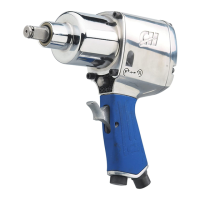
The Campbell Hausfeld Impact Wrench, available in models TL1002, TL1017, and TL1049, is a Do-It-Yourself (DIY) air tool designed for the efficient removal and installation of nuts and bolts, such as lug nuts and exhaust system clamps.

General Safety and Operation:

Before operating, it is crucial to read all included manuals carefully and become thoroughly familiar with the controls and proper use of the equipment. Only persons well acquainted with safe operation rules should use the air tool. A critical safety warning states: "DO NOT EXCEED MAXIMUM OPERATING PRESSURE OF THE AIR TOOL (90 PSI). THE AIR TOOL COULD EXPLODE AND RESULT IN DEATH OR SERIOUS PERSONAL INJURY." This maximum pressure rating applies to all components in the system. The air tool must be disconnected from the air supply before changing tools or attachments, servicing, or during non-operation. Safety glasses are mandatory during operation. Loose clothing, scarves, neckties, and jewelry should not be worn as they can become caught in moving parts, leading to serious personal injury. The trigger must not be depressed when connecting the air supply hose.

Attachments used with air-powered tools must be specifically designed for such use, and damaged or worn attachments should never be utilized. A prominent warning emphasizes: "DO NOT USE HAND-TOOL SOCKETS. USE IMPACT-QUALITY SOCKETS ONLY. HAND-TOOL SOCKETS ARE 'GLASS-HARD' AND WILL SHATTER AND CAN CAUSE SERIOUS PERSONAL INJURY IF USED WITH AIR TOOLS." The tool should never be triggered when not applied to a work object, and attachments must be securely fastened to prevent serious injury. Air lines must be protected from damage or puncture, and an air tool should never be pointed at oneself or others. Before each use, air hoses should be checked for weak or worn conditions, and all connections must be secure. All pressure must be released from the system before attempting to install, service, relocate, or perform any maintenance. All nuts, bolts, and screws must be kept tight, ensuring the equipment is in safe working condition. Hands should be kept clear of moving parts.

Technical Specifications and Performance:

The impact wrenches are equipped with regulators for speed adjustment. While they can be used for removing nuts by setting the regulator to maximum, they should never be used to set torque; a separate torque wrench is required for this purpose. For installing nuts, the regulator should be set to minimum to medium to avoid overtightening.

  • Model TL1002:

    • Average SCFM & PSI: 5.1 @ 90
    • Max RPM: 7000
    • Max Torque: 230 ft/lb
    • Air Inlet: 1/4" NPT (Female)
    • Drive: 1/2" Sq
    • Weight: 5 lb
    • Extended Anvil: NA
  • Model TL1017:

    • Average SCFM & PSI: 2.4 @ 90
    • Max RPM: 10,000
    • Max Torque: 75 ft/lb
    • Air Inlet: 1/4" NPT (Female)
    • Drive: 3/8" Sq
    • Weight: 2 lb
    • Extended Anvil: N/A
  • Model TL1049:

    • Average SCFM & PSI: 2.5 @ 90
    • Max RPM: 10,000
    • Max Torque: 75 ft/lb
    • Air Inlet: 1/4" NPT (Female)
    • Drive: 3/8" Sq
    • Weight: 3 lb
    • Extended Anvil: NA

For optimal performance, using 3/8" (I.D.) fittings with 1/4" NPT threads is recommended for all models. Hoses longer than 50 feet should have a 1/2" I.D. It is not recommended to install a quick coupler between the impact wrench and the leader (whip) hose. Air tool manufacturers recommend using an air filter and oiler to increase tool life.

Maintenance Features:

Proper lubrication is the owner's responsibility and is critical for the tool's lifespan; failure to lubricate correctly will dramatically shorten the tool's life and void the warranty. The impact wrench requires lubrication before initial use and before and after each additional use, in two separate areas: the air motor and the impact mechanism. Campbell Hausfeld air tool oil (ST127000AV) is recommended for its cleaning, lubricating, and rust-inhibiting properties.

Air Motor Lubrication (Daily):

  1. Disconnect the impact wrench from the air supply.
  2. Turn the impact wrench upside down.
  3. Simultaneously pull the trigger and pour a teaspoon of Campbell Hausfeld oil into the air inlet. Then, push the forward and reverse button in both directions.
  4. After lubrication, oil will discharge through the exhaust port during the first few seconds of operation. Therefore, the exhaust port must be covered with a towel before applying air pressure to prevent serious injury. Connect the impact wrench to the air supply, cover the exhaust port with a towel, and run the wrench in both forward and reverse directions for 20 to 30 seconds.

Impact Mechanism Lubrication (Monthly):

  1. Disconnect the impact wrench from the air supply.
  2. Remove the allen head screw from the oil port hole. The location varies by model (TL1002: right side, "OIL" stamped below; TL1049: left side near exhaust port; TL1017: in front of the forward/reverse lever).
  3. Add three teaspoons of Campbell Hausfeld air tool oil into the oil port hole. Replace the screw.
  4. Reconnect the air supply and run the tool for 20 to 30 seconds, rotating it upside down and sideways to lubricate the entire mechanism.
  5. Remove the screw and hold the oil port hole over a container to drain excess oil.
  6. If the oil is dirty, repeat the procedure until the oil runs clear. Install and tighten the screw. The residual oil in the chamber is sufficient for proper lubrication.

Storage:

The impact wrench must be lubricated before storing. Follow the air motor lubrication instructions, but run the impact wrench for only 2 to 3 seconds instead of 20 to 30 seconds to ensure more oil remains in the tool for storage.

Troubleshooting:

A general troubleshooting guide is provided for common issues:

  • Tool runs slowly or will not operate: Possible causes include grit or gum in the tool, no oil, low air pressure, air hose leaks, pressure drops, worn rotor blade, or worn ball bearing. Corrective actions involve flushing with air tool oil, lubricating, adjusting regulators, tightening hose fittings, ensuring proper hose size, replacing worn parts, and cleaning/regreasing bearings.
  • Moisture blowing out of tool: Possible causes are water in the tank or air lines/hoses. Solutions include draining the compressor tank, oiling the tool, installing a water separator/filter (located far from the compressor), or installing an air dryer or a Campbell Hausfeld belt air filter (MP2121).
  • Impacts slowly or will not impact: This is typically due to a lack of lubrication, the tool regulator being set incorrectly, or an in-line/compressor regulator set too low. Corrective actions involve lubricating the air motor and impact mechanism, and adjusting the tool and air system regulators.

Warranty:

The product comes with a one-year limited warranty from the date of purchase by the original purchaser, covering defects in material and workmanship. Implied warranties are limited to one year. The warranty does not cover incidental, indirect, or consequential losses, damages, or expenses; failures due to accident, abuse, neglect, or non-compliance with instructions; pre-delivery service; normal adjustments; routine maintenance items (lubricants, filters, gaskets); or electric motor and gasoline engine components (which are covered by their original manufacturers). The warrantor's responsibility is to repair or replace, at its option, failed products or components. The purchaser is responsible for delivering the product to a Campbell Hausfeld Authorized Service Center and using reasonable care in operation and maintenance.

Campbell Hausfeld TL1002 Specifications

General IconGeneral
BrandCampbell Hausfeld
ModelTL1002
CategoryPower Tool
LanguageEnglish

Related product manuals