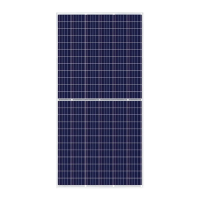
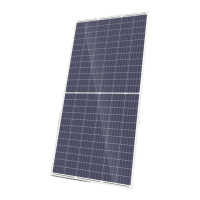
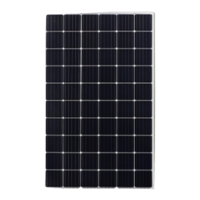
This document is an installation manual for Canadian Solar's standard solar modules, providing essential information for professional installers regarding the installation, maintenance, and handling of CS-series solar modules. It emphasizes safety precautions, technical specifications, and proper installation and maintenance procedures to ensure optimal performance and longevity of the modules.
Function Description:
The manual outlines the necessary steps and guidelines for installing Canadian Solar's CS-series photovoltaic (PV) modules. These modules are designed to convert sunlight into direct current (DC) electricity and are intended for use in general open-air climates. The manual covers various aspects from unpacking and storage to mechanical and electrical installation, grounding, and ongoing maintenance. It also includes annexes detailing alternative mounting methods, alternative grounding methods, and mechanical and electrical ratings for specific module types. The overall function is to provide comprehensive instructions to qualified professionals for safe and effective deployment of Canadian Solar PV systems.
Important Technical Specifications:
The manual specifies that CS-series solar modules are qualified for Application Class A (equivalent to Safety Class II requirements), suitable for systems operating at voltages above 50 V or power above 240 W. Modules are certified as Type 1 or Type 4 according to UL 1703 and Class C according to IEC 61730-2.
Electrical characteristics are provided under Standard Test Conditions (STC): Irradiance of 1000 W/m², AM1.5 spectrum, and cell temperature of 25°C. These characteristics, including Maximum Power (Pmax), Operating Voltage (Vmp), Operating Current (Imp), Open Circuit Voltage (Voc), Short Circuit Current (Isc), and Max. Series Fuse Rating, are within ±10% or [0; +5 W] of the indicated values for Isc, Voc, and Pmax.
For example, some module types listed with their specifications include:
- CS6P-245M to CS6P-290M: Pmax ranging from 245.0 W to 290.0 W, Vmp from 30.3 V to 31.9 V, Imp from 8.09 A to 9.09 A, Voc from 37.4 V to 38.7 V, Isc from 8.61 A to 9.59 A. Overall dimensions are 1638 x 982 x 40 mm (64.5 x 38.7 x 1.57 in) with a weight of 18.0 kg (39.7 lbs).
- CS6A-195M to CS6A-225MS: Pmax ranging from 195.0 W to 225.0 W, Vmp from 24.2 V to 25.3 V, Imp from 8.04 A to 8.91 A, Voc from 29.9 V to 31.4 V, Isc from 8.56 A to 9.53 A. Overall dimensions are 1324 x 984 x 40 mm (52.1 x 38.7 x 1.57 in) with a weight of 15.5 kg (34.2 lbs).
- CS6X-290P to CS6X-350P: Pmax ranging from 290.0 W to 350.0 W, Vmp from 35.9 V to 38.1 V, Imp from 8.08 A to 9.21 A, Voc from 44.4 V to 46.2 V, Isc from 8.64 A to 9.79 A. Overall dimensions are 1954 x 982 x 40 mm (76.9 x 38.7 x 1.57 in) with a weight of 22.0 kg (48.5 lbs).
- CS6V-200M to CS6V-255MS: Pmax ranging from 200.0 W to 255.0 W, Vmp from 25.2 V to 27.2 V, Imp from 7.95 A to 9.38 A, Voc from 31.1 V to 33.3 V, Isc from 8.46 A to 9.91 A. Overall dimensions are 1638 x 826 x 40 mm (64.5 x 32.5 x 1.57 in) with a weight of 16.0 kg (35.3 lbs).
- CS3U-290P to CS3U-350P and CS3U-290M to CS3U-350M: Pmax ranging from 290.0 W to 350.0 W, Vmp from 35.9 V to 38.3 V, Imp from 8.08 A to 9.21 A, Voc from 44.4 V to 46.6 V, Isc from 8.51 A to 9.79 A. Overall dimensions are 1960 × 992 × 40 mm (77.2 x 39.1 x 1.57 in) with a weight of 22.4 kg (49.4 lbs).
- CS3U-350MS to CS3U-410MS: Pmax ranging from 350 W to 410 W, Vmp from 38.8 V to 41.2 V, Imp from 9.03 A to 9.96 A, Voc from 46.6 V to 49 V, Isc from 9.53 A to 10.49 A. Overall dimensions are 2000 × 992 × 40 mm (78.7 x 39.1 x 1.57 in) with a weight of 22.6 kg (49.8 lbs).
- CS1V-240MS to CS1V-275MS: Pmax ranging from 240 W to 275 W, Vmp from 28.3 V to 29.8 V, Imp from 8.48 A to 9.22 A, Voc from 34.7 V to 36.1 V, Isc from 9.15 A to 9.66 A. Overall dimensions are 1638x826x40 mm (64.5 x 32.5 x 1.57 in) with a weight of 15.4 kg (34.0 lbs).
- CS1K-285MS to CS1K-345MS: Pmax ranging from 285 W to 345 W, Vmp from 29.1 V to 31.4 V, Imp from 9.80 A to 10.99 A, Voc from 35.6 V to 37.7 V, Isc from 10.64 A to 11.66 A. Overall dimensions are 1710x992x40 mm (67.3 x 39.1 x 1.57 in) with a weight of 18.9 kg (41.7 lbs).
The manual also provides correction factors for open-circuit voltage based on ambient temperature, using the formula: Cvoc = 1-avoc x (25 - T), where T is the lowest expected ambient temperature and avoc is the voltage temperature coefficient.
Usage Features:
- Professional Installation: Installation and handling of PV modules require professional skills and must only be performed by qualified professionals.
- Safety Precautions: Emphasizes reading all instructions before installation, wiring, operation, or servicing. Warns against contact with electrically active parts of the module, which can cause injury or death.
- Protective Gear: Recommends wearing protective clothing (non-slip gloves, clothes) during installation to prevent direct contact with 30 V DC or greater and to protect hands from sharp edges. Metallic jewelry should be removed.
- Module Handling: Modules should be stored in a dry, ventilated environment away from direct sunlight and moisture. Unpacking and installation should always be done by two people, using both hands. Modules should be lifted by their frames, not wires or junction boxes. Avoid supporting the backsheet, carrying modules on the head, dropping objects on them, placing excessive loads, or twisting the frame. Sharp instruments should not be used on modules.
- Wiring and Connections: Modules can be wired in series or parallel to increase voltage or current. Use dedicated solar cable and suitable connectors that meet local fire, building, and electrical regulations. Cables should be sheathed in sunlight-resistant conduit or be sunlight-resistant themselves. Connections must be safe and properly mated, and connectors should not be subjected to external stress. A minimum bending radius of 60 mm (2.36 in) is required for junction box cables.
- Grounding: For North America, modules with exposed conductive parts must be grounded according to UL 1703 and National Electrical Code requirements. For other regions, grounding is recommended, complying with local electrical codes. Grounding connections should be installed by a qualified electrician using adequate grounding cables (e.g., 4-14 mm² copper wire).
- Mounting Methods: The manual details various mounting methods, including bolting and clamping.
- Bolting: Modules can be bolted using standard mounting holes, with rails running perpendicularly or parallel to the long frame side. Specific load capacities (uplift and downforce) are provided for different configurations and module types. Tightening torques for M6 (1/4") and M8 (5/16") bolts are specified (6-12 Nm and 17-23 Nm respectively).
- Clamping: Top or bottom clamping methods depend on mounting structures. Each module must be securely fastened at a minimum of four points on two opposite sides, with clamps positioned symmetrically within authorized ranges. Clamps should overlap the module frame by at least 5 mm (0.2 in) and have an overlap length of at least 40 mm (1.57 in). Clamp thickness should be at least 3 mm (0.12 in). Clamp material should be anodized aluminum alloy or stainless steel.
- Insertion Systems: Modules are maintained through their entire length on two opposite sides using insertion profiles. Profiles should overlap the module frame by at least 10 mm (0.39 in), and the module frame (C-shape) should overlap the insertion profiles by at least 15 mm (0.59 in).
- Center Clamp Mounting with Single-Axis Tracker: Modules can be mounted on single-axis trackers using center clamps or mounting holes.
- Environmental Conditions: Modules are intended for general open-air climates. Avoid installation near open flames, flammable materials, or immersion in water (fresh or salt). Exposure to salt or sulfur incurs the risk of module corrosion.
- System Design: Project design loads depend on construction, applicable standards, location, and local climate. A safety factor of 1.5 should be applied for calculating maximum authorized design loads.
Maintenance Features:
- No Modifications: Do not modify any components of the PV module (diode, junction box, plug connectors, etc.).
- Regular Cleaning: Regular maintenance is required to keep modules clear of snow, bird droppings, seeds, pollen, leaves, branches, dirt spots, and dust.
- Self-Cleaning Effect: Modules with a sufficient tilt (at least 15°) generally do not require cleaning as rain will have a self-cleaning effect.
- Cleaning Procedure: If soiled, wash with water and a non-abrasive cleaning implement (sponge) during the cool part of the day. Do not scrape or rub dry dirt away, as this may cause micro-scratches. Snow should be removed with a soft brush.
- Cleaning Solutions: Use water with low mineral content and near neutral pH. The maximum recommended water pressure is 4 MPa (40 bar).
- Cleaning Methods:
- Compressed Air (Method A): Recommended for soft dirt (like dust) as long as it is efficient.
- Wet Cleaning (Method B): For excessive soiling, a non-conductive brush, sponge, or other mild agitating method may be used with caution. Ensure tools are non-abrasive to glass or aluminum frame. Environmentally friendly cleaning agents can be used for grease.
- Safety During Cleaning: Ensure the circuit is disconnected before cleaning to prevent electric shock. The array must be disconnected from other active components (inverter, combiner boxes). Wear suitable protection (clothes, insulated gloves).
- Avoid Harmful Practices: Do not immerse modules in water or cleaning solutions. Do not use abrasive or electric cleaners, de-greasers, or corrosive solutions (acid, alkali, acetone, industrial alcohol). Avoid rotating brush cleaning methods, as they can create micro-cracks.
- Periodic Inspection: Periodically inspect the system to check the integrity of all wiring and supports. Electrical or mechanical inspections and maintenance should be performed by qualified personnel only.

 Need help?
 General

 To Next Page