The GentleLASE Bubble Circuit Calibration Procedure is a comprehensive guide for maintaining and ensuring the optimal performance of the GentleLASE laser system, specifically focusing on its cryogen delivery and bubble detection circuits. This document outlines a series of steps designed to calibrate and verify the proper functioning of these critical components, which are essential for the safe and effective operation of the laser in dermatological and aesthetic applications.
Function Description
The GentleLASE laser system utilizes a Dynamic Cooling Device (DCD) to deliver cryogen (a cooling agent) to the treatment area immediately before and after the laser pulse. This cooling mechanism protects the epidermis, minimizes discomfort, and allows for higher, more effective laser fluences. The "Bubble Circuit" refers to the system's ability to detect and manage air bubbles within the cryogen delivery lines, both in the handpiece (HP BBL) and the cryogen canister (Can BBL). Air bubbles in the cryogen lines can compromise the cooling efficacy, leading to inconsistent cooling, potential epidermal damage, and reduced treatment effectiveness. The calibration procedure ensures that the bubble detection circuits accurately sense the presence or absence of cryogen and bubbles, and that the cryogen delivery system operates smoothly and consistently.
The core function of this calibration is to establish and verify specific voltage readings at designated test points on the CPU Laser I/O PCB (Printed Circuit Board). These voltage readings correspond to the operational status of the cryogen delivery system and the bubble detection sensors. By ensuring these voltages are within specified tolerances (e.g., 7.75V +/- 0.5V for normal operation, and greater than 10.50 VDC when bubbles are detected or the cryogen line is empty), the system can reliably identify issues and alert the operator, or automatically adjust its operation to prevent adverse events.
Usage Features
The calibration procedure is designed to be performed by trained service personnel and involves several key usage features that ensure thoroughness and accuracy:
- System Warm-up and Pressure Verification: The procedure begins by ensuring the GentleLASE laser system is properly warmed up and the cryogen canister pressure is within the optimal range (118-122 PSI). This initial step is crucial because cryogen temperature and pressure directly impact its flow characteristics and the accuracy of bubble detection.
- Cryogen Line Purging: A critical step involves purging the cryogen line to remove any existing air bubbles. This is achieved by placing the system in "Standby" mode, setting a spray duration, and repeatedly depressing the "Purge" button. The procedure emphasizes listening for a "smooth flow of mist" rather than a "hiss," indicating a bubble-free cryogen stream. This tactile and auditory feedback is a practical usage feature for immediate assessment.
- DVM (Digital Voltmeter) Measurements: The procedure heavily relies on using a DVM to measure voltages at specific test points (TP30, TP31, TP29) on the CPU Laser I/O PCB. This precise measurement capability allows for quantitative verification of circuit functionality.
- Potentiometer Adjustment (R5, R1): For instances where voltage readings are outside the specified tolerances, the procedure guides the user to adjust specific potentiometers (R5 on the MGL HP PCB for handpiece bubble detection and R1 on the Canister Bubble PCB for canister bubble detection). This adjustability is a key usage feature, allowing for fine-tuning and correction of sensor sensitivity.
- Toggle Screen Interaction: The procedure instructs the user to interact with the system's maintenance "TOGGLE" screen. This includes pressing the "HP Valve" button to discharge cryogen and toggling the "BBL Ckt Test" on and off. These interactions simulate different operational states and allow for verification of the bubble detection circuits under various conditions.
- Visual Indicators (Highlighting): The procedure mentions verifying that "HP BBL" or "Can BBL" is "highlighted" on the maintenance screen. This visual feedback is a user-friendly indicator that the system has detected a bubble condition or an empty cryogen line, confirming the proper functioning of the detection circuit.
- Sequential Verification: The steps are structured sequentially, building upon previous checks to ensure a systematic and comprehensive calibration. This methodical approach minimizes errors and ensures all aspects of the bubble circuit are thoroughly evaluated.
Maintenance Features
The GentleLASE Bubble Circuit Calibration Procedure itself is a core maintenance feature, designed to ensure the longevity, reliability, and safe operation of the laser system. Beyond the calibration, several inherent maintenance features are highlighted:
- Troubleshooting Guidance: The procedure offers built-in troubleshooting advice. For example, if bubbles persist after purging, it suggests checking if the cryogen tank is fully warmed or if the canister is low, prompting a canister replacement if necessary. This proactive guidance helps technicians diagnose and resolve common issues efficiently.
- Component-Level Adjustment: The ability to adjust potentiometers (R5 and R1) allows for precise calibration at the component level. This ensures that the sensors are optimally tuned for accurate bubble detection, preventing premature or delayed alerts and extending the operational life of the system by maintaining optimal performance.
- Verification of Safety Mechanisms: The procedure implicitly verifies critical safety mechanisms. The bubble detection circuits are vital for preventing the laser from firing without adequate epidermal cooling, which could lead to burns. By calibrating these circuits, the maintenance procedure directly contributes to patient safety.
- Regular Performance Checks: While not explicitly stated as a frequency, the existence of such a detailed calibration procedure implies the need for regular performance checks. This ensures that the system consistently meets its operational specifications over time, mitigating wear and tear effects and maintaining treatment efficacy.
- Documentation and Traceability: The document itself, with its revision number (8503-01-0830, Revision A) and proprietary markings, serves as a crucial maintenance feature. It provides a standardized, documented process for technicians, ensuring consistency across all service operations and allowing for traceability of maintenance activities.
- System Diagnostics Integration: The reliance on the system's "maintenance screen" and "TOGGLE" functions indicates an integrated diagnostic capability within the GentleLASE software. This allows technicians to interact with and test specific subsystems without requiring extensive external tools beyond a DVM.
- Preventive Maintenance: By identifying and correcting deviations in voltage readings, the calibration acts as a preventive maintenance measure. It addresses potential issues before they escalate into system failures or compromise treatment outcomes, thereby reducing downtime and repair costs.
- Handpiece and Canister Management: The procedure guides the user through disconnecting and reconnecting the cryogen line and removing/reinstalling the canister. These steps are fundamental to routine maintenance and troubleshooting, ensuring proper handling of critical consumables and connections.
In summary, the GentleLASE Bubble Circuit Calibration Procedure is an indispensable tool for maintaining the high performance and safety standards of the GentleLASE laser system. It combines precise measurement, interactive system diagnostics, and component-level adjustments to ensure the cryogen delivery and bubble detection systems function flawlessly, ultimately contributing to effective and safe patient treatments.

 Need help?
 General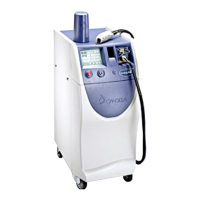

 To Next Page
