Need help?
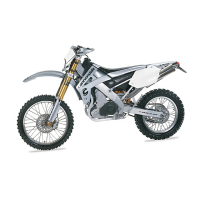
Do you have a question about the Cannondale X440S and is the answer not in the manual?
Explains DANGER, WARNING, and CAUTION symbols and their meanings.
Indicates a potential hazard could result in vehicle damage if instructions are not followed.
States the vehicle is for trained and experienced riders only, not beginners.
Emphasizes sound decisions, avoiding alcohol/drugs, and prohibiting modifications.
States not to overload the vehicle or carry passengers due to safety risks.
Shows VIN location and numbered labels on the motorcycle for identification.
Identifies the location of the engine serial number.
Lists critical safety advice including helmet use, no passengers, and public road prohibition.
Specifies using premium unleaded gasoline only.
States the motorcycle is for closed course use and does not conform to EPA noise standards.
Warns about frame modifications and riding with a cracked frame.
Failure to inspect increases the possibility of equipment failure leading to injury or death.
Always inspect before operating and follow manual procedures.
Lists items to check for Fluids, Brakes, Throttle, Clutch, Drive, Suspension, Wheels, Tires, Body Panels, and Fasteners.
Identifies clutch, brake levers, throttle, and stop/start buttons.
Identifies engine oil, transmission oil fill/drain, and radiator.
Identifies the battery and Engine Control Module (ECM).
Identifies brake pedal, rear brake reservoir, and drive chain adjusters.
Explains how to use the red engine stop button to turn off the engine.
Describes how to use the clutch lever to disengage and engage the clutch.
Explains how to use the green engine start button to start the engine.
Describes the location and operation of the shift lever for gear changes.
Explains throttle use and potential hazards of malfunction or improper freeplay.
Describes how to operate the front brake lever and rear brake pedal.
Explains the purpose and use of air filter cleaning plugs during washing.
Describes the use and limitations of the side stand.
Details starting the engine, including hazards of indoor operation and battery charge importance.
Provides step-by-step instructions for cold starting the MC1000 model.
Advises against opening the throttle when starting a warm engine to prevent fouling.
Explains proper shifting technique and warns against downshifting at high speeds.
Details proper braking technique, including hazards of improper use and wet conditions.
Describes the procedure for stopping the vehicle.
Outlines post-ride cleaning, inspection, and repair steps.
Covers brake fluid type, hazards, and checking/adding procedures for front and rear brakes.
Details how to check and add brake fluid to the front master cylinder.
Details how to check and add brake fluid to the rear master cylinder.
Explains how to check and add coolant, including safety precautions.
Provides steps for bleeding air from the cooling system.
Details how to check the engine oil level, including safety warnings.
Step-by-step guide to checking the engine oil level with illustrations.
Describes adding oil to reach the correct level.
Outlines the procedure and hazards for changing engine oil.
Covers draining oil from the left spar and crankcase, including filter removal.
Details reinstalling the filter cover, O-rings, and inlet fitting.
Explains how to check the transmission oil level and add oil if necessary.
Details draining old transmission oil and replacing the filter.
Covers removing and reinstalling the transmission oil filter and drain bolt.
Provides instructions for adding fuel, including safety warnings and capacity.
Outlines the recommended break-in period and riding instructions.
Details maintenance tasks required during break-in and regular intervals.
Lists checks for fuel level, filter, and idling.
Lists checks for oil level, oil change, and filter.
Lists checks for oil level, oil change, filters, and valve clearance.
Lists checks for fluid level, pad wear, discs, lever freeplay, and pedal height.
Lists checks for coolant level and cooling system inspection.
Lists inspection of spark plug, fluid leaks, and cables/wiring.
Lists visual inspection of fasteners and clutch lever/arm checks.
Lists cleaning of air filters.
Lists checks for wear, freeplay, lubrication, and sprockets.
Lists inspection for cracks, holes, leaks, or damage.
Lists inspection for damage and necessary repairs.
Lists checks for head bearings, rotation, and idle speed with steering.
Lists inspection for fork leg and rear shock oil leaks.
Lists inspection for tire damage, pressure, and wheel damage.
Describes removal and installation of side number panels.
Details how to remove and install the vehicle seat.
Warns about the hazard of the seat coming off during riding if installed incorrectly.
Describes removal and installation of fork leg guards.
Describes removal and installation of the front fender and number plate.
Details removing the front number plate and fender.
Describes removal and installation of radiator shrouds.
Describes removal and installation of the radiator guard.
Details removing and installing the mudflap, including battery terminal safety.
Describes removing and installing the rear fender.
Describes removing and installing the glide plate.
Provides detailed instructions for cleaning and oiling the airbox filter.
Details cleaning the steering head filter, including proper orientation and lubrication.
Explains how to adjust throttle freeplay at the handlebars.
Details adjusting throttle cable freeplay at the engine throttle body.
Explains how to adjust the engine idle speed for optimal performance.
Describes disconnecting and removing the fuel tank, with safety precautions.
Explains how to replace the fuel filter, including flow indicators.
Explains how to measure and adjust front brake lever freeplay.
Details how to adjust the front brake lever position for rider comfort.
Describes how to inspect front brake pads for wear and replace them.
Explains how to adjust the rear brake pedal height for comfort and operation.
Details checking and adjusting clearance for the rear brake pedal pushrod.
Describes how to inspect rear brake pads for wear and replace them.
Explains how to inspect the exhaust pipe and silencer for damage.
Details adjusting the clutch lever position for comfort.
Defines clutch lever freeplay and its adjustment.
Explains how to adjust clutch cable freeplay using the inline adjuster.
Details adjusting the clutch actuating arm, mentioning special tools.
Continues the procedure for adjusting the clutch actuating arm.
Explains how to check and adjust drive chain slack, including wheel alignment.
Continues the procedure for adjusting drive chain slack and wheel alignment.
Explains how to measure and check for drive chain stretch.
Details inspecting and replacing the swingarm buffer.
Covers inspection and replacement of the chain guide and block.
Explains how to inspect drive chain rollers for wear and damage.
Details checking swingarm bearings for wear or looseness.
Describes removing and reinstalling the countershaft sprocket guard.
Details replacing the countershaft sprocket, lock washer, and nut.
Details tightening the countershaft sprocket nut.
Explains how to inspect sprockets for damage and wear.
Discusses common electrical problems caused by connectors and wiring.
Provides tips for disconnecting and connecting electrical connectors safely.
Details cleaning electrical connectors with lint-free rags and compressed air.
Explains the EMS, ECM, sensors, and actuators controlling ignition and fuel delivery.
Explains ignition timing is controlled by the ECM and not user adjustable.
Mentions diagnostic software and cables for the MC1000 model.
Explains the function and location of the crankshaft position sensor.
Describes the TPS and its role in engine management.
Explains the function of the IAC valve in MC1000 models.
Details the coolant temperature sensor and its function in engine management.
Explains the air temperature sensor's role in fuel adjustment.
Explains the barometric pressure sensor integrated into the ECM.
Describes the location and function of the fuel injectors.
Explains the operation of the fuel pump and its pressurizing cycle.
Describes the fuel pressure regulator's function.
Explains the spark plug cap/coil and its ECM control.
Discusses battery type, importance of charge, and warnings.
Details the procedure for removing the battery from MC1000 models.
Provides instructions and warnings for charging the motorcycle battery.
Explains the fuse location and what a blown fuse might indicate.
Details how to replace a fuse, including warnings about using the correct rating.
Step-by-step instructions for removing the spark plug.
Advises consulting a dealer for inspection and how to measure spark plug gap.
Provides instructions and cautions for installing a new spark plug.
Details how to adjust handlebar position by rotating clamps.
Provides torque specifications for handlebar clamp bolts.
Covers pre-ride and post-ride maintenance for fork legs.
Details fork leg disassembly and oil change every 25 hours.
Explains how to bleed air from the front forks after each ride.
Describes adjusting front/rear suspension clickers and contacting Pro-Action.
Details adjusting fork compression damping.
Details adjusting fork rebound damping.
Explains adjusting rear shock compression and rebound damping.
Details adjusting rear shock spring preload.
Explains how to set front and rear ride height.
Details measuring and setting the front ride height.
Details measuring and setting the rear ride height.
Explains how to measure front and rear static sag.
Explains the importance of tire pressure and how to check it.
Details inspecting tires for wear, damage, and valve stem condition.
Describes rear wheel alignment procedures, noting the need for a special tool.
Covers inspection of frame, subframe, and swingarm for cracks or damage.
Lists various lubrication points on the vehicle.
Details lubricating the throttle cable and housing.
Describes using aerosol lubricant for cables.
Provides instructions for cleaning and lubricating the drive chain.
Details lubricating the front brake lever pivot.
Details lubricating the shift lever and shaft.
Details lubricating the footpeg pivot.
Details lubricating the rear brake pedal.
Details lubricating the clutch lever and cable.
Describes lubricating clutch and throttle cables.
Provides cautions for cleaning the vehicle, avoiding high pressure and detergents on brakes.
Warns against using unrecommended cleaners on the seat.
Details preparing the vehicle by installing plugs before washing.
Provides instructions for preparing the vehicle for storage.
Continues instructions for storing the vehicle, including tire pressure and location.
Outlines steps for preparing the vehicle after storage.
Lists overall dimensions, weight, engine type, and capacities.
Details engine bore/stroke, compression, oil, transmission, and gears.
Lists frame type, suspension, tires, wheels, and brakes.
Lists fuel capacity, type, ignition system, and battery specs.
Lists drive chain type, slack, length, and sprocket details.
Lists specifications for brake fluid, coolant, engine oil, transmission oil, and fuel.
Lists specifications for brake freeplay, pad thickness, and clutch freeplay.
Lists specifications for chain slack, length, buffer, guide block, and rollers.
Lists specifications for suspension adjustments and tire sizes/pressures.
Lists specifications for spark plugs, fuses, and engine settings.
Lists torque values for frame, brake master cylinder, and pedal mounting bolts.
Lists torque values for engine oil, fuel tank, and throttle housing bolts.
Lists torque values for suspension components and drive chain parts.
Lists torque values for spark plug, handlebar, and wheel nuts.
 General
| Transmission | 5-speed |
|---|---|
| Final Drive | Chain |
| Ignition | CDI |
| Front Brake | Hydraulic disc |
| Rear Brake | Hydraulic disc |

 To Next Page