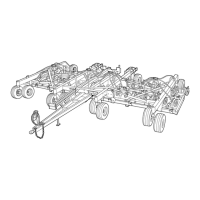
The document provided is an Operator's Manual for the CASE IH WD1903 and WD2303 Self-Propelled Windrowers. This manual, identified by part number 84309779 (3rd edition, English, August 2010, replacing 84210323), serves as a comprehensive guide for the operation and maintenance of these agricultural machines.
Function Description:
The WD1903 and WD2303 are self-propelled windrowers designed for agricultural applications. A windrower is a specialized piece of farm machinery used to cut crops and lay them in rows (windrows) to dry in the field before being collected by other harvesting equipment like balers or combines. This process, often referred to as swathing, is crucial for crops such as hay, alfalfa, small grains, and canola, as it allows for uniform drying and easier collection. The "self-propelled" aspect indicates that the machine is driven directly by an onboard engine and does not require a separate tractor for power or movement. The manual covers all aspects from initial setup and operation to routine maintenance and troubleshooting, ensuring the operator can effectively and safely utilize the machine for its intended purpose.
Important Technical Specifications (as inferred from the table of contents):
While specific numerical values for horsepower, dimensions, or capacities are not directly visible in the provided pages, the manual's structure indicates that detailed specifications are covered.
- Models: WD1903 and WD2303. These likely represent different power outputs, cutting widths, or feature sets within the windrower line.
- Engine: The manual includes sections for "Engine Model (As Applicable)" and "Engine" in the troubleshooting section, confirming that these machines are powered by internal combustion engines.
- Header: The machines are designed to operate with various headers, including "sickle header" and "draper header," and also mention "disc header." This indicates versatility in handling different crop types and cutting methods. The "Header Width (As Applicable)" section suggests that different header sizes can be fitted.
- Hydraulic System: Extensive sections on "Hydraulic schematics," "Hydraulic system" troubleshooting, and "Lubrication and hydraulic oil schedule" highlight the critical role of hydraulics in the machine's operation, likely controlling header lift, reel speed, and other functions.
- Electrical System: "Electrical system" troubleshooting and "Fuses and relays" sections confirm the presence of a sophisticated electrical system for controls, lighting, and diagnostics.
- Air Conditioning System: A dedicated section for "Air conditioning system" indicates operator comfort features.
- Capacities: The manual details "Lubrication and hydraulic oil capacities" and "Fluids, fuels and lubricants," providing essential information for proper servicing.
- Controls: The machine features a "Multifunction handle (MFH) and controls," "Electronic display," "Overhead controls," and "Steering column," indicating an ergonomic and advanced operator interface.
Usage Features:
The manual outlines a comprehensive set of usage features designed for efficient and safe operation:
- Operator's Platform: Detailed sections on "Cab layout," "Cab door," "Operator's seat" (including air suspension and adjustments), and "Instructor's seat" suggest a focus on operator comfort and accessibility.
- Controls: The "Controls/Instruments" chapter covers various control interfaces, including "RH Side Controls," "Overhead Controls," and "Exterior Controls" (mirrors, lights, external tilt cylinder switch). This indicates a well-organized and accessible control layout.
- Commissioning: A "Commissioning the Unit" section, including "Before operating check," ensures proper setup and readiness before initial use.
- Starting and Stopping: Clear instructions for "Starting the engine" and "Stopping the engine" are provided for safe power management.
- Parking: "Parking the machine" and "Remove header" sections guide operators on safe shutdown and storage procedures.
- Transport Operations: "Road transport" (hauling, road travel) and "Recovery transport" (towing) sections address how to safely move the windrower between fields or for maintenance.
- Working Operations: This crucial chapter covers "Install header," "Checking air spring inflation pressure," and specific operational guidance for "Operation with a sickle header," "Operation with a draper header," and "Operation with a disc header." It also includes "Setting header flotation," "Windrow shield adjustments," and "Rear wheel spacing," indicating adjustable features for optimizing performance across different crops and field conditions.
- Safety Information: A dedicated "Safety Information" chapter covers "Safety rules and signal word definitions," "Safety rules - Personal Safety," "Safety precautions," "Safety signs," and "Road travel signs and decals." This emphasizes the manufacturer's commitment to operator safety.
Maintenance Features:
The manual provides extensive guidance for maintaining the windrower, crucial for its longevity and reliable performance:
- General Maintenance Information: This section covers fundamental aspects like "Minimum tightening torques for normal assembly," "Standard torque data for hydraulics," "General information," "Lubrication and hydraulic oil capacities," and "Fluids, fuels and lubricants."
- Lubrication: A dedicated "Lubrication" section, along with a "Lubrication and hydraulic oil schedule" in the maintenance chart, highlights the importance of regular lubrication.
- Adjustments: "Maintenance and adjustments" covers various components that require periodic tuning.
- Component Identification: "Component identification" aids in locating and understanding the various parts of the machine for maintenance purposes.
- Schematics: "Hydraulic schematics" are provided, which are invaluable for diagnosing and repairing hydraulic system issues.
- Specific Components: Sections on "Merger," "Battery," "Lights," and "Fuses and relays" indicate specific maintenance checks and procedures for these critical parts.
- Maintenance Chart: The "MAINTENANCE CHART" includes both a "Lubrication and hydraulic oil schedule" and a "Maintenance and service schedule," offering a structured approach to routine servicing.
- Troubleshooting: A "TROUBLESHOOTING" chapter, broken down by "Engine," "Hydraulic system," "Air conditioning system," and "Electrical system," provides systematic guidance for diagnosing and resolving common issues, minimizing downtime.
- Forms and Declarations: The inclusion of "Delivery report" and "Service record" forms emphasizes the importance of tracking machine history and scheduled maintenance, particularly for warranty and service intervals (e.g., "1st 50 Hour").
In summary, the CASE IH WD1903 and WD2303 Self-Propelled Windrowers are robust agricultural machines designed for efficient crop cutting and windrowing. The operator's manual provides comprehensive instructions for safe operation, detailed technical specifications, user-friendly controls, and a thorough maintenance schedule, all aimed at maximizing the machine's performance and lifespan.

 Need help?
 General

 To Next Page