2 Introduction
Castle invented the low-angle Professional Pocket in 1985 to meet the needs of
cabinetmakers and woodworkers who require a fast, strong joint in wood, plywood, and
other structural materials for cabinet making, furniture construction, and other
carpentry tasks. With this system, the screws are driven into the side grain of the
wood, creating a strong joint that is not prone to splitting and holds firmly for the life of
the structure. The exclusive 3-degree screw angle minimizes the problem of
component shifting (misalignment caused by tightening the screw) that is commonly
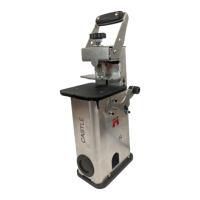
associated with pocket joinery. With the Castle 110, it is now possible to create the
same fully machined Castle Professional Pocket used by cabinetmakers in your own
workshop or on the jobsite.
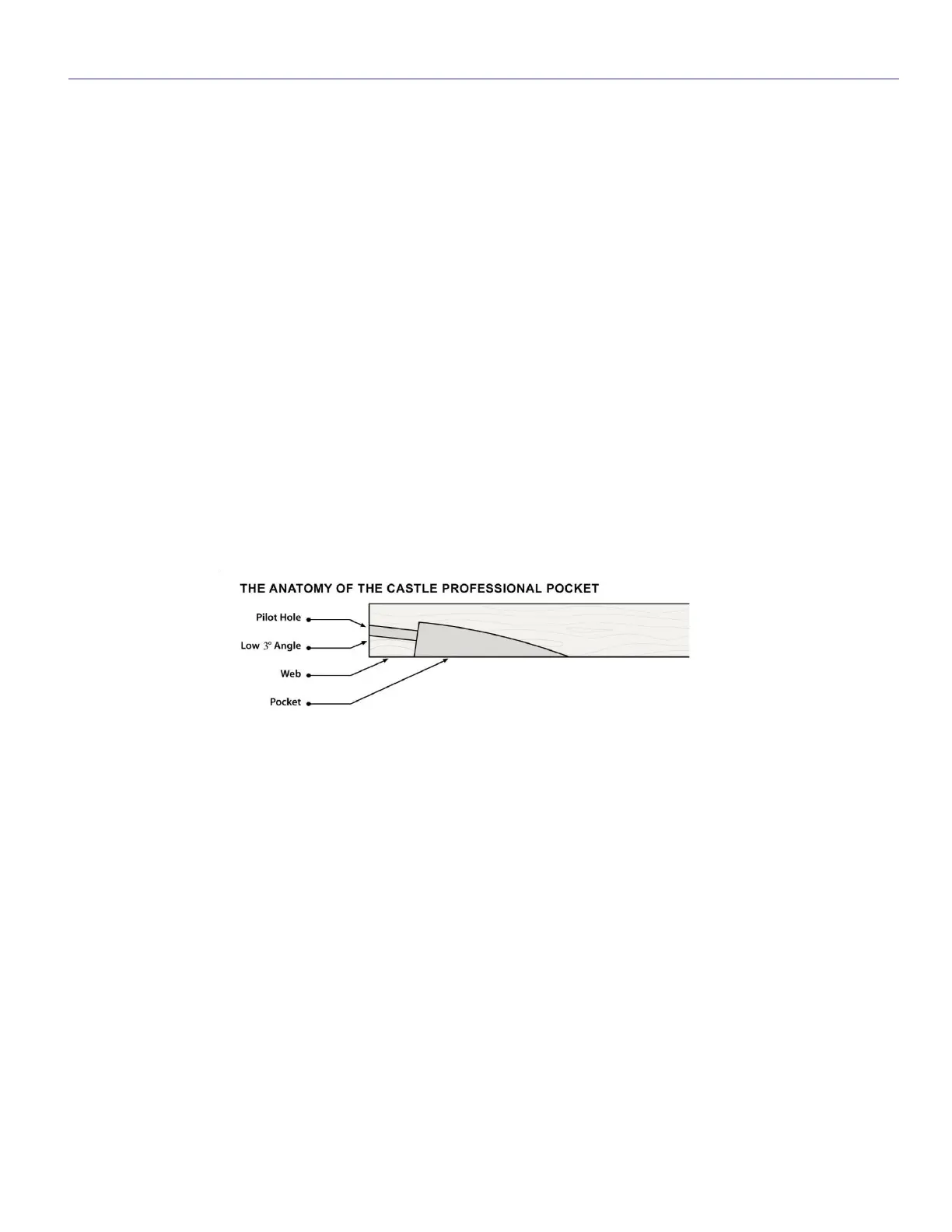
Pilot Hole: The pilot hole is drilled from the edge of the stock creating a clean, chip-
free hole for the pocket screw which eliminates end-grain pop-out (common on drilled
pockets) that can interfere with a tight joint.
Low 3° Angle: The exclusive Castle 3-degree angle virtually eliminates forces
that can result in shifted or misaligned joints. Note: the 3-degree system
requires cheese head torx screws for proper assembly.
Web: The web easily adjusts to suit a variety of screw lengths.
Pocket: The routed pocket leaves a clean recess which requires no additional
sanding or finishing before the components are assembled.


 To Next Page
 Loading...