EasyManua.ls Logo

CASTLE 12327 - User Manual

Default Icon
2 pages
Print Icon
To Next Page IconTo Next Page
Loading...
Castle Stoves, Division of Ardisam ǀ 1160
8
th
Avenue, Cumberland WI 54829 ǀ 1-800-345-6007 ǀ info@castlestoves.com
TROUBLESHOOTING GUIDE
Always follow your operator’s manual for instructions on how and when to clean your stove.
Most problems with pellet stoves are solved with a thorough cleaning.
Select and use only wood pellets that are dry and free from dirt and debris. Dirty or damp fuel
will adversely affect the operation and performance of the unit.
Diagnostics. Your Castle Stove’s controller comes equipped with an on-board diagnostics option
that will let you test some components of your stove. Please see your operator’s manual for
instructions.
Never perform cleaning or maintenance on a hot stove. Please allow unit to cool for a
minimum of two hours.
Never perform service with power supplied to the unit. Please unplug unit prior to servicing.
Before calling customer service or an authorized service center, PLEASE CLEAN your pellet
stove, fans and pipes thoroughly. In most cases, a proper and thorough cleaning will solve the
issue.
If after you have thoroughly cleaned your stove according to the operator’s manual and you
have followed the troubleshooting guide below, and your stove is still not working properly,
please call Customer Service at 800-345-6007.
PROBLEM
CAUSE
SOLUTION
Fault light comes on
Fire goes out
Control reads out of fuel, check burn pot. Add
fuel to the hopper.
If the hopper is full, relight. If it continues to give
that signal, then enter the diagnostic area of the
controller. A circle next to “NTC1” should be
highlighted. If not, replace the 52C proof of fire
switch. Check pigtail leads, replace spade
terminals as necessary.
Fault light is on
Overtemp
The room fan can be tested by highlighting the
circle next to “Blower”. Allow stove to cool and
restart.
Check exhaust pipe for obstructions.
Increase blower voltage, through controller, in
each stall.
Question and Answer IconNeed help?

Do you have a question about the CASTLE 12327 and is the answer not in the manual?

Summary

Troubleshooting Guide

General Maintenance and Fuel Recommendations

Follow manual for cleaning, use dry pellets, and clean stove thoroughly for most issues.

Safety Precautions for Service

Never perform cleaning or maintenance on a hot stove or with power supplied.

Fault Light and Overtemp Issues

Troubleshoot fault light by checking fuel, burn pot, diagnostics, and room fan.

Fuel Feed and Ignition Troubleshooting

Fuel Not Feeding or Vacuum Signal Issues

Check seals, venting, exhaust motor, and auger for obstructions or malfunctions.

Hopper Lid and Fire Burn Issues

Address hopper lid switch, dirty stove, poor fuel quality, and igniter problems.

Overview

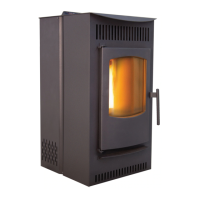
This document serves as a troubleshooting guide for Castle Pellet Stoves, providing comprehensive instructions and solutions for common operational issues. It emphasizes the importance of regular maintenance and proper usage to ensure optimal performance and longevity of the stove.

Function Description:

Castle Pellet Stoves are heating appliances designed to burn wood pellets efficiently, providing warmth for residential spaces. The core function involves feeding pellets into a burn pot, igniting them, and then using a series of fans and exhaust systems to distribute heat and manage combustion byproducts. The stoves are equipped with a controller that manages various operational parameters, including pellet feed rate, fan speeds, and safety features. This controller also incorporates a diagnostic option, allowing users to test specific components and identify potential malfunctions. The overall design aims for user-friendly operation, with an emphasis on safety and efficiency.

Important Technical Specifications:

While specific technical specifications like BTU output, hopper capacity, or dimensions are not detailed in this troubleshooting guide, several functional components are mentioned, implying their technical relevance. These include:

  • Controller: The central electronic unit that manages stove operations and provides diagnostic capabilities. It allows for adjustments to blower voltage and monitoring of various signals.
  • Auger: A mechanical component responsible for feeding pellets from the hopper into the burn pot. Its proper functioning is critical for consistent fuel delivery.
  • Exhaust Motor: A fan responsible for drawing combustion gases out of the stove and through the venting system. Its speed and operation are crucial for maintaining proper draft and preventing smoke buildup.
  • Room Fan (Blower): A fan that circulates heated air into the room. Its functionality directly impacts heat distribution.
  • Igniter: An electrical component used to initiate combustion of the pellets in the burn pot.
  • Pressure Sensor: A safety device that monitors negative pressure within the fire chamber. If insufficient negative pressure is detected, it can shut off the auger to prevent dangerous conditions.
  • Hopper Lid Switch: A safety interlock that prevents the stove from operating if the hopper lid is open, ensuring user safety and preventing pellet spillage.
  • 52C Proof of Fire Switch (NTC1): A temperature-sensitive switch that confirms the presence of a flame. If it doesn't detect fire, it can signal a fault.
  • Pigtail Leads and Spade Terminals: Electrical connectors associated with various components, highlighting the electrical nature of the stove's control system.

The guide also implicitly refers to the stove's ability to burn "wood pellets," indicating its fuel type. The mention of "blower voltage" adjustments through the controller suggests variable speed control for the fans.

Usage Features:

The guide highlights several key usage features, primarily through instructions and warnings:

  • Operator's Manual Reliance: Users are consistently directed to consult the operator's manual for detailed instructions on cleaning, operation, and diagnostics. This emphasizes the importance of following manufacturer guidelines for safe and effective use.
  • Diagnostic Option: The controller includes an "on-board diagnostics option" that allows users to test components. This is a crucial feature for self-troubleshooting and identifying the root cause of issues without immediate professional assistance. Users can highlight specific circles (e.g., "NTC1," "Blower," "Feeding," "Exhaust," "Limit") on the controller to check component status or initiate tests.
  • Fuel Type and Quality: The guide stresses the importance of using "only wood pellets that are dry and free from dirt and debris." This indicates that the stove is designed for a specific fuel type and that fuel quality significantly impacts performance.
  • Controller Adjustments: Users can increase "blower voltage, through controller, in each stall," suggesting a degree of user control over fan speeds to optimize combustion and heat output.
  • Igniter Adjustment: The guide mentions "Verify igniter adjustment" and ensuring "Only the wire leads should be out of the igniter retainer," indicating that the igniter's position can be adjusted for optimal performance.
  • Safety Interlocks: The presence of a "hopper lid switch" and a "pressure sensor" highlights built-in safety features that prevent operation under unsafe conditions (e.g., open hopper, insufficient draft).

Maintenance Features:

Maintenance is a central theme of the troubleshooting guide, with frequent emphasis on cleaning and inspection:

  • Thorough Cleaning: The guide repeatedly states that "Most problems with pellet stoves are solved with a thorough cleaning" and advises users to "PLEASE CLEAN your pellet stove, fans and pipes thoroughly" before calling customer service. This underscores the critical role of regular and comprehensive cleaning in preventing malfunctions.
  • Specific Cleaning Areas: Users are instructed to clean the "fire pot," "ash pan," "exhaust vent system," "stove through cover plate clean-out hole," and "igniter tube." This provides a detailed checklist for routine maintenance.
  • Inspection of Seals: The guide advises to "Check door seals" and "Check viewing glass seals," indicating that maintaining airtight seals is crucial for proper operation and efficiency.
  • Inspection of Electrical Components: Users are prompted to "Check pigtail leads, replace spade terminals as necessary" when troubleshooting the proof of fire switch, suggesting that electrical connections are part of routine inspection.
  • Hopper Door Seal Check: "Check hopper door seal" is listed as a maintenance step when the hopper lid switch is not functioning correctly, emphasizing the importance of maintaining the integrity of seals.
  • No Cleaning on Hot Stove: A critical safety instruction is "Never perform cleaning or maintenance on a hot stove. Please allow unit to cool for a minimum of two hours." This highlights a key safety protocol for maintenance.
  • Power Disconnection for Service: Another vital safety instruction is "Never perform service with power supplied to the unit. Please unplug unit prior to servicing." This ensures electrical safety during any maintenance or repair work.
  • Replacement of Components: The guide suggests replacing components like the "52C proof of fire switch," "auger," "hopper safety switch," and "faulty igniter" when troubleshooting specific issues, indicating that some parts are user-replaceable or require professional replacement.

In summary, the Castle Pellet Stove is designed for efficient heating with a strong emphasis on user-friendly diagnostics and preventative maintenance. Its controller provides operational control and troubleshooting capabilities, while various safety features ensure secure operation. Regular cleaning and adherence to the operator's manual are paramount for sustained performance and to avoid common issues.

CASTLE 12327 Specifications

General IconGeneral
BrandCASTLE
Model12327
CategoryStove
LanguageEnglish

Related product manuals