15
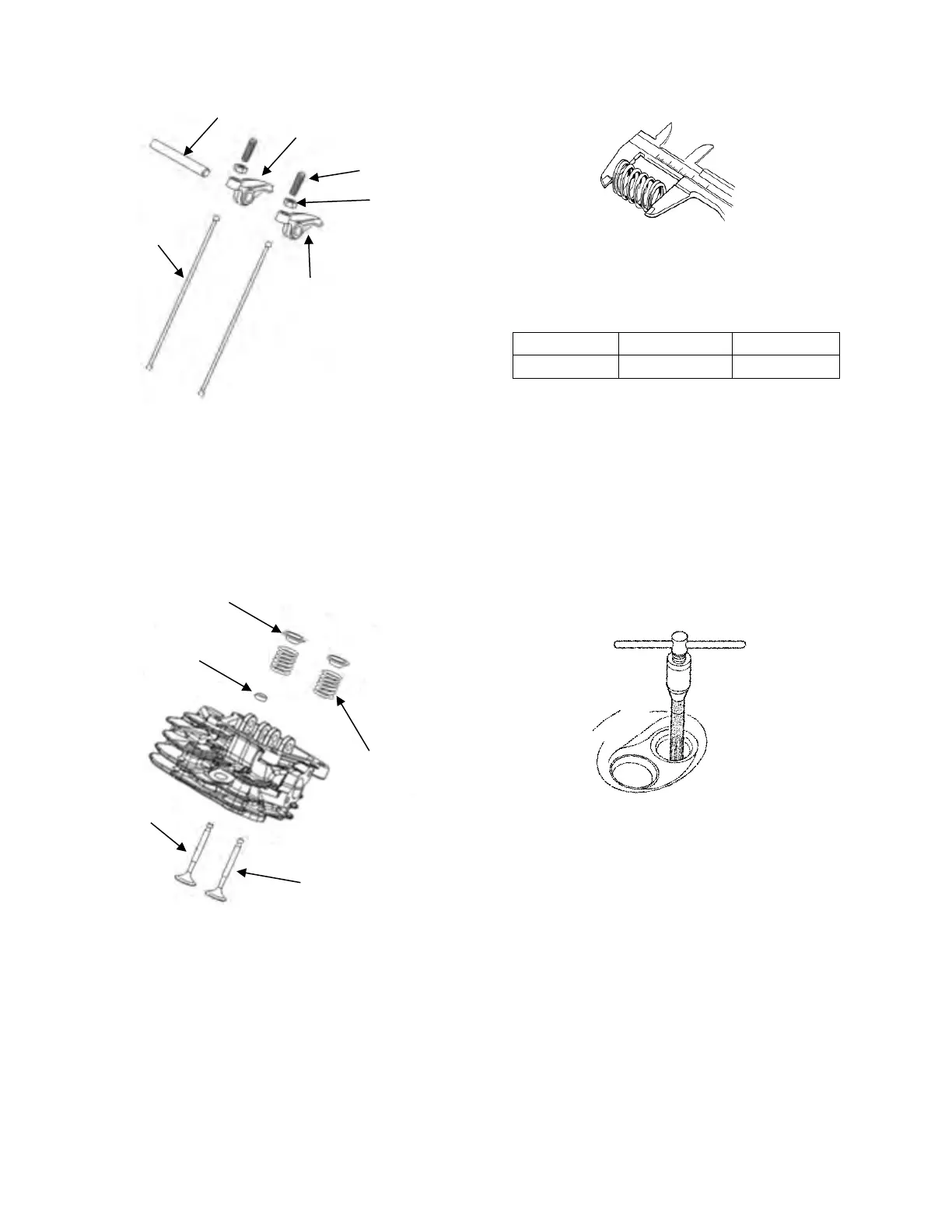
Remove locking nut (2) and adjusting nut (1).
Remove shaft (5), and remove exhaust valve
rocker arm (6). Repeat the process for intake
valve rocker arm (3). Check the rocker arms for
wear. Replace if damaged. Remove pushrods
(4). Inspect the pushrods. Make sure they are
straight and not scored. Check the pushrod ends
for wear. Replace the pushrods if worn or
damaged.
Note: Do not remove the retainer (1) while the
head is still on the engine or the valves will drop
down into the cylinder.
Press down on retainer (1) and move it to the
side so that the valve stem will pass through the
larger hole. Remove valve spring (2) and
exhaust valve (4). Repeat the process for the
intake valve (3) and retainer.
Valve Springs:
Check the free length of the valve spring. The
normal free length is 28.5mm. If the free length
is 25.5mm or less, replace the spring.
Valve Guides:
Inspect the valve guides. Make sure that they fit
tightly into the cylinder head. Inspect the inner
surfaces of the valve guides. The inner surface
should be smooth, with no cracking or pitting. If
the inner surface is damaged, replace the valve
guide.
Valve Guides – Ream:
For best results perform this procedure when the
valve guides and cylinder head are at room
temperature.
Make sure that the reamer is centered over the
valve guide. Coat the reamer and valve guide
with cutting oil. Turn the reamer clockwise and
work it through the valve guide for the entire
length of the reamer. Continue to turn it
clockwise as you remove the reamer from the
valve guide. Remove any carbon deposits and
check the internal diameter of the valve guide.
The normal diameter of the valve guide is
8.6mm. If the internal diameter of the valve
guide is 9.021mm or more, either replace the
valve guide or install inserts.



 To Next Page
 Loading...