EasyManua.ls Logo

Central Machinery 67536 - User Manual

Central Machinery 67536
16 pages
Print Icon
To Next Page IconTo Next Page
Loading...
Visit our website at: http://www.harborfreight.com
Email our technical support at: productsupport@harborfreight.com
NOTICE
FOR CEMENT OR
MORTAR ONLY.
Do not use with Epoxy
2-part resin mix.
Owners Manual & Safety Instructions
Save This Manual Keep this manual for the safety warnings and precautions, assembly,
operating, inspection, maintenance and cleaning procedures. Write the product’s serial number in the
back of the manual near the assembly diagram (or month and year of purchase if product has no number).
Keep this manual and the receipt in a safe and dry place for future reference. 21c
When unpacking, make sure that the product is intact
and undamaged. If any parts are missing or broken,
please call 1-888-866-5797 as soon as possible.
Copyright
©
2009 by Harbor Freight Tools
®
. All rights reserved.
No portion of this manual or any artwork contained herein may be reproduced in
any shape or form without the express written consent of Harbor Freight Tools.
Diagrams within this manual may not be drawn proportionally. Due to continuing
improvements, actual product may differ slightly from the product described herein.
Tools required for assembly an d se rv ic e may n ot b e in cl uded.
Read this material before using this product.
Failure to do so can result in serious injury.
SAVE THIS MANUAL.

Questions and Answers

  • S
    Spencer GarciaAug 1, 2025
    How to troubleshoot a Central Machinery Mixer that will not start?
    • H
      hollycantuAug 1, 2025
      If your Central Machinery Mixer won't start, there are several potential causes. First, ensure the power cord is securely plugged in. Second, verify that the outlet has power. If the outlet is unpowered, turn off the Mixer and check the circuit breaker. If the breaker is tripped, ensure the circuit has the correct capacity and no other loads. Finally, internal damage or wear could be the issue, in which case you should have a technician service the tool.
  • C
    Calvin BestAug 5, 2025
    Why is my Central Machinery Mixer overheating?
    • J
      Jeffrey DixonAug 5, 2025
      If your Central Machinery Mixer is overheating or overloading, there are a few things to consider. Avoid running the Mixer at 100% load for extended periods; allow for lighter, no-load intervals. Also, check for blocked motor housing vents and carefully blow out any dust using compressed air while wearing ANSI-approved safety goggles and a NIOSH-approved dust mask/respirator. Finally, a long or small diameter extension cord can strain the motor. Try eliminating the extension cord, or if needed, use one with the proper diameter for its length and load.
  • W
    William MoralesAug 10, 2025
    What to do if Central Machinery 67536 Mixer is making excessive noise?
    • R
      Ryan WilsonAug 10, 2025
      Excessive noise or rattling in your Central Machinery Mixer can stem from a couple of issues. If your model has a belt, it might be too loose (slipping) or too tight (causing bearing damage); properly tension the belt. Alternatively, there could be internal damage or wear, in which case it's best to have a technician service the Mixer.
  • E
    emilyyoungAug 14, 2025
    Why is my Central Machinery Mixer running slowly?
    • D
      Dr. George Beck DDSAug 14, 2025
      If your Central Machinery Mixer is operating slowly, the issue might be related to the extension cord. Try eliminating the use of an extension cord. If an extension cord is necessary, use a shorter, heavier gauge cord.
  • B
    Brandon ChapmanAug 19, 2025
    What to do if Central Machinery Mixer will not start?
    • J
      Jennifer SullivanAug 19, 2025
      If your Central Machinery Mixer won't start, there are several potential causes. First, check that the power cord is properly plugged in. Second, ensure that the outlet has power; if not, check the circuit breaker, making sure the circuit has sufficient capacity and no other loads. Finally, internal damage or wear could be the issue, in which case you should have a qualified technician service the mixer.
  • E
    Elizabeth PorterAug 23, 2025
    Why does my Central Machinery 67536 operate slowly?
    • B
      benjamin83Aug 23, 2025
      If your Central Machinery Mixer is operating slowly, it could be due to an extension cord that is too long or has a wire size that is too small. Try eliminating the use of the extension cord altogether. If an extension cord is necessary, use a shorter, heavier gauge cord.
  • L
    Lisa FletcherAug 27, 2025
    What to do if Central Machinery Mixer makes excessive noise?
    • J
      Joseph PotterAug 27, 2025
      If your Central Machinery Mixer is making excessive noise or rattling, it is likely due to internal damage or wear. In this case, have a qualified technician service the tool.

Summary

Electrical Safety and Risk Prevention

Important Safety Instructions

General safety precautions for operating electrical appliances.

Grounding Instructions

Proper grounding procedures for electrical safety and shock prevention.

Extension Cord Guidelines

Guidelines for selecting and using extension cords with the appliance.

Connecting Cords

Methods to secure extension cords to appliance cords for safety.

Mixer Operation Safety Warnings

General Mixer Operation and Hazard Warnings

Safety guidelines for mixer operation, handling hazards, and preventing accidents.

Personal Protective Equipment and Maintenance Safety

Safety gear, work area cleanliness, and precautions during maintenance.

Specifications

Instructions for Putting into Use

Assembly;Mounting

Step-by-step guide for assembling and mounting the cement mixer.

Operating Instructions

Tool Set Up

Procedures for setting up the cement mixer before operation.

Work Piece and Work Area Set Up

Guidelines for preparing the work area and materials for mixing.

General Operating Instructions

Step-by-step instructions for operating the cement mixer.

Maintenance and Servicing

Cleaning, Maintenance, and Lubrication

Procedures for cleaning, maintaining, and lubricating the cement mixer.

Belt Inspection and Tensioning

How to inspect, adjust, and replace the mixer's drive belt.

Troubleshooting

Wiring Connection Diagrams

Parts List

Assembly Diagram

Limited 90 Day Warranty

Overview

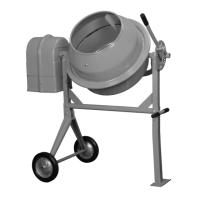
The Central Machinery 3-1/2 Cubic Ft. Cement Mixer (Item 67536) is a robust and essential tool designed for mixing cement and mortar. It is explicitly stated that this mixer is FOR CEMENT AND MORTAR ONLY and DO NOT USE WITH EPOXY 2-PART RESIN MIX, a crucial safety warning reiterated throughout the manual. This restriction is highlighted multiple times to prevent misuse and potential damage or injury.

Function Description:

The primary function of this device is to efficiently mix cement and mortar for various construction and DIY projects. Its 3-1/2 cubic feet drum capacity allows for a significant volume of material to be mixed at once, making it suitable for household use and small to medium-sized jobs. The mixer operates by rotating a drum, ensuring thorough and consistent blending of materials such as water, cement, and aggregate rock. The drum's angle can be adjusted, providing flexibility for loading, mixing, and dumping materials.

Important Technical Specifications:

  • Electrical Input: 120 VAC / 60 Hz / 3.5A, indicating it can be powered by standard household electrical outlets in North America.
  • Motor No Load Speed: 1950 RPM, which refers to the motor's rotational speed without any load.
  • Drum Speed: 36 RPM, the rotational speed of the mixing drum, optimized for effective mixing.
  • Drum Capacity: 3-1/2" Cubic Feet, specifying the maximum volume of material the drum can hold.
  • Drum Opening: 15", the diameter of the drum's opening, facilitating easy loading and unloading of materials.

Usage Features:

The cement mixer is designed with several features to enhance its usability and safety:

  • Adjustable Drum Angle: The drum's angle can be easily adjusted using the Control Handle (7). This allows the operator to set the optimal angle for loading, mixing, and dumping, improving efficiency and reducing physical strain. Locking pins on the Arm (22) secure the drum at the desired angle.
  • Portability: The mixer is equipped with Wheels (65) and a Stand (27), making it relatively easy to move around the work area. The assembly instructions detail how to attach the wheels to the Wheel Bracket (29) for mobility.
  • Safety Warnings: The manual emphasizes several critical safety warnings:
    • DO NOT INSERT SHOVEL OR HANDS INTO MIXER WHILE PLUGGED IN. This is a severe warning against entanglement, which can lead to serious injury or death.
    • Do not attempt to move the Cement Mixer when it is full and/or in operation. Moving a loaded or operating mixer is unsafe and can cause severe injury.
    • Keep safe clearance around mixer. All persons, except the operator, should maintain at least six feet from the mixer during operation.
    • Wear appropriate personal protective equipment (PPE): ANSI-approved safety goggles and heavy-duty work gloves are required during assembly and operation. Nonslip footwear and protective hair covering are also recommended.
    • Work Area Setup: The work area should be clean, well-lit, and free from children or pets to prevent distractions and injury. The power cord should be routed safely to avoid tripping hazards and damage.
  • Extension Cord Guidelines: Detailed instructions are provided for using extension cords, including:
    • Minimum Wire Gauge: A table (TABLE A) specifies the recommended minimum wire gauge based on nameplate amperes and cord length (25' to 150') to prevent voltage drop and tool damage.
    • Grounding Type: If the appliance is grounded, the extension cord must be a grounding type 3-wire cord.
    • Outdoor Use: For outdoor use, an outdoor-use extension cord marked with suffix letter "W" and a tag stating "Suitable for Use with Outdoor Appliances" should be used.
    • Connection Security: Instructions are given to keep the extension cord connection dry and off the ground, and to secure cords by making a knot or using a plug-receptacle retaining strap to prevent them from pulling apart.
  • Grounding Instructions: The appliance must be properly grounded to reduce the risk of electric shock. It is equipped with an equipment-grounding conductor and a grounding plug for a 120 V circuit. The manual illustrates a 3-prong plug (Figure A) and provides guidance on using a temporary adapter (Figures B and C) if a properly grounded outlet is not available, emphasizing that the adapter should only be used until a permanent grounded outlet can be installed by a qualified electrician.
  • Typical Material Quantities: The manual provides a guideline for typical maximum quantities: 2 gallons of water with 3 shovels of cement and 15 shovels of aggregate rock (using a size 3 shovel, not included). This helps users understand the mixer's capacity and avoid overloading.

Maintenance Features:

Regular maintenance is crucial for the longevity and safe operation of the cement mixer:

  • Pre-Use Inspection: Before each use, a thorough inspection of the tool's general condition is required. This includes checking for loose hardware, misalignment or binding of moving parts, cracked or broken parts, damaged electrical wiring, and damaged or cracked belts. Any condition affecting safe operation must be addressed.
  • Immediate Cleaning After Use: It is essential to immediately wash out all debris from the inside and outside of the Cement Mixer after use. A stiff, long-handled bristle brush is recommended for cleaning the drum. This prevents material from hardening inside the drum, which can impair future operation and damage the mixer.
  • Motor Protection: Users are warned DO NOT apply water in or around the Motor Base Cover to prevent damage to electrical components.
  • Fastener Tightness: Periodically recheck all fasteners and other connections for tightness to ensure structural integrity and safe operation.
  • Belt Inspection and Tensioning:
    • Initial Retightening: The belt should be retightened after the first 25 hours of use.
    • Inspection: The belt should be examined for cracks, tears, or other damage and replaced if necessary.
    • Tensioning Procedure: Detailed steps are provided for checking and adjusting belt tension. This involves pressing on the center of the longest span of the belt with moderate finger pressure and measuring the deflection distance, which should be between 1/2" to 3/4". Instructions are given for loosening or tightening motor bracket bolts to adjust tension. If the belt is too long to be properly tensioned, it must be replaced.
    • Belt Cover: Always replace the belt motor cover before use to protect the belt and prevent accidental contact with moving parts.
  • Storage: The appliance should be stored indoors, clean, and out of reach of children when not in use. The drum angle should be tilted as far down as possible to drain all fluids before storage.
  • Damaged Supply Cord: A critical warning states that if the supply cord of this power tool is damaged, it must be replaced only by a qualified service technician.
  • Troubleshooting Guide: The manual includes a troubleshooting section to help users diagnose and resolve common issues such as the tool not starting, operating slowly, excessive noise or rattling, and overheating/overloading. This section provides possible causes and likely solutions, often referring back to other sections of the manual for detailed instructions (e.g., Grounding section for extension cords).
  • Professional Servicing: The manual explicitly states that procedures not specifically explained must be performed only by a qualified technician. It also warns against operating damaged equipment and advises having problems corrected before further use if abnormal noise or vibration occurs.
  • Motor Wiring: A note in the wiring connection diagrams section indicates that the motor may require wiring prior to use, and this work should be done only by an electrician or qualified technician for safety.

The Central Machinery 3-1/2 Cubic Ft. Cement Mixer is a practical and user-friendly tool for mixing cement and mortar, provided that all safety warnings and maintenance instructions are strictly followed. Its design prioritizes both operational efficiency and user safety, making it a reliable choice for its intended applications.

Central Machinery 67536 Specifications

General IconGeneral
BrandCentral Machinery
Model67536
CategoryMixer
LanguageEnglish