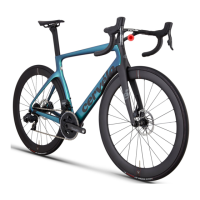
This document is the 2023 Cervélo S5 Retailer Assembly Manual, providing comprehensive instructions for the setup, customization, and maintenance of the Cervélo S5 bicycle. It is specifically designed for authorized Cervélo retailers and professional bicycle mechanics, assuming a minimum required background and skill level. The manual emphasizes that it is not intended for consumer use due to the specialized tools and expertise required for proper assembly and adjustments.
Function Description:
The Cervélo S5 is a high-performance road bicycle engineered for speed and efficiency, with a focus on seamless integration of electronic shifting systems. This manual details the assembly and adjustment procedures necessary to prepare the S5 for optimal performance and rider safety. It covers everything from the initial unboxing and component installation to final fitting and torque specifications, ensuring the bicycle meets its design intent for aggressive racing and competitive cycling.
Usage Features:
The manual guides retailers through the installation of various components, highlighting features that enhance the S5's performance and user experience.
- Frame & Fork Preparation: Instructions begin with applying carbon paste to the frame and seatpost, followed by the proper installation and torquing of the seatpost clamp. It details the installation of the Front Derailleur Mount (FDM-0E0) or the Front Derailleur Mount Blanking Plate (FDM-CVR) for 1x systems, ensuring correct torque. The manual also covers the installation of the Threaded Fork Insert (QRI-THD) and the Rear Derailleur Hanger, emphasizing the importance of not fully tightening the rear derailleur hanger assembly until the rear wheel is installed to prevent misalignment. Cleaning the chainstay and installing the Chainstay Protector (PRO-CS-508) are also covered to protect the frame.
- Fork Installation: The process of installing the fork into the frame is meticulously outlined, starting with applying grease to bearing pockets and installing headset bearings. It describes the correct orientation and tilting of the fork to properly seat it into the lower bearing, followed by tilting/rotating the fork into place over the upper bearing. A crucial caution is provided against forcing the fork, as improper assembly can damage the paint or fork. The final steps involve gently sliding the fork laterally to fully seat the crown and installing the Upper Bearing Gap Spacer (FKI-GPSP) with specific torque.
- Brake Hose Routing: This section provides detailed illustrations for routing hydraulic brake hoses through the frame and fork. It specifies routing the rear brake hose from the chainstay, through the down tube, and up through the head tube and fork, passing through a figure-8 shaped opening at the top of the fork. The front brake hose is routed from the bottom of the fork blade up through the forward hole at the top of the fork. The use of the Disc Hose Guide (CBG-DBH) is specified, and installers are directed to follow the component manufacturer's instructions for caliper installation and adjustment.
- Headset Assembly: Instructions for headset assembly include applying grease to the Preload Cone and installing it, then greasing the threaded end of the Tension Rod and installing it, tightening to 2Nm. The fork fixing screw is then exposed by rotating the fork and tightened to 4Nm maximum to complete the fork installation.
- Di2 Battery Installation: The manual details the installation of the Shimano Di2 system battery inside the down tube using the Internal Battery Mount (BTM-705). It emphasizes testing the system prior to final installation due to the sealed location. Instructions include applying Loctite 242 to M3 fixing screws, passing them through mounting holes to catch fixing nuts in the battery holder, and tightening them slightly before final torquing with a 2mm hex key to a maximum of 2.5Nm. The battery is attached to the mount using zip ties, and a long 5mm hex key is used as an insertion tool to position the battery and holder assembly in the down tube.
- Electric Wire Routing & Installation: This section illustrates routing for both brake hoses and E-Wires (SD300). It specifies routing the 650mm E-Wire and 350mm E-Wire, noting that the S5 frame and fork are designed for electronic/wireless groupsets only. After all wires are inside, the Bottom Bracket Cable Port is capped with the BB Blanking Plug (GR-BB-140). For wired shifting systems, the Shimano EW-SD300 grommet (for 6mm hole) is installed, while for wireless shifting systems, the Blanking Plug (GR-576) is used.
- Stack Adjustment: The S5 allows for stack adjustment from +5mm to +30mm above the base position using combinations of 5mm and 7.5mm Stem Spacers, enabling 2.5mm adjustments. A warning emphasizes the use of complete Headset Spacer Kits without substitution to avoid loss of control and serious injury.
- Stem Installation: This section provides instructions for installing the stem, including lightly greasing M6 fixing screws, the bottom surface of the stem, and the top edge surfaces of the required Stem Spacers. Washers are assembled on the M6 fixing screws with the ribbed side down, and the screws are tightened alternately to 8Nm. The manual notes that any initial gap between the bar and spacers/fork will disappear when properly tightened. The fork fixing screw is then re-tightened to 4Nm after stem and spacer installation.
- Handlebar Installation: Instructions for handlebar installation involve lightly greasing Handlebar Fixing Screws and attaching the handlebar to the stem with Handlebar Mounting Inserts, tightening to 5Nm. It notes that the inserts are directional and side-specific. The manual also illustrates how brake hoses run through the arms of the C035 stem and in the channels on the underside of the HB14 handlebar. The handlebar and stem combination allows for up to 5° of rotation.
- Before Final Fitting: This section offers tips for reinstallation, especially concerning brake hose length. It notes that while two-piece Stem Spacers allow for addition/removal without re-cabling, cable length dictates adjustment limits. Removing spacers (going lower) is simpler as it allows trimming the brake hose at the lever, while adding spacers (going higher) may require hose replacement. It recommends including 20mm of additional brake hose length for future adjustments. Tricks include loosening handlebar fixing screws, removing the rear brake caliper to draw out extra hose length, carefully reinstalling the stem by feeding the hose into the frame, and ensuring hoses are in the appropriate bar slot. A warning advises against forcing hydraulic brake hoses through the frame/fork to prevent kinks, cracks, or fluid leaks, which could lead to brake failure.
- Seatpost Assembly: This section details the assembly of the seatpost, starting with applying Loctite 242 to threads below the head of the 50mm button head cap screw, installing the crossbar, and tightening them together. The curved washer and adjustment dial are installed in the seatpost cutout. The button head cap screw with crossbar is installed, and the dial is turned until threads engage. The spherical washer is installed on the 30mm spherical cap screw with the concave face mating the convex surface. Loctite 242 is applied to the lower threads of the 30mm spherical cap screw. The crossbar is installed, and a light coat of carbon assembly compound is applied to the radius on the upper face of the seatpost. The lower saddle clamp base is installed, and saddle rails are located between upper and lower clamping surfaces. The desired saddle angle is established using the adjustment wheel, and the opposing angle adjusting screw is tightened to 8-9Nm to secure the saddle. The manual notes that the SP20 seatpost is compatible with both metallic (7mm) and carbon (7x9mm) saddle rails.
- Seatpost Cutting Instructions: This section provides a method for trimming the seatpost, emphasizing that all Cervélo Aero Seatposts require a 45-degree chamfer cut on the rear trailing edge. It details measuring and marking the cut-off location, ensuring a minimum 6.5cm seatpost insertion. The SP20 seatpost is inserted into a saw guide (e.g., Park Tool SG-7.2), and a carbon-specific blade is used for cutting. Any fraying or burring is removed with fine-grit sandpaper. A 45-degree guideline is marked 1cm from the cut end on the trailing edge and 1cm from the back on the bottom edge. The blade is carefully placed on this mark to cut the chamfer. After sanding and applying carbon assembly compound, the seatpost is returned to the frame. A warning reiterates the minimum 6.5cm insertion requirement to prevent frame damage and serious injury.
- Compatible Parts - HB14 Tri Extension Mount Assembly: This section illustrates the assembly of the HB14 Tri Extension Mount, including the EX11 Arm Pad (Left & Right), EX11 Arm Pad Carrier (Left & Right), Arm Pad Carrier Fixing Screws (M5x12mm x4), Extension Mount Fixing Screws (M5x20mm x4), Extension Mount Base (Left & Right), Extension Clamp Fixing Screws (M4x12mm x4), and Handlebar Fixing Screws (T25 Torx, M5x20mm x4).
- Aero Thru-Axle Installation: Instructions for securing wheels involve installing the greased axle through the dropout and wheel hub, aligning the threaded end with the threaded insert. The axle is threaded clockwise into the threaded component until secured tightly. A warning emphasizes the critical importance of correct installation for rider safety. The front axle is tightened to 12-15Nm, and the rear axle is also tightened to 12-15Nm. Final tightening of the Rear Derailleur Hanger Nut is performed using a 17mm wrench to 12-15Nm, noting this is unique to initial assembly. A warning advises adjusting brakes per manufacturer's instructions.
- Tire/Rim Clearance: The manual states that the Cervélo S5 complies with the ISO 4210-2:4.10.2 standard for tire clearance, requiring a minimum of 4mm clearance between the tire and any frame element to maintain the Limited Lifetime Warranty. It provides a method for determining maximum allowable tire/rim dimension: measure the space between chainstays at the bottom bracket junction and seatstays at the top of the tire, take the smaller of these two numbers (Frame Clearance), subtract 8mm (4mm per side), and ensure the installed, fully inflated tire's greater width (rim or tire) is less than the calculated allowable dimension. A warning highlights the risk of loss of control and serious injury if contact occurs between the tire/rim and frame/fork, and that failure to follow guidelines may void the warranty.
- Intended Use of the S5 Bicycle: The S5 is classified as a High-Performance Road - Condition 1 bike, designed for riding on paved surfaces where tires maintain ground contact. It is intended for paved roads only and not for off-road, cyclocross, touring with racks/panniers, or mounting child seats/trailers. The manual emphasizes that material use is optimized for light weight and specific performance, acknowledging that these bikes are intended for aggressive racers and competitive cyclists, potentially leading to a shorter product life. It advises that less aggressive riders will enjoy longer frame life and that light weight is prioritized over frame weight and ruggedness. Frequent inspection is recommended due to the likelihood of damage in a crash. A warning stresses understanding the bike's intended use to avoid hazardous situations. The manual also notes that Cervélo bicycles are tested to a maximum combined bicycle/rider/luggage weight of 100kg, but component weight limits may vary.
Maintenance Features:
The manual incorporates several maintenance-related instructions and recommendations throughout the assembly process.
- Greasing and Loctite Application: It frequently specifies the application of good quality bicycle grease to various threaded components, bearings, and interfaces (e.g., seatpost, tension rod, M6 fixing screws, bottom bracket shell, thru-axle) to ensure smooth operation, prevent corrosion, and facilitate future disassembly. Loctite 242 is specified for critical fasteners like the Di2 battery fixing screws and seatpost head bolts to secure them against loosening.
- Carbon Assembly Compound: The use of carbon assembly compound/friction paste is strongly recommended for all clamping areas involving carbon fiber, such as seatpost to frame, stem to fork, and handlebar to stem joints. This paste reduces corrosion, decreases required clamping force, and supports a given load.
- Torque Specifications: A detailed table of torque specifications is provided for all critical fasteners on the S5, including those for the frame, fork, stem, handlebar, seatpost clamp, saddle, wheels, and pedals. This is crucial for rider safety and component longevity. The manual stresses the use of a correctly calibrated torque wrench and adherence to specified torque values, noting that incorrect torquing can lead to component failure and serious injury.
- Pre-forming Threads: For the Upper Bearing Gap Spacer, pre-forming threads by installing and then removing the supplied M3x8mm fixing screws with the fork separate from the frame simplifies the final assembly process.
- Hose Length Management: The "Before Final Fitting" section provides guidance on managing hydraulic brake hose length, recommending including 20mm of additional length for future adjustments and service. It also offers tricks for reinstallation to avoid pinching hoses.
- Regular Inspection: For high-performance road bikes like the S5, the manual advises frequent inspection due to their light weight and the potential for damage in crashes.
- Customer Support: The manual provides contact information for Cervélo Customer Support, product registration, manuals, and warranty information, encouraging retailers and consumers to seek assistance and information as needed.

 Need help?
 General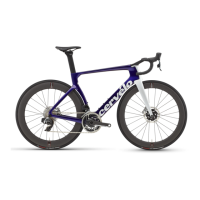

 To Next Page