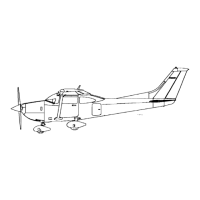
MODEL
402C
LOADING
'WARNING'
WEIGHT
&
BALANCE
If a tail ground strike has occurred or there is evidence of any damage to
the tailcone or empennage area, the airplane must
be
examined
by
a
qualified aircraft mechanic and repaired,
if
necessary, before the next
flight
Due
to differences in optional equipment installed on the airplane, a wide center of gravity
range
exists.
Under certain loading conditions, it is possible to exceed the aft
CG
limits which
could cause the tail
to
tip and allow the tail bumper to strike the ground.
The
force of a tail
ground
strike could damage internal aircraft structure. resulting in possible interference with
elevator
control system operation.
To
prevent tail tipping during airplane loading,
it
is recommended that owners and operators
study
their individual airplane's weight and balance information to become familiar
with
its
capabilities and limitations.
When
loading, it is recommended the following steps be followed:
1. During unusual loading conditions where the airplane
aft
CG
limits could possibly be
exceeded, use a suitable padded tail stand under the tailcone, whenever possible.
The
tail stand
shOuld
be removed
by
a crew member or ground service personnel
only when airplane loading is complete.
2. Load the baggage
in the nose and avionics compartments prior to boarding of
the crew and passengers.
3. Avoid
carrying baggage in the aft cabin.
4. When boarding people, have the pilot or person who is
to occupy the copilot
seat
be
the first to board with remaining persons filling the most fOlward seats
first and the aft seats last. Arrange to have heavier people occupy the most
forward seats.
5.
When
unloading the aircraft, have one person remain in the copilot or pilot
seat while the other flight deck occupant goes aft
to open the door. Arrange
to have the passengers
in
the aft seats to be the first to deplane.
, November 1979
Revision 5
- 18 March 1998
6-1OAf6-1
06



 To Next Page