Driving and Operating 9-29
D (Drive): This position is for
normal driving. It provides the best
fuel economy. If more power is
needed for passing, and the
vehicle is:
.
Going less than 56 km/h
(35 mph), push the accelerator
pedal about halfway down.
.
Going about 56 km/h (35 mph) or
more, push the accelerator all
the way down.
Notice: If the vehicle seems to
accelerate slowly or not respond
when you go faster, and you
continue to drive the vehicle that
way, you could damage the
electric drive unit. Have the
vehicle serviced right away.
L (Low): This position reduces
vehicle speed without using the
brakes. You can use L (Low) on
hills. It can help control vehicle
speed going down steep mountain
roads along with using the brakes
off and on. You can use L (Low) on
very steep hills, in deep snow,
or in mud.
Notice: Spinning the tires or
holding the vehicle in one
place on a hill using only the
accelerator pedal may damage
the electric drive unit. The repair
will not be covered by the vehicle
warranty. If you are stuck, do not
spin the tires. When stopping on
a hill, use the brakes to hold the
vehicle in place.
Brakes
Antilock Brake
System (ABS)
This vehicle has the Antilock Brake
System (ABS), an advanced
electronic braking system that helps
prevent a braking skid.
When propulsion is active and the
vehicle begins to drive away, ABS
checks itself. A momentary motor or
clicking noise might be heard while
this test is going on, and it might
even be noticed that the brake
pedal moves a little. This is normal.
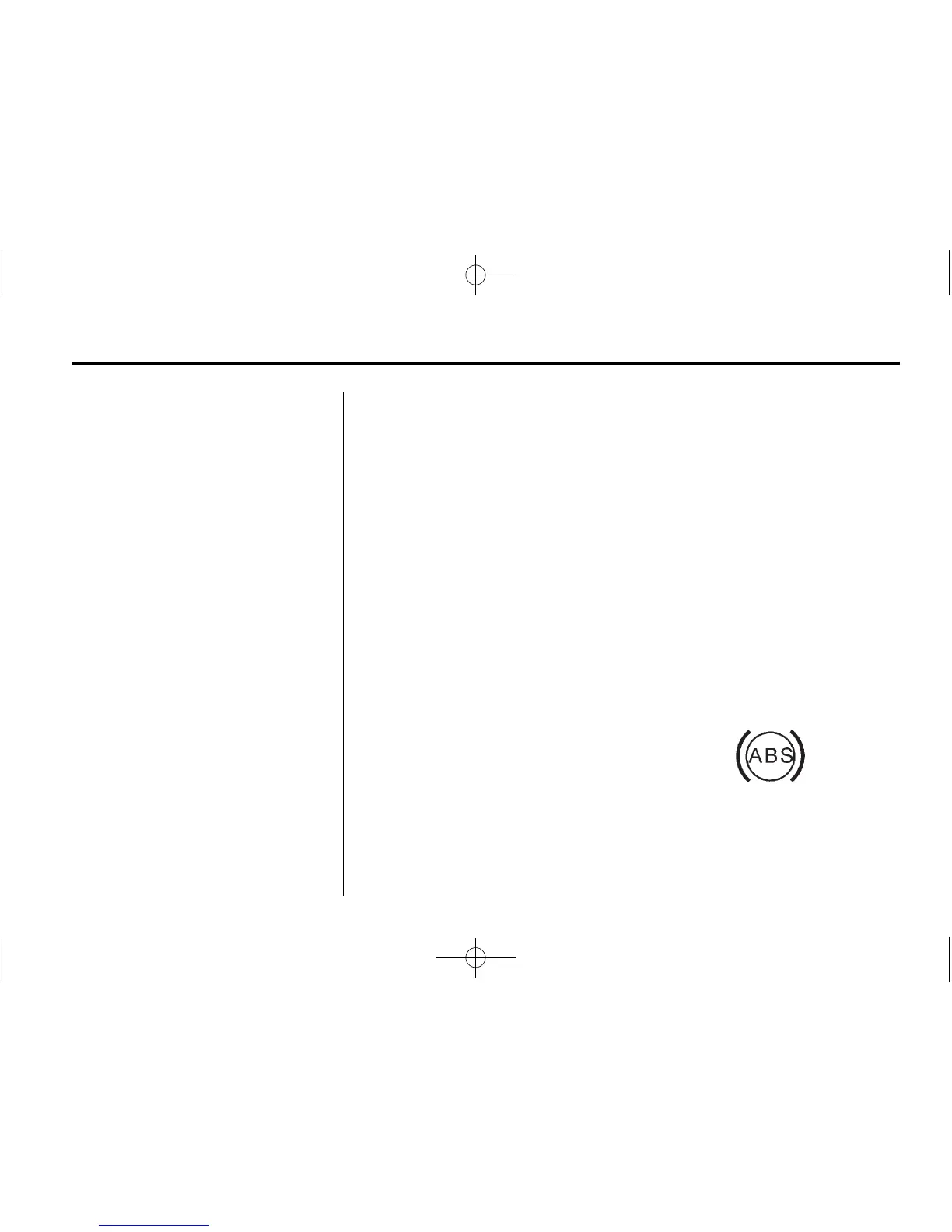
If there is a problem with ABS, this
warning light stays on. See Antilock
Brake System (ABS) Warning Light
on page 5‑23.


 To Next Page