Need help?
Do you have a question about the Chicago Pneumatic CP7901 and is the answer not in the manual?
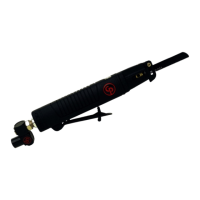
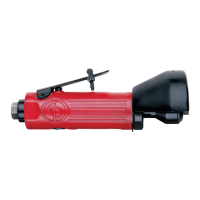
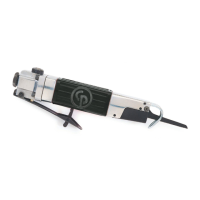
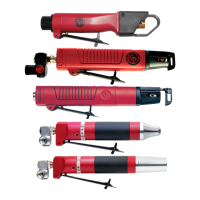
This document outlines the operational and maintenance procedures for a range of Chicago Pneumatic reciprocating saws and air files, including models CP7900, CP7901, CP9881, CP9705, and CP9710. It serves as an essential guide for anyone involved in the use, installation, repair, or maintenance of these pneumatic tools, emphasizing the importance of adhering to safety instructions to minimize the risk of injury.
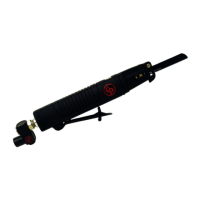
The devices covered by this manual are pneumatic reciprocating saws and air files, designed for professional use. These tools operate by converting compressed air into a reciprocating motion, which drives a blade or file back and forth. This action makes them suitable for cutting various materials or for filing and shaping tasks. The reciprocating nature allows for precise control and efficient material removal, making them versatile for a wide array of industrial and automotive applications. The tools are powered by an external air compressor, requiring a continuous supply of clean, lubricated air to function optimally. Their design focuses on delivering consistent performance while maintaining a compact and manageable form factor for user convenience.
To ensure proper and safe operation, several key usage features are highlighted. Before any operation, the device must be correctly connected to an air supply system, as illustrated in the provided air diagram. This diagram details the necessary components, such as air filters, regulators, and lubricators, to ensure the tool receives air at the correct pressure and quality. Once connected, accessories, such as saw blades or files, must be securely fixed to the tool. This is a critical step to prevent accidents and ensure effective material processing.
The operation of the tool is straightforward: to start the machine, the main lever (A) is simply pushed. Releasing this lever immediately stops the tool, providing an intuitive and responsive control mechanism for the user. This design prioritizes user safety by allowing for quick cessation of operation when needed. The tools are intended exclusively for professional use, underscoring the need for operators to possess the necessary skills and training to handle such equipment safely and effectively. It is also imperative for users to thoroughly read and understand all product safety information provided separately, as well as the instructions within this manual, before commencing any task. This proactive approach to safety is crucial for preventing accidents and ensuring the longevity of both the tool and its operator.
Effective maintenance is crucial for the longevity, performance, and safety of these pneumatic tools. The manual outlines several key maintenance features and recommendations. Regular lubrication is paramount, especially if an air line lubricator is not integrated into the air supply system. In such cases, it is recommended to lubricate the tool daily before use with SAE #10 turbine oil or an equivalent. A specific warning is issued against bursting the tool into full-speed operation immediately after lubrication, suggesting a gradual start-up to allow the oil to properly distribute. Recommended lubricants, such as CP Oil PROTECTO-LUBE, are specified with various part numbers and quantities to facilitate easy procurement.
Beyond daily lubrication, periodic overhauling and cleaning are recommended after every 500 hours of operation or every six months, whichever comes first. This involves dismantling the tool to thoroughly clean its internal components and inspect for wear. A critical safety measure during any maintenance activity is to ensure the machine is disconnected from its energy source (compressed air) to prevent accidental operation. High-wear parts are specifically identified in the parts list, indicating areas that require closer attention during inspections and may need more frequent replacement. To minimize downtime, specific tune-up kits are recommended, which typically include common wear parts.
The manual also addresses the disposal of the equipment, emphasizing adherence to local country environmental regulations for the safe handling and disposal of all components. Any damaged, badly worn, or improperly functioning devices must be taken out of operation immediately to prevent further hazards. Repairs should only be performed by qualified technical maintenance staff, ensuring that the tools are restored to their proper working condition by trained professionals. This comprehensive approach to maintenance, from daily lubrication to periodic overhauls and proper disposal, is designed to maximize the lifespan of the tools, maintain their performance, and uphold safety standards.
 General
| Type | Reciprocating Saw |
|---|---|
| Power Source | Pneumatic |
| Vibration Uncertainty (K) | 1.5 m/s² |
| Blade Shank | Universal |
| Free Speed | 10000 rpm |
| Air Consumption | 170 l/min (6 cfm) |
| Air Inlet Thread Size | 1/4 in NPT |
| Min. Hose Size | 3/8 in |

 To Next Page