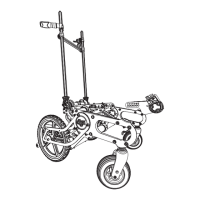
< 1. wheel locks
They are designed to prevent a stationary wheelchair from rolling and should NEVER be used as brakes to slow a
moving chair. The wheel locks can be foot engaged, by lifting the levers (C) to a stop. The locks are disengaged by
pressing down on the levers (C) until they hit a stop.
Safety note: Before disengaging the wheel locks, ensure the wheelchair is under control. Always
apply wheel locks when the chair is stationary. The wheel locks are less effective on worn tyres.
< 2. tip assist
The wheelchair can be tipped onto just its rear wheels, allowing it to traverse steps and curbs. To
perform this, press down on the wheel lock lever (C). Using the handlebars, rotate the wheelchair
about the rear wheel to lift the castors. Ensure you have full control of your chair when you perform this operation.
< 3. anti tip levers
These are designed to reduce the possibility of a tip. To increase wheelchair stability, move the anti-tip levers (B) to
their rearmost position. To disengage, push the levers (B) to their foremost position. Both anti-tip levers should be
used together to avoid potential instability.
< 4. tilt in space
The angle of the chair can be adjusted by compressing the tilt lever (A) and using the
handlebars to adjust the seat’s angle. It is advised that the wheel locks are engaged during this operation. The
wheelchair may be less stable when tilted.
< 5. swing away footrests
To swing under, pull the lower handle of the grey snap clip towards the front of the chair. The
bar it grips will be released, and the foot rests can swing away under the chair. To re-secure, bring
the footrest’s central bar to the clip, and push together firmly until they click into place. Beware of the potential
finger trap between the snap clip and the leg rest down tubes.
< everyday use
A
B
C
page 4
R


 To Next Page
 Loading...