< transfer to vehicle seat
Wheelchair occupants should transfer to vehicle seats wherever possible. An occupied wheelchair should be
adequately secured within a motor vehicle with the wheel locks on. Chunc wheelchairs should not be carried
behind a folding seat, such as the rear seat of a car, unless it is restrained by luggage straps. The wheelchair can be com-
pacted for storage as described in the every day use section of this manual.
< appropriately tie-down and forward facing
The Chunc One can be used as a forward facing seat in a suitably adapted motor vehicle and should be used in conjunc-
tion with a 4 point, tie down system with integrated lap belt and vehicle mounted shoulder belt. The Chunc One Adapt
Wheelbase withdrop hook interface can also be used in the same manner, however you should first check the suitability
of the surrogate seating system with your provider.
< tie-down points
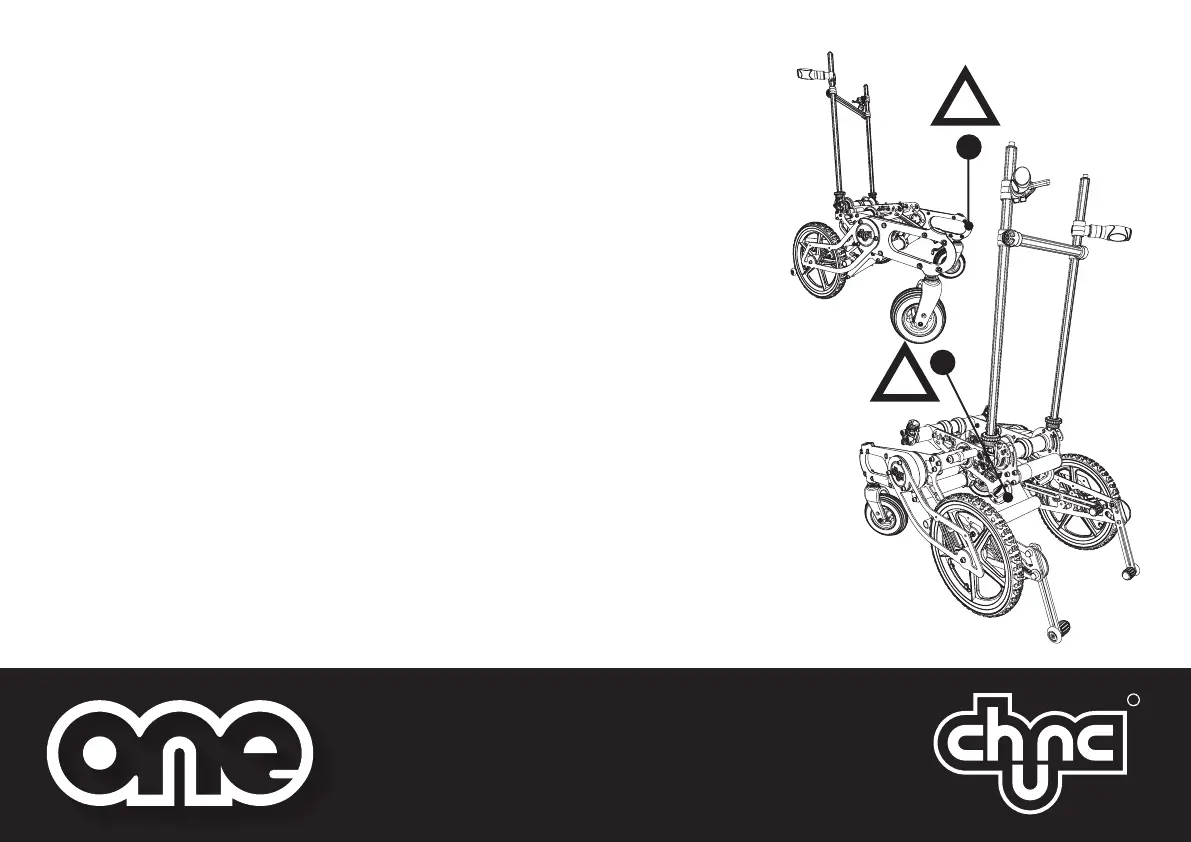
The Chunc One wheelchairs and Adapt wheelbase are equipped with 4 tie down points. The front tie down points (X)
can be found within both front chassis mouldings. The rear tie downs (X) can be located on the back of the upper frame
plate. A strap style fitting is recommended for use on the front tie down and a karabiner fitting is recommended for the
rear tie down. The tie down belt should have a clear path from the wheelchair to the rail anchor point and should not be
interfered with by any part of the vehicle, wheelchair, seating or accessory. If you spot any visible damage to any of the tie
down areas, do not transport a Chunc wheelchair in a motor vehicle without first contacting a Chunc representative.
< belt restraints
Postural supports and belts may be used in a moving vehicle in addition to the occupant belt restraint, but
should not be relied upon to replace occupant restraints that have been designed for this purpose. Restraints
should not be held away from the body by wheel- chair components or parts such as the wheelchair armrests or wheels.
Pelvic restraints should make full contact across the front of the body near the junction of the thigh and pelvis. Upper
torso belts should fit over the shoulder. Belt restraints should be adjusted as snugly as possible but with enough slack so
as not to interfere with the occupant’s breathing or create isolated pressure. Belt webbing should not be worn twisted in
a manner that significantly reduces the area of contact of the belt.
< safe transportation
!
!
x
x
page 7
R


 To Next Page
 Loading...