
 Need help?
Do you have a question about the Cisco MERAKI MV52 and is the answer not in the manual?
Guides for mounting the MV52 camera on walls or ceilings.
Details on using accessories for pole mounting the MV52 camera.
Instructions for mounting the MV52 camera adjacent to a junction box.
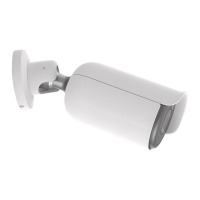
The Cisco Meraki MV52 is a sophisticated varifocal bullet camera, representing the second generation of smart cameras designed to simplify video surveillance deployments. Unlike traditional surveillance systems that often require complex and costly servers and video recorders, the MV52 integrates these functionalities, thereby removing common limitations associated with such setups. This design philosophy aims to make video surveillance more accessible and easier to manage for various environments.
The primary function of the MV52 is to provide high-quality video surveillance. As a varifocal camera, it offers adjustable focal lengths, allowing users to zoom in or out to capture a wider field of view or focus on specific details, depending on the surveillance needs. This flexibility makes it suitable for a diverse range of applications, from monitoring expansive outdoor areas to securing narrower corridors. The camera is equipped with advanced processing capabilities, enabling features like night mode, which enhances visibility in low-light conditions. Its smart camera designation implies integrated intelligence for video analytics, though specific analytics features are not detailed in this document. The MV52 is designed for both indoor and outdoor use, with robust construction to withstand various environmental conditions. It supports direct streaming functionality, generating unique domain names for secure access to its video feed. This eliminates the need for complex network configurations often associated with traditional CCTV systems.
The MV52 is designed for ease of use and integration into existing network infrastructures.
Powering and Connectivity: The camera features a 1000BASE-TX Ethernet port with 802.3at PoE+ (Power over Ethernet Plus) support, requiring 30W of power. This means it can receive both power and data over a single Ethernet cable from a compatible PoE switch or injector, simplifying installation and reducing cabling requirements. For situations where PoE is not available, a 12V DC input option is also provided. The camera's power requirement of 30W is dedicated entirely to itself, ensuring sufficient power for higher processing demands and IR (Infrared) load, crucial for its advanced features like night mode.
Network Configuration: Before physical installation, the MV52 needs to be configured within the Cisco Meraki Dashboard. This involves logging into the dashboard, identifying or creating a network, and adding the camera using its Meraki order number or serial number. The camera is expected to run on the latest 4.15 Beta Firmware, which can be upgraded via the dashboard. For network connectivity, the MV52 relies on DHCP for IP address assignment, meaning it must be added to a subnet that supports DHCP. Firewall settings must be configured to allow outgoing connections on specific ports and IP addresses for the camera to communicate with the dashboard. DNS configuration is also critical; each MV52 generates a unique domain name for secure direct streaming, which resolves to the camera's private IP address. On-site DNS servers need to whitelist *.devices.meraki.direct or configure conditional forwarders to ensure these domain requests are forwarded to Google public DNS.
Physical Installation: The MV52 offers multiple mounting options to suit different deployment scenarios:
The installation process involves placing a mounting template, drilling holes, passing the cable through a center hole, and connecting it. The camera's base is then secured to the surface using provided screws. A key feature of the installation is the ability to adjust the camera's field of view and angle using a ball joint mechanism. The top of the base can be rotated to affix the camera, and fine-tuning of the angle is performed before tightening the base clockwise to secure the position. Torx keys (M5 and M2.5, provided) are used to further tighten the joints for a stable installation. A protective lens cover is present out of the box and must be removed before installation.
Status Indication: The MV52 includes an LED indicator that communicates various status conditions through different colors and patterns:
The MV52 is designed with minimal on-site maintenance in mind, largely due to its server-less architecture and cloud-managed nature.
Firmware Updates: Firmware upgrades are managed through the Meraki Dashboard, ensuring the camera runs on the latest software with security patches and new features. The "Flashing Green" LED status indicates when an upgrade is in progress. This centralized management reduces the need for manual updates on individual devices.
Environmental Resilience: The camera is built to operate in various conditions. Its design ensures that the fixed power cable is not exposed to the outdoor environment after installation, contributing to its longevity and reliability.
Temperature Management: Due to its advanced night mode and processing capabilities, the MV52 can operate at a high external temperature, potentially reaching up to 50°C when night mode is active. This is a normal operational characteristic, and the camera is designed to handle such temperatures. It is recommended to mount the camera before plugging it in to allow for proper heat dissipation.
Troubleshooting: The LED indicator serves as a primary diagnostic tool for quick troubleshooting of common issues such as network connectivity problems (Solid Amber) or power supply issues (Solid Red). Further troubleshooting and FAQs are available through online documentation, accessible via a provided link.
In summary, the Cisco Meraki MV52 is a robust, intelligent, and user-friendly varifocal bullet camera that streamlines video surveillance by integrating server and recorder functionalities. Its cloud-managed nature, flexible power options, multiple mounting configurations, and clear status indicators contribute to an efficient deployment and maintenance experience, making it a suitable solution for modern surveillance needs.
 General
| Sensor Type | CMOS |
|---|---|
| Video Resolution | 2560 x 1920 |
| Max Frame Rate | 30 fps |
| Frame Rate | 30 fps |
| Video Compression | H.264 |
| Power over Ethernet (PoE) | 802.3af |
| Ingress Protection | IP67 |
| Night Vision | Yes |
| Wireless | 802.11ac |
| Ethernet | 10/100/1000 Mbps |
| Power | 12V DC |
| Operating Temperature | -10°C to 50°C |
| Mounting | Wall, ceiling |
| Cloud Management | Meraki Dashboard |
| Image Sensor | 1/2.8" |

 To Next Page