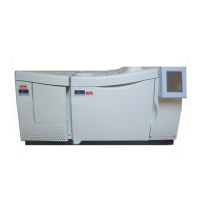
Clarus GC 500 Service Manual
1-9
Safety Practice
This chapter describes the general safety practices and precautions that must be observed when operating
the Clarus 500 GC.
This advice is intended to supplement, not supersede, the normal safety codes in the user's country. It is
also a supplement to the PerkinElmer standard Safety and Health Policy. The information provided does
not cover every safety procedure that should be practiced. Ultimately, maintenance of a safe laboratory
environment is the responsibility of the analyst and the analyst's organization.
Please consult all manuals supplied with the Clarus 500 GC and accessories before you start working with
the instrument. Carefully read the safety information in this chapter and in the other manuals supplied.
When setting up the instrument or performing analyses or maintenance procedures, strictly follow the
instructions provided. The Clarus 500 GC should be used in accordance with the instructions provided in
this manual. If used otherwise, the protection provided by the instrument may be impaired.
Generic Warnings
Before installing or operating the Clarus 500 GC, read the following information concerning hazards and
potential hazards. You should ensure that anyone involved with installation and/or operation of the Clarus
500 XL GC is knowledgeable in both general safety practices for the laboratory and safety practices for
the Clarus 500 GC. Get advice from your safety engineer, industrial hygienist, environmental engineer, or
safety manager before you install or use this instrument.
Heated Zones
Heated zones should be treated with caution, for example, injector caps and detectors. Avoid physical
contact with the injector caps. The detector cover may get hot, especially if flame ionization detectors are
operated at high temperatures. As a general rule, allow heated zones to cool before attempting to work in
the oven, injector, or detector areas.
CAUTION
THERMAL RUNAWAY PROTECTION: The Clarus 500 GC software
shuts down the instrument if any heated zone exceeds 470 °C. Should this
occur, the following error message is displayed:
INSTRUMENT SHUTDOWN
xxx THERM RUNAWAY where xxx is the heated zone
Call your PerkinElmer Representative.
Instrument shutdown also occurs if there is a PRT (Platinum Resistance
Thermometer) or MPU (Micro Processor Unit) failure. In these cases
the following error message is displayed:
INSTRUMENT SHUTDOWN
xxx PRT ERROR where xxx is the failed zone.
Call your PerkinElmer Representative.


 To Next Page
 Loading...