6° LOADING
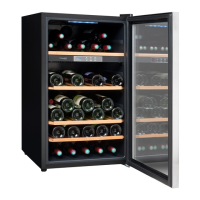
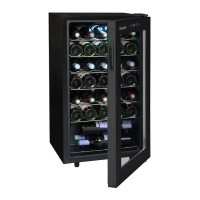
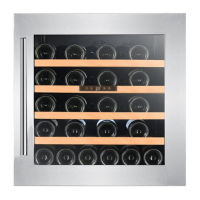
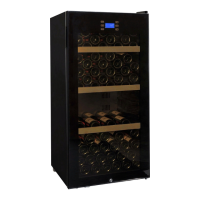
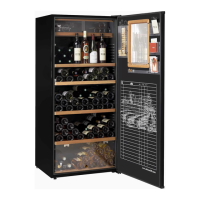
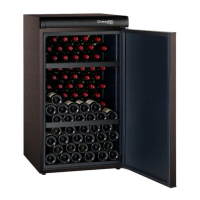
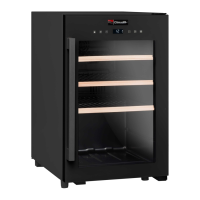
The maximum recommended filling quantities of bottles are guidelines and are not contractual; they provide a
quick estimate of the size of the appliance (similar to the litre capacities of refrigerators).
They correspond to tests conducted with a standard bottle: the standard “75 cl tradition Bordeaux” bottle -
standards apply the geographical origin of each bottle shape (Bordeaux, Burgundy, Provence, etc.) and a type
(traditional, heavy, light, flute, etc.), each with its own diameter and height.
In reality and in extreme cases, you could store more bottles by stacking the same type of bottle without using
shelves, but a “varied cellar” comprises a wide variety of bottles and the “practical” aspect of everyday cellar
management limits its capacity. You will therefore probably use a little less capacity than the recommended
maximum.
How to fill and maintain your wine cellar:
Types of bottle:
We see here 4 kinds of 75 cl wine bottles: Burgundy and Bordeaux wine bottles of different dimensions.
There are many others of all shapes and sizes.
You will note the storage differences depending on bottle heights, diameters and alternating position method.
For example, if a wine cellar is loaded only with Burgundy wine bottles, there will be approximately 30% fewer
bottles than the initial quantity calculated for Bordeaux bottles.
Criss-crossing types:
Top-to-bottom neck-to-neck:
Note the difference in
depth!
bodies:
Top-to-bottom neck between bottle
Increased loading.
Examples of serving temperatures: (to be observed when tasting, in order to avoid missing out on the
rich aromas of your wines!)
Opinions vary, and the ambient temperature too, but many people agree on the following:
Prestigious Bordeaux wines – Reds 16 – 17°C
Prestigious Burgundy wines – Reds 15 – 16°C
Prestigious dry white vintages 14 – 16°C
Light, young, fruity reds 11 – 12°C
Provence rosés, primeur wines 10 – 12°C
Dry whites and vin de pays reds 10 – 12°C
Vin de pays whites 8 – 10°C
Champagnes 7 – 8°C
Sweet wines 6°C


 To Next Page