
 Need help?
Do you have a question about the CNS Systems VDL 6000/FASS and is the answer not in the manual?
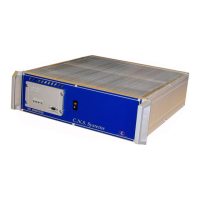
The VDL 6000/FASS (Fixed AIS Station System) is a robust and versatile device designed for maritime navigation and radio communication, specifically functioning as an Automatic Identification System (AIS) base station. This system is available in both Basic and Advanced configurations, ensuring adaptability to various operational requirements while consistently meeting the stringent standards of IEC 62320-1.
At its core, the VDL 6000/FASS serves as a critical component in maritime safety and traffic management by facilitating the exchange of AIS messages. It acts as a fixed AIS station, comprising radio transceivers (FAS) that enable the broadcasting and reception of vital information from vessels equipped with AIS transponders. This information typically includes vessel identification, position, course, speed, and other navigational data, contributing to enhanced situational awareness for maritime authorities and other vessels.
The system supports various operational modes to manage its functionality and status effectively. In "Normal" mode, all services are fully enabled, allowing for comprehensive AIS data processing and transmission. The "On/Standby" mode is a transitional state during start-up or shutdown, where the system is powered and performing initialisation or closing procedures, but not yet providing full services. Should a service or subunit not be working properly, the system can enter a "Degraded" mode, indicating partial functionality. A "Downgraded" mode signifies that some or all services are disabled, while the system remains operational. For diagnostic and configuration purposes, a "Maintenance" mode allows for changes to system settings. Finally, the "Off" mode indicates that the VDL 6000/FASS is inoperable and without power.
The VDL 6000/FASS operates in simplex mode for its base station functions, meaning it transmits and receives on the same frequency but not simultaneously. It integrates with a Monitor and Control Tool (MCT) for comprehensive management, allowing operators to oversee its performance and configure its settings. The system is designed to handle various input and output sentences, which are specific data formats used for communication within the AIS network and with external systems. These sentences cover a wide range of functions, including AIS device status, alarm state setting, interrogation requests, broadcast binary messages, general base station configuration, control of the AIS base station, data link management, broadcast rate configuration, AIS reception summaries, station identification, reception processing and output selection, transmit feedback reports, transmit slot assignment, transmit slot prohibit status, VHF data-link messages (both general and own-vessel), version information, and VDL signal information.
The Advanced configuration of the VDL 6000/FASS features redundant FAS units, enhancing reliability and ensuring continuous operation even if one unit experiences an issue. This redundancy is a key feature for critical maritime applications where uninterrupted service is paramount.
The VDL 6000/FASS is designed for straightforward installation and operation. Initial setup involves ensuring proper ground connection, connecting to the main power supply, and attaching GPS and VHF antenna cables. The ground connection is a mandatory safety procedure that must be completed before any other cables are connected. Once physically installed, the system's configuration is managed through the Monitor and Control Tool (MCT), which provides an interface for adjusting VDL reservations, messages, and other operational parameters in accordance with IEC 62320-1 guidelines.
Starting the system involves pushing the main power switch to the ON position and verifying that the FAS units are powered. For shutdown, in advanced configurations, the operator selects "shutdown" in the MCT and waits for a confirmation dialog before turning off the main power switch or using an IP relay if applicable. The system's various operational modes provide clear indications of its status and capabilities, allowing operators to quickly assess its health and performance. The ability to configure broadcast rates, manage data link slot allocations, and control the AIS base station through specific input sentences highlights the system's flexibility and control.
Maintenance of the VDL 6000/FASS is structured to ensure its long-term reliability and safe operation. A periodic planned maintenance schedule is recommended, with visual inspections performed annually. During these inspections, technicians are advised to check for blown fuses, remove dust from the air intake and outtake to prevent overheating, and verify that all external interface cables are properly attached.
The system includes two temperature-controlled fans, which should be checked annually for correct operation. If a fan fails, it can be replaced with a spare fan unit. The VDL 6000/FASS is designed with replaceable components to facilitate maintenance. Recommended spare parts for local storage include the VDL 6000/FAS (radio transceiver), the Controller (if part of the configuration), the Power Supply Unit, and spare fans. All parts can be ordered separately from CNS Systems, with identification facilitated by the part number found on the rear identification label.
Electrical fuses are a key maintenance consideration. The main power external interface is protected by a 5x20mm slow 6.3 A AC fuse. If this fuse blows, the underlying cause must be investigated before a replacement is installed. For specific part numbers (VDL 6070-NN-10), the system features automatic fuses located on the rear side. If an automatic fuse trips, it can be reset by pushing its knob back into the un-blown position, but again, the cause of the trip should be investigated first. For other part numbers (VDL 6070-NN-11, -12, -13... and VDL 6500-NN), glass tube fuses are used for DC protection. These are 5x20mm 5A fast glass tube fuses, with one spare fuse typically mounted on the rear side. As with other fuses, the reason for a blown fuse must be determined before replacement.
Overall, the VDL 6000/FASS is designed for ease of maintenance, with clear guidelines for routine checks and readily available spare parts, ensuring its continued operational effectiveness in demanding maritime environments.
 General
| Category | Car Navigation system |
|---|---|
| Manufacturer | CNS Systems |
| Model | VDL 6000/FASS |
| GPS | Yes |
| Bluetooth | Yes |
| USB | Yes |
| SD Card Slot | Yes |
| Video Playback | Yes |
| Audio Playback | Yes |
| Touchscreen | Yes |

 To Next Page