29
BICYCLE MAINTENANCE
PLEASE NOTE: THE MANUFACTURERS WARRANTY DOES NOT COVER THE WEAR OF PARTS.
Like all mechanical elements, the various components on your bicycle wear out with usage and time. Rather than guess whether a component is still safe
and useable, we prefer to show how to evaluate states of wear to decide at what moment each component needs to be replaced.
Component type How to check its state of wear Comments
Tyres The knobs in the middle of the tread should be at least
1mm high, and the tyre should not have any cuts or
cracks
If you replace the tyre with a wider one, it is possible
that the clearance between the pedal and the wheel
diminishes. Make sure that the front tyre doesn’t come
into contact with your foot when you turn the handlebars.
Inner tubes The air pressure should not diminish between rides.
Rims (in the case of broken rims) The sidewalls should not be worn. Check the rims wear
indicator.
Rim tape Should not be folded or ripped.
Brake rotor/disc Should not be warped, cracked or worn.
Friction elements, brake pads Refer to the wear indicators on the brake pads.
Cables and cable housing There should be no rust or fraying.
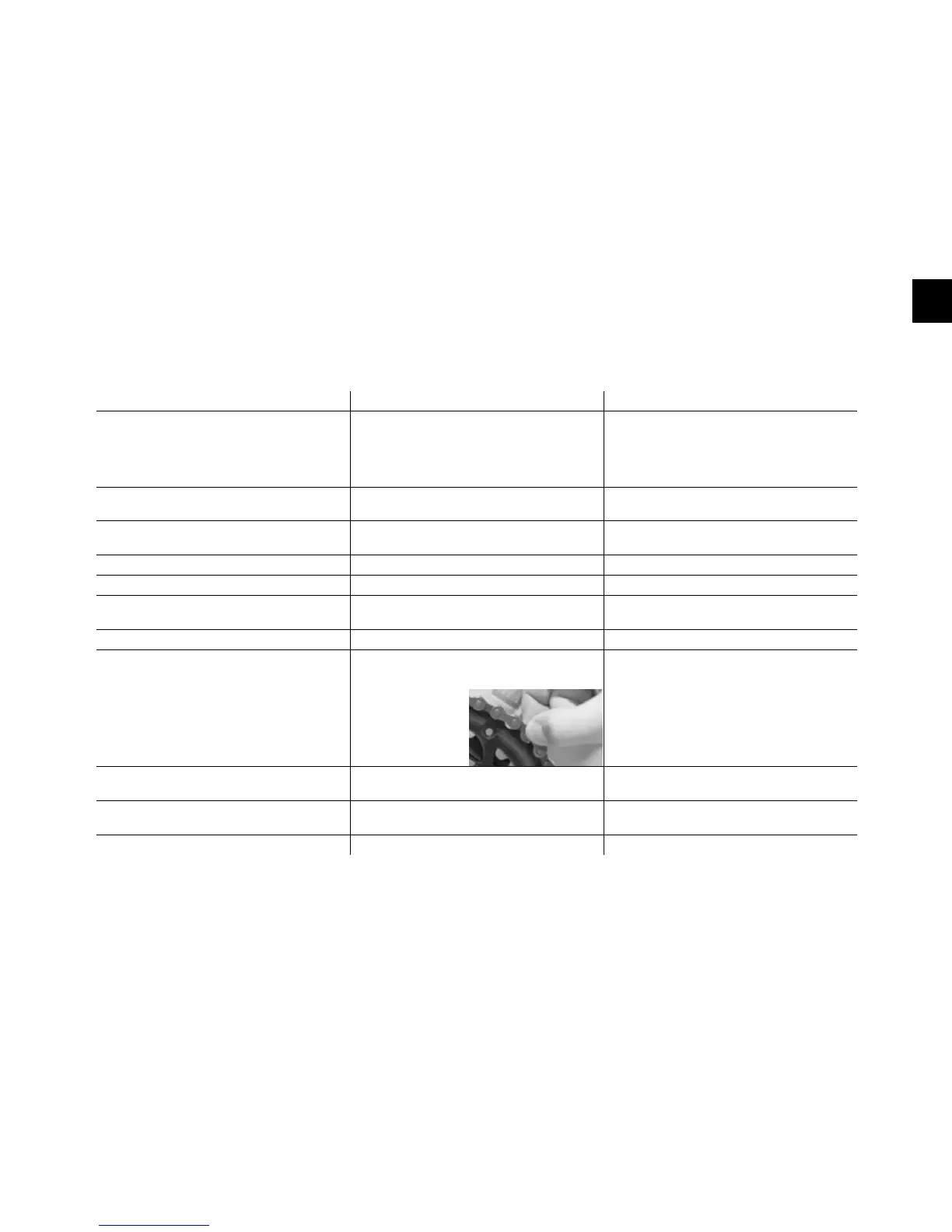
Chain and cassette With the chain on the big chainring, it should not be
possible to see the top of a tooth when you pull a link
away from the chainring
(fig.26).
Always replace the
chain and
the cassette at the
same time and
remember to regularly
lubricate the chain
Chainrings and jockey wheels The teeth should not be pointy or deformed. Replace after two chain/cassette changes.
Bearings: wheels, cranksets, swingarm, headset, pedals,
etc...
There should be no play, and should turn without any
stiffness.
Spacers and reducers There should be no play.
fig.26
EN



 To Next Page