EasyManua.ls Logo

Core HRV - User Manual

Core HRV
3 pages
Print Icon
To Next Page IconTo Next Page
Loading...
CORE HRV - General Product Information
1
© CORE Energy Recovery Solutions GmbH
For more information about our products please visit
us at www.core.life.
We will be pleased to assist you!
Introduction
Congratulations on purchasing your new CORE HRV - Heat
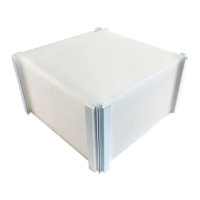
Recovery Ventilation. The exchanger is classed as an high
performing Counterflow Heat Exchanger with maximum
efficiency due to our unique and patented channel design.
The HRV is a component for energy recovery (recuperation)
for ventilation devices that are designed for living spaces. The
HRV is not designed for any other operating mode.
Notes on packaging and shipping
Even though an HRV appears to give the impression of being
robust and sturdy, applying heavy weight to pallets whilst
storing or transporting, especially in combination with high
temperatures, can lead to distortion and damage.
For shipment of larger quantities, it is recommended:
- Pallets with sufficient load capacity
- No stacking over 2,5 m high
- packaging with foil
- securing the HRV on the pallet with a lid (cardboard)
and straps made of polypropylene.
For shipment of single HRV, it is recommended:
- A box suitable for parcel shipping
- Appropriate stabilization as a transport safeguard
(e.g. very coarse (> 10 mm), non-dusting filling
material)
The weight of your ERV varies greatly depending on the type
and height. In the following table you will find the minimum
requirements we recommend for cardboard packaging for
each weight:
Weight
[kg]
Composition
Corrugation
<2
135TL / 100WS
/ 100WS
1-fluted
2
135TL / 100WS
/ 100WS
1-fluted
3
120TL / 100WS
/ 120TL
1-fluted
4
135TL / 100WS
/ 100WS
1-fluted
5
135TL / 100WS
/ 135TL
1-fluted
TL = test liner, KL = kraft liner, WS = Fluting
Additional note:
Please contact your cardboard supplier for the exact
composition of the cardboard.
Notes on storage
The temperatures during the entire life cycle of the HRV must
be within the limits of - 20 ° C to + 50 ° C. Otherwise there is
a risk of distortion, odour formation, the occurrence of leaks
or other kind of damage. All of this reduces the high
performance of your HRV.
Never stack multiple HRVs higher than 2.6 m and do not
load an HRV with more than 30 kg. Do not load an HRV
unevenly.
Always place an HRV on one of its closed surfaces.
If you replace an HRV during the winter time with an ERV,
please make sure to store the HRV in a dark, cool place and
take in account the maximum load mentioned above.
Notes for handling and installation
The HRV is completely ready for installation. Please do not
use any additional oils, sprays, talc or other lubricants for
installation in order to make the HRV easier to slide into the
socket.
Please do not let the HRV fall and avoid strong forces.
The strapping attached at the factory is important. It is not
packaging material and should NOT be removed. It is used
to facilitate installation and maintenance of the ERV. The
strapping is not designed to carry the weight of the ERV
during continuous transport!
Notes on usage
The HRV is designed for living areas.
Before an HRV can be put into operation in a ventilation
device, the corresponding device settings must be made.

Question and Answer IconNeed help?

Do you have a question about the Core HRV and is the answer not in the manual?

Summary

Introduction to CORE HRV

Packaging and Shipping Guidelines

Storage Recommendations for HRV

Handling and Installation Procedures

HRV Usage and Operation

Cleaning and Disinfection

Disposal of HRV Units

HRV Shelf Life and Performance

HRV Materials and Construction

Conformities, Certificates, and Standards

HRV Odour Management

Radon and Ventilation Systems

HRV Use in Special Environments

Quality Control Process

Overview

The CORE HRV (Heat Recovery Ventilation) is a high-performing counterflow heat exchanger designed for energy recovery (recuperation) in ventilation devices for living spaces. It features a unique and patented channel design to achieve maximum efficiency. The HRV is not intended for any other operating mode.

Function Description:

The CORE HRV facilitates the exchange of heat between incoming fresh air and outgoing stale air, recovering energy that would otherwise be lost. This process helps maintain a comfortable indoor temperature while ensuring a continuous supply of fresh air. The device is designed to prevent the accumulation of indoor pollutants, including radon, by constantly ventilating the living space.

Important Technical Specifications:

  • Temperature Range: The HRV must operate within a temperature range of -20°C to +50°C throughout its entire life cycle. Temperatures outside this range risk distortion, odor formation, leaks, or other damage, reducing the HRV's performance.
  • Material Composition: The HRV is primarily made of high-quality polystyrene, with a small portion of adhesive and sealing material. Some types may include a metal housing and/or aluminum side grilles, which do not affect performance. The plastics used are non-metabolizable and tested in compliance with hygiene standard VDI 6022 DIN ISO 846.
  • Packaging Requirements:
    • For larger quantities, use pallets with sufficient load capacity, avoid stacking over 2.5 m high, use foil packaging, and secure the HRV with a cardboard lid and polypropylene straps.
    • For single HRVs, use a suitable box for parcel shipping with appropriate stabilization (e.g., very coarse (> 10 mm), non-dusting filling material).
    • Minimum cardboard packaging requirements based on weight:
      • <2 kg: 135TL/100WS/100WS, 1-fluted, 4.0 mm width
      • 2 kg: 135TL/100WS/100WS, 1-fluted, 4.0 mm width
      • 3 kg: 120TL/100WS/120TL, 1-fluted, 4.0 mm width
      • 4 kg: 135TL/100WS/100WS, 1-fluted, 2.5 mm width
      • 5 kg: 135TL/100WS/135TL, 1-fluted, 2.5 mm width
      • (TL = test liner, KL = kraft liner, WS = Fluting)
  • Certifications and Standards:
    • Hygiene standard: DIN ISO 846
    • Fire standard: EN DIN 13501, ISO 11925 (Class E)
    • Quality management: DIN ISO 9001:2015
  • Lifespan: An HRV can operate for up to 10 years without interruption if handling, use, and storage instructions are followed. The 10-year operational life begins from the date of manufacture indicated on the type plate. Storage time is deducted from this specified operational life.

Usage Features:

  • Installation Readiness: The HRV is completely ready for installation. No additional oils, sprays, talc, or other lubricants should be used to facilitate sliding it into the socket.
  • Handling: Avoid dropping the HRV or applying strong forces. The factory-attached strapping is crucial for installation and maintenance and should NOT be removed. It is not designed for continuous transport.
  • Odor Management:
    • Freshly Produced Odor (Plastic Smell): This typically evaporates after a few days of ventilation. Set the ventilation device to the highest air exchange rate when unoccupied and repeat until the odor dissipates.
    • Odor Transmission: Odors from outside or other rooms (e.g., onions, garlic, smoke, tar) can be transmitted. These also evaporate after a few days of ventilation. Set the ventilation device to the highest air exchange rate when unoccupied. An extractor hood is recommended for kitchen smells.
    • Chemical Exposure: If strong cleaners, oils, or other chemicals (including biologically produced, biodegradable, and bio-based chemicals in quantities > 50 ml) are used during renovation, remove the HRV from the ventilation unit, switch off the unit, and ventilate the area extensively for several days to a week with open windows and doors. This prevents odor transfer and material damage. The HRV is not designed for areas with high chemical loads like workshops or production halls; it is only for office and living areas.
  • Radon Prevention: Using a ventilation system ensures fresh air intake, preventing the accumulation of radon, which can be a health hazard.
  • Coastal/Island Use: Due to increased salt content in sea air, deposits may occur, affecting performance. Annual cleaning with water is recommended.
  • Storage: Never stack multiple HRVs higher than 2.6 m and do not load an HRV with more than 30 kg. Load the HRV evenly and always place it on one of its closed surfaces. When replacing an HRV with an ERV during winter, store the HRV in a dark, cool place, observing maximum load limits.
  • Device Settings: Before operating the HRV in a ventilation device, ensure the corresponding device settings are made.

Maintenance Features:

  • Cleaning: A dirty HRV can be cleaned and disinfected. Detailed instructions for washing and disinfection are provided in the cleaning instructions.
  • Disposal: Visibly soiled HRVs that cannot be cleaned, damaged HRVs, or those being disposed of due to age should be placed in the household waste bin.
  • Quality Control: Every single CORE HRV exchanger undergoes a 100% quality control check before leaving the factory.

Core HRV Specifications

General IconGeneral
BrandCore
ModelHRV
CategoryFan
LanguageEnglish