Need help?
Do you have a question about the CORONA SX-B22A and is the answer not in the manual?
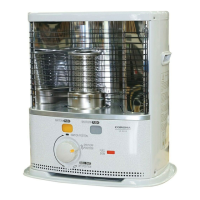
Identifies the main external parts and features of the heater, including the top plate, guard grille, and control panel.
Details the various internal and external components that make up the heater's structure, including the wick system and fuel tank.
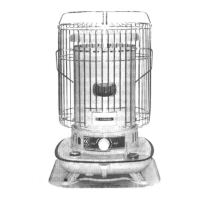
The Corona Portable Kerosene Heater, model SX-B22A, is a heating appliance designed for indoor use, providing warmth through the combustion of kerosene. Its design emphasizes ease of use, safety, and efficient heating.
The primary function of this device is to generate heat. It operates by drawing kerosene from a fuel tank to a wick, which is then ignited. The heat generated by the burning wick is radiated into the surrounding area, providing warmth. A burner chimney helps to optimize the combustion process and distribute heat effectively. The heater includes an ignition system, typically powered by batteries, to facilitate easy startup. A wick control dial allows users to adjust the flame height, thereby controlling the heating output. For safety, the heater is equipped with a shut-off button and an anti-shock automatic shut-off device that activates if the unit is tipped over. A fuel gauge indicates the kerosene level, ensuring users are aware of when to refuel.
Before initial use, it is crucial to read the safety warnings. The heater requires clean, fresh kerosene for operation. To fill the fuel tank, the tank room cover is opened, and the fuel tank is removed. A siphon pump should always be used to fill the tank, and care must be taken not to overfill it, as indicated by the fuel gauge. Once filled, the fuel tank is inverted and placed back into the heater, ensuring it is properly seated.
Assembling the heater involves removing all packing material from the burner and tank room. The burner chimney must be installed correctly, which can be verified by rotating it left and right a few times to ensure smooth movement. Batteries are installed in the holder, observing the correct polarity.
When lighting the heater for the first time or after cleaning the wick, it is important to wait at least 30 minutes after filling the tank to allow the wick to fully absorb the kerosene. To light the heater, the wick control dial is slowly turned to the "IGNITION POSITION" until the wick is at its maximum level. The ignition button is then gently pushed until it stops. After ignition, the button should return to its original position. If the ignition device is unusable, the heater can be ignited with a match by unfolding the guard grille, ensuring no un-burned match portions are left inside. After the wick is lighted, the burner chimney's position should be checked by rotating it.
During operation, the flame can be adjusted using the wick control dial. Turning the dial to the right raises the wick and increases the flame, while turning it to the left lowers the wick and decreases the flame. It is important to adjust the wick slowly and carefully to avoid sudden, dangerous flame increases. Operating the heater with the flame too high or too low can result in smoke and odor. The fuel sign on the front panel indicates when the fuel level is low, turning pink to prompt refueling.
To turn off the heater, the wick control dial is slowly and softly turned to the "SMELL SAVE OFF POSITION" until it stops. The heater will extinguish completely within one to three minutes. In an emergency, the anti-shock automatic shut-off device can be activated by pressing the quick distinction button, which rapidly lowers the wick and turns off the heater. However, this method is not recommended for regular use as it can produce smoke and a strong kerosene odor. If the heater is tipped over, the anti-shock device will automatically extinguish it. After any extinction, it is important to wait at least five minutes before relighting, as the hot burner chimney can produce smoke and odor if relit too soon.
Regular maintenance, particularly de-carboning the wick, is essential for optimal performance and extended wick life. De-carboning is recommended once a week during periods of heavy use. This process involves allowing the heater to run until all kerosene in the removable fuel tank and reservoir beneath the wick is consumed, causing the flame to go out due to lack of fuel. After the flame extinguishes, the fuel tank is refilled, and the heater is relit after the wick has soaked up some kerosene. This procedure helps remove tar or carbon buildup from the wick. If significant carbon remains, a small amount of kerosene can be placed in the fuel tank, and the heater run on high until the flame goes out. If the correct flame height cannot be achieved after de-carboning, the wick may need to be replaced.
The manual emphasizes that proper ventilation is necessary during operation, as combustion consumes indoor air. The heater should not be placed in high-traffic areas or where exposed to strong drafts. It must also be kept at least 1 meter away from combustible materials like furniture, curtains, and clothing. The top of the heater should not be used for cooking or boiling water, as this can affect its operation. When moving the heater, the handles on each side of the cabinet should be used. The heater should never be moved while in operation, and the ignition should not be operated if the heater is already running. Only clean, fresh kerosene should be used, and highly volatile fuels like petrol must be avoided due to fire risk. Kerosene should be stored in an approved, tightly capped container in a cool, dark place, never in glass containers. The heater should never be left unattended while in use, and it must be extinguished before going to sleep. If the heater is damaged or burning irregularly, it should not be used. The tank must be turned off before filling.
 General
| Model | SX-B22A |
|---|---|
| Category | Heater |
| Type | Kerosene Heater |
| Heating Power | 2.2 kW |
| Tank Capacity | 4.0 L |

 To Next Page