
 Need help?
Do you have a question about the CORRECT CRAFT Ski Nautique 206 and is the answer not in the manual?
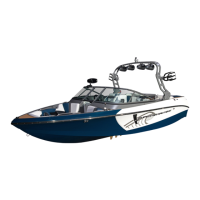
Detailed specifications including length, beam, draft, capacity, and weight of the boat.
Overview of the dashboard layout, including standard and optional gauges and switches.
Explanation of the keyless ignition system, its modes, and operation.
Details the three types of ignition codes: Master, Primary User, and Secondary User.
Instructions on how to change the primary user code for the keyless ignition system.
Steps to program or change the secondary user code for limited access.
Procedure to erase all user-defined codes from the keyless ignition system.
Description of the individual keys on the keypad and their functions.
Explains the operation of the Launch Control System (LCS) or ballast tank fill and drain pumps.
How to operate the boat's shower system.
Controls for the boat's heating system, with multiple speed settings.
How to activate and control courtesy and docking lights.
Operation of navigation and anchor lights for visibility and safety.
How to operate the bilge blower for ventilation.
Operation of the boat's horn as a momentary switch.
Overview of the switches located on the dash pod and their functions.
Specific mode for the bilge pump to conserve battery power when the boat is stored.
Legal requirements and operation of navigation lights.
Operation of the anchor light.
Information about the accessory power output and circuit breaker.
Proper use of the ventilation blower before engine ignition and at slow speeds.
Usage of 12-volt power outlets for electronics.
Indicates high engine temperature.
Explanation of the various gauges like Volt, Temp, Oil Pressure, Tachometer, Speedometer.
How to use the emergency cut-off switch and safety lanyard.
Operation of the throttle control, including detent positions and lockout ring.
Safety precautions related to the use of the boarding platform.
Information on the ski pylon's material, use, and warnings about extensions.
How to use the lifting rings for securing or transporting the boat.
Explanation of the capacity plate and its importance for safe loading.
Location and explanation of the boat's unique Hull Identification Number (HIN).
How to adjust the driver's seat for comfort.
Accessing storage under the love seat cushion.
Procedures and precautions for fueling the boat.
How to open and secure the walk-through windshield.
How to latch and lift the engine box for access.
Location and operation of the engine cooling water intake shut-off valve.
Use of the dash cooler for storage.
Information about the boat's stereo system and remote controls.
Accessing and using the stern trunk storage area.
How to manually release the trunk lid latch from the inside.
How to remove the stern seat bottom cushion.
Description of the bow section, including removable cushions and cooler access.
Steps to fold and reposition the optional flight control tower.
Options for ballast tanks (trick tank, wakeboard tank) and their purpose.
Operation of the Launch Control System (LCS) for filling and emptying ballast tanks.
Procedures for winterizing the Launch Control System.
How to use flight clips for securing wakeboards and safety precautions.
Steps to remove the boarding platform.
Location of the boat's battery.
How to operate the optional Correct Craft Cruise control system.
Overview of the standard Faria speedometers and tachometers.
A comprehensive checklist of items to verify before starting the engine.
Critical checks including gasoline lines, fuel tank, and hose connections.
Safety warnings regarding ventilation, engine box closure, and rotating parts.
Recommended gauge readings for oil pressure, temperature, and voltage during warm-up.
Troubleshooting steps for an engine that fails to start, including fuel pressure and flooding.
Procedure for starting a flooded engine and recommended dealer service.
Checks to perform after the initial engine run, including oil, leaks, and controls.
Detailed steps for breaking in the engine to ensure proper seating of piston rings.
General advice on engine operation, propeller loading, and cooling system maintenance.
Importance of maintaining and following the boat's warning and information labels.
Details the specific warning label for the tow pylon regarding its use and safety.
Warning label for fuel leaks, emphasizing regular inspection.
Caution regarding the water strainer, specifically the seal ring.
Warning against using alcohol-blended fuels due to potential component deterioration.
Warnings located on the transom regarding propellers, CO fumes, and overloading.
Danger label for boarding platform related to propellers and CO fumes.
Warning label for the engine, emphasizing inspection for leakage before operation.
Warning against operating the engine with the flame arrestor removed.
Warning regarding personal injury or property damage from flying objects related to flight clips.
Caution to secure the windshield in the closed position when the vessel is in motion.
Combined danger and warning labels on the dash pod related to propellers, CO, and fuel vapors.
Instructions for draining water and replacing the element in the fuel control cell.
General safety warnings for the side console, including operator seating and emergency shut-off.
Danger label for the flight control tower, detailing usage limits and safety precautions.
Image and details of the capacity plate for the Ski Nautique 206.
Guidelines on boating etiquette, right-of-way, and common courtesy on the water.
Strict prohibition against operating the boat under the influence of alcohol or controlled substances.
Rules for occupants to remain seated and avoid hazards like propellers.
Advice on looking carefully before turning and maintaining awareness of surroundings.
Factors affecting stopping ability and caution in low visibility areas.
Information on state regulations for water sports and the recommendation for a qualified observer.
Essential maintenance tips and warnings for keeping the boat in good condition.
Guidance on safely installing the propeller on the shaft, including keyway alignment.
Steps for installing the cotter pin to secure the propeller nut.
How to inspect and tighten the stuffing box to prevent excessive water leakage.
Procedure for performing an oil change using the quick oil drain system.
Importance and procedure for flushing the engine with fresh water after salt water use.
Guidelines for safe care, cleaning, and maintenance of the boat battery.
Procedures and considerations for storing the boat during winter.
Steps to check and remove water from the fuel system, especially during storage.
Advice on fuel tank levels for storage to minimize condensation and expansion.
Regular maintenance for the hull and deck's gelcoat finish, including washing and waxing.
How to care for teak surfaces, including cleaning and refinishing.
Cleaning and polishing advice for metal work on the boat.
Cleaning recommendations for windshield, mirrors, and gauge faces.
Tips for cleaning and maintaining the marine-grade vinyl, including stain removal.
Instructions for adjusting the tunable rudder foil for steering correction.
Selecting and installing the correct trailer hitch for the vehicle and boat.
Connecting the vehicle's wiring to the trailer lights.
Available locking devices for securing the boat.
A checklist of essential checks before trailering the boat.
Important checks to perform periodically during long trips while trailering.
Warranty coverage for the hull, deck, and stringer system.
Details on transferring the lifetime warranty to a second owner.
Warranty coverage for components and parts for five years.
List of conditions and circumstances not covered by the limited warranty.
Steps to follow when making a warranty claim for a defect.
Form and procedure for transferring the boat's warranty to a new owner.
Details of the customer referral program and associated benefits.
List of authorized service centers by region.
Benefits and inclusions of membership in the Nautique Owners Association.
Application form for joining the Nautique Owners Association, including upgrade options.
Form for ordering custom dash plaques with personalized sayings.
Continued definitions of boating terms and nautical terminology.
 General
| Weight | 3, 300 lbs |
|---|---|
| Engine | PCM EX 343 |
| Horsepower | 343 hp |
| Wakeboard Tower | Optional |
| Length | 20 ft 6 in |
| Beam | 91 in (2.31 m) |
| Fuel Capacity | 29 gal (110 L) |


 To Next Page