
 Need help?
Do you have a question about the Craftsman 315.215700 and is the answer not in the manual?
Details the terms and conditions for a one-year repair warranty for the sander.
Highlights critical safety warnings and explains safety symbols for user guidance.
Explains the meaning of various safety symbols (Danger, Warning, Caution, Note) used in the manual.
Details double insulation safety and notes on servicing by qualified technicians.
Covers fundamental safety practices for tool operation, work area, and personal preparedness.
Specifies essential personal protective equipment like safety glasses, dust masks, and hearing protection.
Outlines crucial safety practices for operating the sander, including securing work and proper shutdown.
Covers safe practices for using power cords and extension cords with the sander.
Lists general precautions for safe sander operation, covering environment, maintenance, and usage.
Provides safety guidelines related to material inspection, personal condition, parts, and saving instructions.
Details specific safety measures required when sanding painted surfaces, especially lead-based paint.
Lists the parts included with the oscillating sander and provides unpacking instructions.
Highlights critical warnings regarding missing parts and the importance of correct throat plate usage.
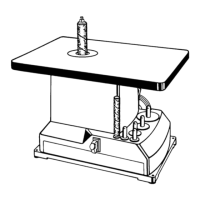
Describes the sander's design, oscillating motion, sanding capacities, motor, and dust collection features.
Details the dimensions of the sanding table and the operation of the ON/OFF switch with its locking key.
Explains the designated storage areas for throat plates, wrenches, sanding sleeves, and rubber spindles.
Specifies the required power supply voltage, frequency, and current for operating the sander.
Identifies key components of the oscillating sander as shown in Figure 3.
Outlines the procedures for starting, stopping, locking, and unlocking the sander using the switch key.
Emphasizes safety precautions, including unplugging the sander and removing the key before making adjustments.
Details the steps for removing sanding sleeves, including loosening the hex nut and handling tight nuts.
Provides step-by-step instructions for installing sanding sleeves, including washer and spindle selection.
Guides the selection of appropriate throat plates and spindle washers for different sanding sleeve sizes.
Details the procedure for installing 1/2 inch sanding sleeves, noting the absence of a rubber spindle.
Presents a chart for selecting the correct throat plate and spindle washer for various sanding sleeve diameters.
Specifies approved uses for the sander (wood, plastics) and warns against sanding metals.
Guides the selection of the correct size, grit, and type of sanding sleeve for optimal results.
Explains how to prepare the sander for operation by securing it to a workbench or mounting board.
Warns about the dangers of loose clothing, jewelry, and hair getting caught in moving parts.
Details the correct procedure for sanding, including starting the motor, feeding the workpiece, and direction of feed.
Explains the function and use of the dust exhaust port for dustless sanding operations.
Provides instructions on how to safely transport the sander, especially when used in portable applications.
Provides general guidelines for maintaining the sander, including part replacement, cleaning, and solvent use.
Warns about accelerated wear and damage when using the sander on abrasive materials like fiberglass or plaster.
Offers advice on selecting, using, and maintaining extension cords for safe and efficient operation.
Reminds users to wear safety goggles and dust masks during maintenance or when blowing dust.
Diagram showing an exploded view of the oscillating sander with numbered components.
Lists all parts of the sander with their corresponding part numbers, descriptions, and quantities.
 General
| Model Number | 315.215700 |
|---|---|
| Type | Random Orbit Sander |
| Power Source | Corded Electric |
| Voltage | 120V |
| Amperage | 2.0 Amps |
| No Load Speed | 12, 000 OPM |
| Orbit Diameter | 1/8 inch |
| Pad Size | 5 inch |
| Dust Collection | Yes |
| Weight | 3.5 lbs |


 To Next Page