EasyManua.ls Logo

CREST ULTRASONICS DMS-1218 - User Manual

Default Icon
195 pages
Print Icon
To Next Page IconTo Next Page
Loading...
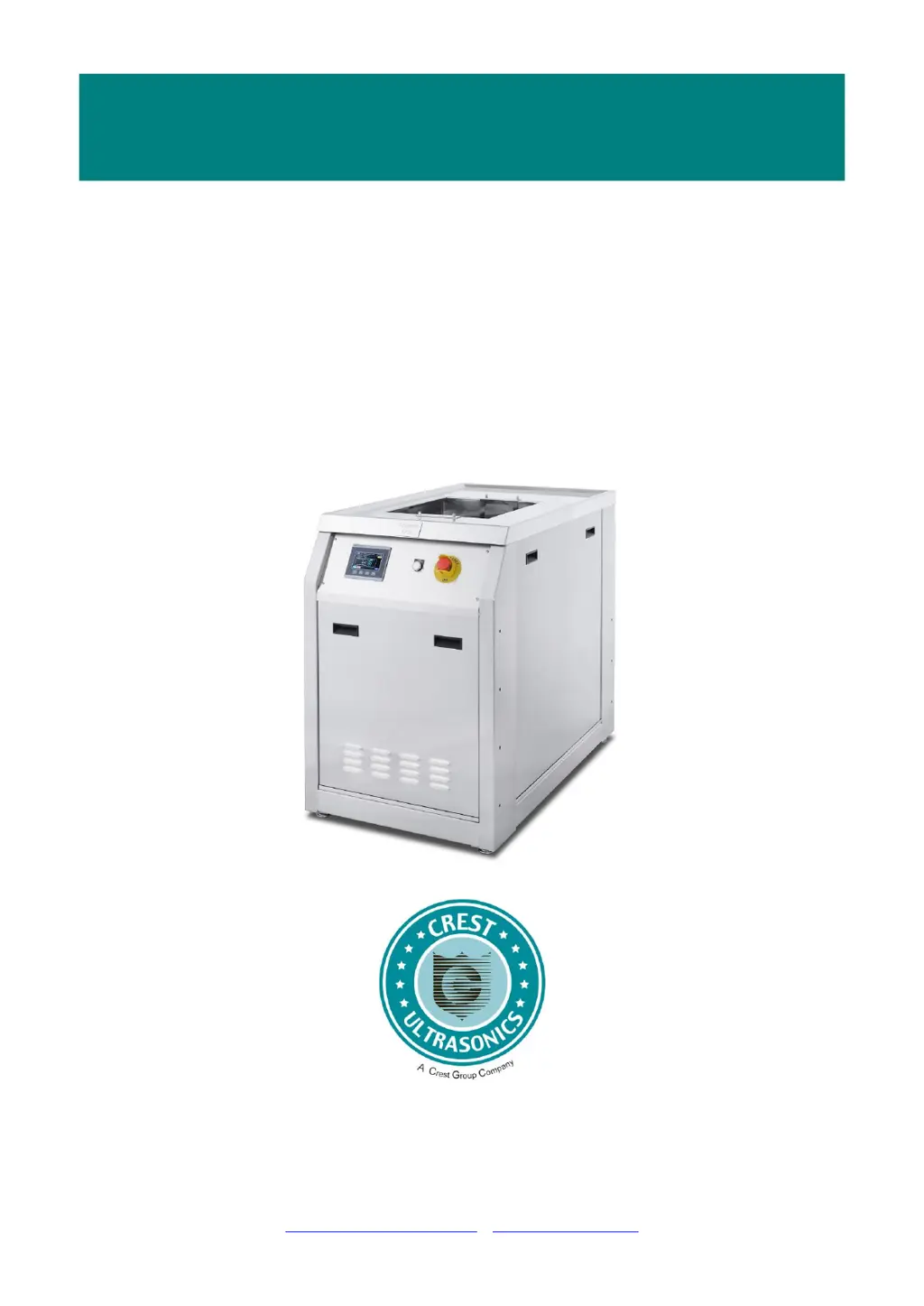
Instruction Manual
Digital Modular System
Rinse Module
Manual #: DMS-R-IM
Model #: DMS-1218/DMS-1826
Advanced Ceramics Technology (M) Sdn. Bhd
Megasonic Sweeping (M) Sdn. Bhd.
A Crest Group Inc. Company
|No 1536, Jalan Perusahaan, Kawasan Perusahaan Bukit Tengah, 13600 Perai, Penang, Malaysia.|
|Tel: +60(4)-507 0018 | Fax: +60(4)-507 0020 |
| www.crest-ultrasonics.com | www.act.crestm.com |

Table of Contents

Questions and Answers

Summary

Disclaimer

Manual Conventions

Explains text formatting conventions used in the manual for clarity and quick identification of special terms.

Danger, Warnings, Cautions, and Notes

Manual Code

Feedback on This Manual

Revision History

1. SAFETY

1.1 INTRODUCTION

Introduces the importance of safe operation and operator awareness of system hazards.

1.2 OPERATOR TRAINING

Specifies that personnel must be trained in electrical safety, machine operation, chemicals, and emergency procedures.

1.3 IMPORTANT SAFETY NOTIFICATIONS

Details critical safety warnings regarding flammable liquids, electrical hazards, and ventilation.

1.4 GENERAL PRECAUTION

Outlines general precautions for operating and servicing the system, listing potential hazards.

1.5 LIFTING HAZARDS

Addresses hazards associated with lifting heavy objects and recommends proper lifting aids and PPE.

1.6 HEAT;HOT SURFACE HAZARD

Warns about hot surfaces and equipment, recommending protective gloves and clothing.

1.7 CHEMICAL HAZARDS

Covers hazards related to cleaning liquids, emphasizing proper labeling, MSDS, and ventilation.

1.8 COMPRESSED AIR HAZARD

Details precautions and safe work practices for using compressed air systems.

1.9 MECHANICAL HAZARDS

Highlights pinch point, entanglement, and trip hazards, with precautions for safe operation.

1.10 ELECTRICAL HAZARDS

Covers hazards of hazardous voltage, emphasizing disconnect, lockout, and general electrical safety practices.

1.11 EMERGENCY OFF (EMO) CIRCUIT

Explains the function of the EMO circuit and procedures for its use and recovery.

1.12 SAFETY INTERLOCKS

Describes built-in safety features like low liquid level, door switches, and leak sensors.

1.13 LOCKOUT TAG OUT (LOTO)

Details the lockout/tagout procedures for safe servicing and maintenance.

2. SYSTEM OVERVIEW

2.1 INTRODUCTION

Introduces the DMS aqueous ultrasonic cleaning system and its designation.

2.2 SYSTEM SPECIFICATIONS

Lists detailed technical specifications for the DMS-1218 and DMS-1826 models.

3. INSTALLATION

3.1 CONSOLE UNCRATING AND PLACEMENT

Provides instructions for safely uncrating, inspecting, and placing the system console.

3.2 SYSTEM CLEARANCE

Specifies recommended clearance around the system for maintenance access and personnel safety.

3.3 HANDLING AND TRANSPORTING

Outlines precautions and procedures for safely handling and transporting the equipment.

3.4 FACILITIES REQUIREMENTS

Details the necessary facility connections and requirements for power, water, and exhaust.

3.5 PLUMBING INSTALLATION

Explains how to connect the system's water inlet, exhaust, and waste outlet lines.

3.6 ELECTRICAL INSTALLATION

Covers the procedures and safety precautions for electrical connections and installation.

4. OPERATION

4.1 INTRODUCTION

Introduces the operation section and basic system checks required before use.

4.2 IMPORTANT SAFETY NOTIFICATIONS

Lists critical safety warnings related to operation, including hot surfaces and handling.

4.3 POWER ON SYSTEM

Provides step-by-step instructions for safely powering on the system.

4.4 PANELVIEW 800 TERMINAL HMI SCREEN

Explains the functions and components of the PanelView 800 Human-Machine Interface screen.

4.5 LOGIN & LOGOUT

Describes the system's security levels and procedures for logging in and out.

4.6 CLEAN, DRAIN AND FILL WATER

Details the procedure for cleaning, draining, and filling the system tanks.

4.7 TEMPERATURE MONITORING AND SETTING

Explains how to monitor and adjust tank temperature settings and alarms.

4.8 OPERATING STATION (RINSE STATION)

Guides users on setting process parameters for the rinse station.

4.9 INFO AND ALARM MESSAGE

Covers how to view and interpret info and alarm messages displayed on the HMI.

4.10 RECOVER FROM OVER TEMPERATURE

Provides steps to recover the system from an over-temperature condition.

4.11 POWER OFF SYSTEM

Details the procedure for safely powering down the system.

4.12 EMERGENCY OFF

Explains the function and use of the Emergency OFF button and subsequent steps.

4.13 REMOTE AND LOCAL MODE

Describes the differences and procedures for operating in Local and Remote modes.

4.14 AUTO;MANUAL MODE

Explains how to switch between Auto and Manual operating modes.

4.15 DECOMMISSIONING PROCEDURE

Outlines the general steps for decommissioning and removing the equipment.

4.16 OPERATING PROCEDURE DURING ACCIDENT OR BREAKDOWN

Provides procedures for operators, maintenance, and engineers during accidents or breakdowns.

5. INTERPRETING HMI

5.1 MAIN MENU SCREEN

Describes the main menu screen layout and available buttons upon system power-on.

5.2 AUTO SCREEN

Details the Auto Screen functions, indicators, and how to select recipes.

5.3 ALARM HISTORY SCREEN

Explains the Alarm History screen, including alarm display and navigation.

5.4 RECIPE SETTING SCREEN

Guides on configuring process times like dwell time, sonic time, and power.

5.5 TEMPERATURE CONTROL SCREEN

Covers viewing current temperature and setting temperature control parameters.

5.6 MANUAL FUNCTION SCREEN

Explains how to manually control components like heater, pump, and sonic.

5.7 MISC. SCREEN

Allows viewing and configuring special functions and settings at the station.

5.8 AUTO OPTIONS SCREEN

Explains how to enable/disable components or features during Auto cycle operation.

5.9 DIGITAL I;O STATUS

Assists in monitoring PLC input/output status for troubleshooting purposes.

5.10 PROCESS DATA MONITOR

Monitors ultrasonic generator power, conductivity, resistivity, pH, and flowrate.

6. PREVENTIVE MAINTENANCE

6.1 INTRODUCTION

Emphasizes the importance of preventive maintenance for system reliability and lifespan.

6.2 IMPORTANT SAFETY NOTIFICATIONS

Lists critical safety warnings relevant to performing maintenance tasks.

6.3 BUDDY SYSTEM

Recommends implementing a buddy system for all maintenance work due to inherent hazards.

6.4 COMPONENTS MAINTENANCE

Refers to component manuals for specific maintenance procedures for system parts.

6.5 PM FOR TANK AND PLUMBING

Details the preventive maintenance schedule for tanks and plumbing components.

7. FUNDAMENTALS OF ULTRASONIC CLEANING

7.1 INTRODUCTION

Introduces ultrasonic cleaning and the role of transducers and cavitation.

7.1.1 FACTORS AFFECTING SCRUBBING ACTION

Discusses factors like degassing, electrical frequency, and chemical characteristics.

7.1.2 FUNDAMENTAL COMPONENTS

Describes the basic components of an ultrasonic cleaning system: generator, transducers, tanks, and solution.

8. TROUBLESHOOTING

8.1 CORRECTING PROBLEMS

Lists common problems, their possible causes, and recommended corrections for resolution.

9. APPENDIX

9.1 SYSTEM PASSWORD

Details the system's access levels, user numbers, and default passwords.

9.2 DATE AND TIME SETTING

Guides on how to change the system's date and time settings, requiring Engineer access.

9.3 ADMINISTRATION LOGIN

Explains the Administrator login and the availability of the 'Go To Config Screen' button.

9.4 TEMPERATURE PRESENT VALUE OFFSET SETTING

Describes how Administrators can set temperature offset and slope adjustment values.

9.5 MACHINE SETUP (DMS-1218)

Details the machine setup procedures for the DMS-1218 model, covering various parameters.

9.6 MACHINE SETUP (DMS-1826)

Details the machine setup procedures for the DMS-1826 model, covering various parameters.

9.7 RESISTIVITY METER SET POINT ADJUSTMENT (OPTIONAL ITEM)

Explains how to adjust set points for the resistivity meter.

9.8 RESISTIVITY METER SET POINT ADJUSTMENT (OPTIONAL ITEM)

Provides steps for adjusting set points on a Myron Resistivity Meter.

9.9 CONDUCTIVITY METER SET POINT ADJUSTMENT (OPTIONAL ITEM)

Guides on adjusting set points for the conductivity meter.

9.10 PH METER SET POINT ADJUSTMENT (OPTIONAL ITEM)

Explains how to adjust set points for the pH meter.

9.11 PH SENSOR INSTALLATION

Provides instructions for installing the pH sensor, including O-ring lubrication.

9.12 RESISTANCE TEMPERATURE DETECTOR (RTD) CALIBRATION PROCEDURE

Outlines the procedure for calibrating the RTD sensor.

10. ENVIRONMENTAL PROTECTION;DISPOSAL

10.1 DISPOSAL AND RECYCLING

Discusses governmental regulations for disposing of equipment and the benefits of recycling.

10.2 GOVERNMENTAL REGULATORY BODIES

Emphasizes consulting relevant regulatory bodies for waste handling and disposal rules.

CREST ULTRASONICS DMS-1218 Specifications

General IconGeneral
ModelDMS-1218
CategoryCleaning Equipment
Frequency40 kHz
HeaterYes
Heater Power1000 watts
TypeUltrasonic Cleaner
Voltage117 V
Dimensions24 x 16 x 16 inches (61 x 40.6 x 40.6 cm)