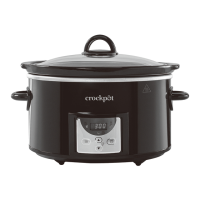
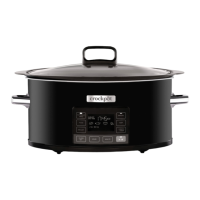
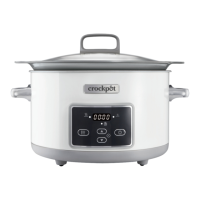
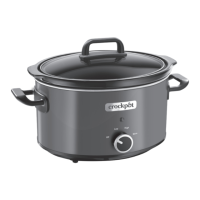
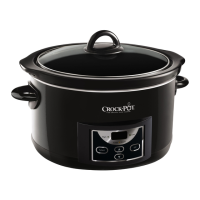
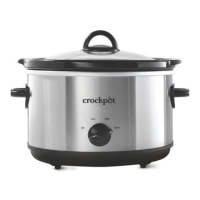
The Crock-Pot™ slow cooker is a versatile kitchen appliance designed for convenient and efficient cooking of a wide variety of dishes. It is particularly well-suited for preparing meals that benefit from long, slow cooking times, such as stews, roasts, and soups, allowing flavors to meld and ingredients to become tender. The appliance is designed for household countertop use, emphasizing ease of use and minimal supervision during the cooking process.
Function Description
The primary function of the Crock-Pot™ slow cooker is to cook food at low temperatures over an extended period. This method of cooking helps to tenderize tougher cuts of meat, develop rich flavors, and maintain moisture in dishes. The slow cooker typically features a heating base, a removable stoneware insert, and a lid. Users place ingredients into the stoneware, cover it with the lid, and select a temperature setting (usually Low or High). The heating base then gently heats the stoneware, cooking the food evenly. Some models may also include a "Warm" setting, which is intended solely for keeping already cooked food warm, not for cooking. The appliance is designed to operate without constant attention, making it ideal for busy individuals who want to prepare meals in advance.
Usage Features
The Crock-Pot™ slow cooker offers several features that enhance its usability and versatility:
- Temperature Settings: Most models come with at least two primary cooking settings: Low and High. The "Low" setting cooks food at a lower temperature for a longer duration, typically 7-12 hours, while the "High" setting cooks at a higher temperature for a shorter duration, usually 3-6 hours. This flexibility allows users to choose the cooking time that best fits their schedule and recipe requirements.
- Warm Setting: Many Crock-Pot™ slow cookers include a "Warm" setting. This feature is designed to keep food at a safe serving temperature after it has finished cooking, without continuing to cook it further. It is recommended not to use the "Warm" setting for more than 4 hours to maintain food quality and safety.
- Removable Stoneware: The stoneware insert is removable, which makes it easy to add ingredients, serve food, and clean the pot. The stoneware is also ovenproof and microwave safe, offering additional flexibility for reheating or finishing dishes. However, it should not be used on a gas or electric burner or under a broiler.
- Lid: The lid, typically made of tempered glass, allows users to monitor the cooking progress without lifting it, which helps to retain heat and moisture. Some models may feature locking lids, which are useful for transport but should not be locked during cooking.
- Recipe Versatility: The slow cooker is suitable for a wide range of recipes, including various meats (beef, pork, chicken, fish), vegetables, beans, pasta, rice, and soups. It excels at dishes that benefit from long simmering, such as chili, stews, and pulled pork.
- Cooking Guidelines: To ensure optimal results, it is recommended to fill the stoneware between 1/2 and 3/4 full. Overfilling can lead to spillover, while underfilling might affect cooking times and food quality. The lid should remain on during the first two hours of cooking to allow heat to build up efficiently.
- Ingredient Preparation: The manual provides helpful tips for preparing different types of ingredients. For instance, beans should be softened before combining with acidic foods, and dried red kidney beans should be boiled first. Vegetables generally cook slower than meat and should be placed near the sides or bottom of the stoneware. Fresh herbs are best added at the end of the cooking cycle to preserve their flavor, while dried herbs and spices can be added at the beginning. Milk, cream, and sour cream are best added during the last 15-30 minutes of cooking to prevent breakdown.
- Meat Preparation: For meat, trimming fat, rinsing, and patting dry are recommended. Browning meat in a separate skillet before slow cooking can enhance flavor and allow fat to be drained. Meat should be positioned to rest in the stoneware without touching the lid. The size and type of meat, as well as bone structure, can influence cooking times, with leaner meats cooking faster and bone-in meats requiring longer.
- Frozen Ingredients: When cooking frozen meats, at least 1 cup of warm liquid should be added to prevent sudden temperature changes. This typically adds 4 hours on Low or 2 hours on High to the cooking time.
- Liquid Management: Ensuring an adequate amount of liquid is crucial to prevent food from drying or burning. The stoneware should always be filled a minimum of 1/2 full and a maximum of 3/4 full.
Maintenance Features
Proper maintenance ensures the longevity and safe operation of the Crock-Pot™ slow cooker:
- Cleaning: Before cleaning, the slow cooker must be turned off, unplugged, and allowed to cool completely. The lid and stoneware are dishwasher safe or can be washed with hot, soapy water. Abrasive cleaning compounds or scouring pads should not be used, as they can damage the surfaces. For water spots or stains, a non-abrasive cleaner or vinegar can be used.
- Heating Base Cleaning: The outside of the heating base can be cleaned with a soft cloth and warm, soapy water, then wiped dry. It is crucial never to immerse the heating base in water or any other liquid to prevent electric shock and damage.
- Temperature Changes: To prevent damage, the stoneware and lid should not be subjected to sudden temperature changes. Avoid washing them with cold water when they are hot. Similarly, avoid adding refrigerated foods or cold liquids into a heated pot.
- Lid Inspection: The tempered glass lid should always be inspected for chips, cracks, or any other damage before use. A damaged lid should not be used, as it may shatter during operation.
- Cord and Plug Care: The power cord should be regularly inspected for damage. If the cord or plug is damaged, or if the appliance malfunctions, it should not be operated. Any repair or replacement of a damaged cord should be done by the manufacturer or an authorized service center. The appliance uses a polarized plug, designed to fit into an outlet only one way to reduce the risk of electric shock. If the plug does not fit, it should be reversed. If it still doesn't fit or if the outlet feels warm, a qualified electrician should be contacted.
- No User-Serviceable Parts: The appliance contains no user-serviceable parts beyond the described cleaning and maintenance. Any servicing beyond these instructions should be performed by an Authorized Service Representative to maintain warranty validity and ensure safety.
- Storage: When not in use, the slow cooker should be unplugged, cleaned, and allowed to cool before storing.
- Placement: The slow cooker should always be used on a dry, stable, and level countertop surface. It should be kept at least 6 inches (152 mm) clear from walls and on all sides to allow for proper ventilation. A hot pad or trivet is recommended under the slow cooker, especially on finished wood tables, to prevent heat damage to surfaces.
- Initial Use: During the initial use, some slight smoke and/or odor may be detected. This is normal for many heating appliances and typically dissipates after a few uses.

 Need help?
 General

 To Next Page