23
• When mixing liquids (especially hot liquids) use a tall container or make small quantities at a time to
reduce spillage, splattering and possibility of injury from burning.
• When puréeing soups, use a medium speed to rstly break up the large, already tender ingredients,
then gradually increase the speed to high for a smooth nish.
WARNINGS:
• Be careful never to remove the blending shaft from the liquid while in operation as it will splatter.
Do not let the hand blender stand in a hot pot over heat while not in use.
• Do not attempt to blend fruit pits, bones or other hard materials as these are liable to damage the
blade.
• Do not overll chosen mixing containers. The level of mixture will rise when blending and can
overow.
• Do not put ngers near the blades. To dislodge food, unplug the Hand Blender from the electrical
supply rst.
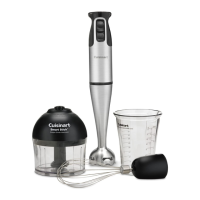
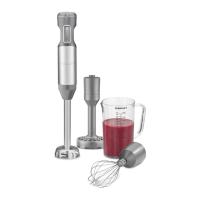
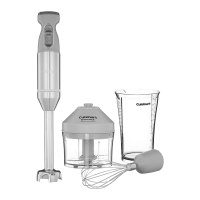
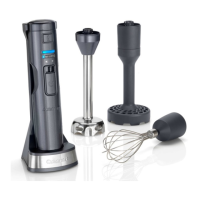
Whisking attachment
• Begin whisking on Speed 1, gradually increasing the speed to avoid splatters.
• When beating egg whites use a very clean metal or glass bowl, never plastic. Plastic can contain
hidden oils and fats that can ruin the delicate egg white foam. To help stabilize the egg whites, add
1/8 teaspoon of cream of tartar per egg white prior to beating them. (If using a copper bowl omit
the cream of tartar.) Beat the egg whites until desired peaks form.
• Beating egg whites for too long causes them to dry out and become less stable.
• When adding sugar to beaten egg whites, add it slowly when soft peaks just begin to form and then
continue beating to form desired peaks.
• When beating heavy cream, if possible and time allows, use a chilled bowl and chill the whisk
attachment. The best shaped bowl for whipping cream is one that is deep with a rounded bottom
to minimize any splatter.
• The cream should come out of the fridge just before whipping. Whipped cream may be used at
either soft or rm peaks depending on preference. It may be avoured as desired. For best results,
whip cream just before using.
Caution: Do not immerse the whisk attachment gearbox in water or any other liquid.
WARNING: Keep hands, hair, clothing, as well as spatulas and other utensils away from the whisk
attachment during operation to reduce risk of injury to persons, and/or damage to the appliance. A
spatula may be used, but only when the unit is not operating.
Potato masher attachment
• Put potatoes or other food to be mashed in a large bowl or pot. Place the head of the potato masher
into the food. Slightly raise and lower the masher as you move it through the food until it reaches
the texture you require.
N.B.The potato masher is plastic so will not damage non-stick surfaces.
• When using the masher, it is best to use low speed for potatoes, which are starchy and should not
be overworked (the less you process potatoes the better).
• Mashing each section, by using just 1 or 2 up and down motions works best. The high speed can be
used for other root vegetables like turnips and sweet potatoes.
• Mash ingredients when they are hot - they will mash better and more easily.
• Mash vegetables rst, then add in the other ingredients, such as milk, butter and seasonings.


 To Next Page
 Loading...