PRE-RIDE CHECKLIST
STEERING OPERATING PROCEDURES
cycleboard.com
BEFORE RIDING, ALWAYS MAKE SURE TO THOROUGHLY CHECK YOUR CYCLEBOARD AND ENSURE IT IS SAFE TO OPERATE.
BRAKE
Check the brakes for proper function. When you squeeze the
lever, the brake should provide positive braking action.
FRAME
Check for cracks or broken connections. Although cracked or
broken frames are rare, it is possible for an aggressive rider to
run into a curb or wall and wreck, bend or break a frame. Get
into the habit of inspecting your CycleBoard on a regular basis.
WHEELS AND TIRES
Periodically inspect the tires for excess wear. Confirm front tires
are inflated to 30-35 PSI and rear tire is inflated to 25-30 PSI for
best battery range. Always check to ensure wheel bolts are
tight. Note: Front tires with uneven wear can cause dangerous
conditions like speed wobble and should be replaced with new
tires.
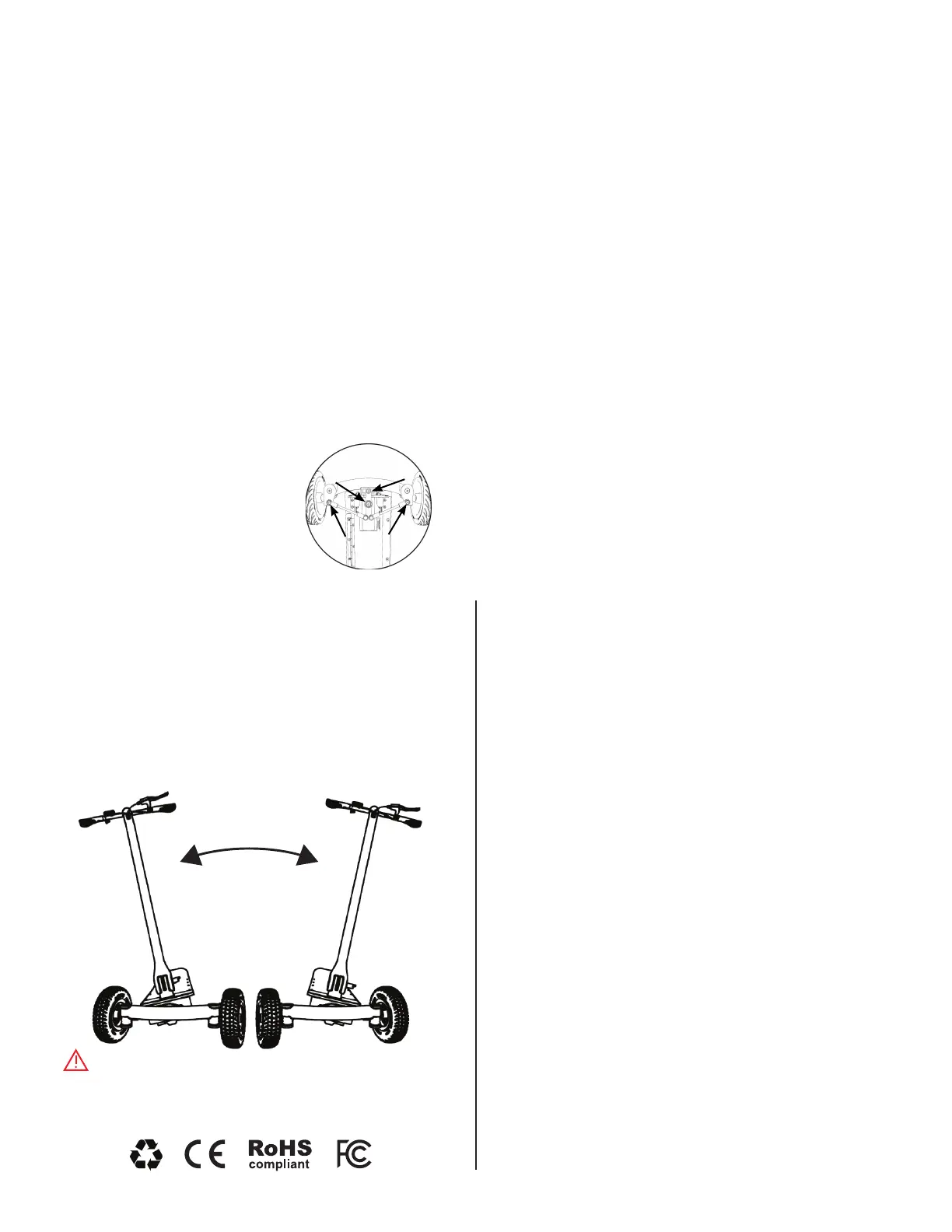
STEERING
ALWAYS ensure the 4 underside bolts in the front steering
mechanism are tight before riding. Add Loctite if they become
loose.
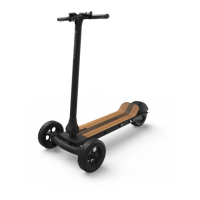
The CycleBoard is a revolutionary stand up electric vehicle
that uses an intuitive "Lean-to-Turn" steering design.
It DOES NOT steer like a traditional 2-wheel scooter or bicycle
by turning the handlebars. The handlebars DO NOT turn.
Steering the CycleBoard is achieved by leaning your body from
side to side (similar to a skateboard). This leaning motion will
cause the riding deck and handle to pivot left or right as well as
cause the wheels to steer in the direction you are leaning. The
front wheels turn in the direction you are leaning and the rear
wheel leans in the direction you are leaning.
WARNING: RIDING THE CYCLEBOARD MAY BE A
DANGEROUS ACTIVITY AND MAY RESULT IN SERIOUS
INJURY OR DEATH, EVEN WHEN USED WITH PROPER
SAFETY PRECAUTIONS
HARDWARE
Check all parts such as nuts, bolts, cables, fasteners, etc. to
ensure they are secure and assembled correctly before riding.
If the CycleBoard is damaged or not functioning properly, do
not ride.
LAWS AND REGULATIONS
Always check and obey any local laws or regulations.
INSURANCE
Do not assume that your existing insurance policies necessarily
provide coverage for use of this product. Check with your
insurance company for information regarding insurance.
USAGE
Make sure you are physically and mentally ready and capable
to ride your CycleBoard. This is a motorized three-wheeled
product and riders must familiarize themselves with the
characteristics and proper use of the product. It is not “just like
a bicycle,” it is not “just like a scooter,” and it is not “just like a
tricycle.” The motor drives the rear wheel and riders must learn,
practice and understand the proper use of this product to best,
and safely, enjoy it. Particularly riders must learn and master
the steering function of the CycleBoard, see more on this in the
“Steering” Section of this guide.
RIDE AT YOUR OWN RISK AND USE COMMON SENSE
YOUR FIRST CYCLEBOARD RIDE: For your first CycleBoard ride,
we recommend you go to an open area away from cars,
pedestrians, cyclists, and potential hazards in order to practice
and familiarize yourself with the CycleBoard controls and
steering. Do this until you are able to safely operate your
CycleBoard. Be sure to learn how to steer, adjust speed and
brake before you attempt to ride in busy places.
STARTING YOUR CYCLEBOARD: Stand with both feet on the
CycleBoard, push and hold the throttle power button until it
turns on. ALWAYS start in Speed Mode 1. Keep one foot on the
riding deck and push off on the ground with the other foot. The
CycleBoard must be moving at 2-3 mph for the motor to
engage. Slowly pull the throttle trigger to accelerate while
keeping both hands on the handlebars. Do Not accelerate past
Speed Mode 1 until you have mastered the steering and other
functions of the CycleBoard.
STOPPING YOUR CYCLEBOARD: Release the throttle and apply
the hand brake until the vehicle comes to a complete stop.
Avoid braking too abruptly to prevent skidding.
DO NOT attempt to turn the handlebars while riding as this is
not how the CycleBoard is designed to steer and may be
dangerous .
DO NOT exceed 10 mph or ride down hills until you have
practiced riding the CycleBoard for at least 8 hours of cumula-
tive riding time and have mastered the steering function.
RIDE AT YOUR OWN RISK AND USE COMMON SENSE
Page 21
PRE-RIDE CHECKLIST
BRAKE
Check the brakes for proper function. When you squeeze the
lever, the brake should provide positive braking action.
FRAME
Check for cracks or broken connections. Although cracked or
broken frames are rare, it is possible for an aggressive rider to
run into a curb or wall and wreck, bend or break a frame. Get into
the habit of inspecting your CycleBoard on a regular basis.
WHEELS AND TIRES
Periodically inspect the tires for excess wear.
ŅĹüĜųĵƋĜų埱ųå
ŞųŅŞåųĬƼĜĹüĬ±ƋåÚ
. Always check to ensure wheel bolts are tight.
Note: Front tires with uneven wear can cause dangerous
conditions like speed wobble and should be replaced with new
tires.
STEERING
ALWAYS ensure the 4 underside bolts in the
front steering mechanism are tight before
riding. Add Loctite if they become loose.
HARDWARE
Check all parts such as nuts, bolts, cables, fasteners, etc. to
ensure they are secure and assembled correctly before riding. If
the CycleBoard is damaged or not functioning properly, do not
ride.
LAWS AND REGULATIONS
Always check and obey any local laws or regulations.
INSURANCE
Do not assume that your existing insurance policies necessarily
provide coverage for use of this product. Check with your
insurance company for information regarding insurance.
USAGE
Make sure you are physically and mentally ready and capable to
ride your CycleBoard. This is a motorized three-wheeled product
and riders must familiarize themselves with the characteristics
BEFORE RIDING, ALWAYS MAKE SURE TO THOROUGHLY CHECK YOUR CYCLEBOARD AND ENSURE IT IS SAFE TO OPERATE.


 To Previous Page
 Loading...