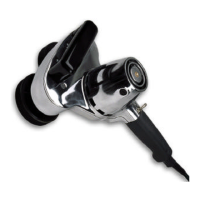
2) EXTENSION CORD (Available directly from Cyclo Toolmakers)
With the Model 5 & 5C Orbital Polisher/Sander, use only three-wire extension cords that have three-prong grounding type plugs
and three-pole receptacles that accept the tool's plug. Replace or repair damaged cords. When using this tool at a distance from the
power source, a three conductor grounding type extension cord of ADEQUATE SIZE must be used for safety and to prevent the loss
of power and overheating.
For the 115 Volt, 2.0 Amp tool, the figures on page 3 indicate the size of wire which must be within the indicated length of
extension cord.
AMPERE 2.0
Extension Cord Length Size of Wire in Cord
25 feet 18
50 feet 18
100 feet 18
150 feet 16
200 feet 16
3) MOTOR
Your Cyclo Orbital Polisher/Sander is powered with a sturdy universal motor. Be certain your power supply agrees with that shown
on the name plate. A.C. means alternating current. Variance in your voltage by more than 10% will mean loss of power and
overheating. This tool is factory tested. If it will not operate, check electric supply for blown fuses, check plug and electrical
receptacle for proper contact.
ADDITIONAL SAFETY INSTRUCTIONS
1) Keep Work Area Clean. Cluttered areas and benches invite injuries.
2) Consider Work Area Environment. Don't use power tools in damp or wet locations. Keep work area well lit. Do not use the
tool in the presence of flammable liquids or gases.
3) Guard Against Electrical Shock. Prevent body contact with grounded surfaces. For example: pipes, radiators, ranges.
4) Keep Children Away. Do not let visitors contact tool or extension cord. All visitors should be kept away from work area.
5) Store Idle Tools. When not in use, tools should be stored in dry, and high or locked-up places - out of reach of children.
6) Do not Force Tool. It will do the job better and safer at the rate for which it was intended.
7) Use the Right Tool. Do not force small tool or attachment to do the job of a heavy-duty tool.
8) Dress Properly. Do not wear loose clothing or jewelry. They can be caught in moving parts. Rubber gloves and non-skid
footwear are recommended. Wear protective hair covering to contain long hair.
9) Use Safety Glasses. Also use face or dust masks if operation is dusty.
10) Do not Abuse Cord. Never carry tool by cord or yank it to disconnect from receptacle. Keep cord away from heat, oil and
sharp edges.
11) Secure Work. Use clamps or a vise to hold work. It is safer than using your hands and it frees both hands to operate tool.
12) Do not Overreach. Keep proper footing and balance at all times.
4


 To Next Page
 Loading...