EasyManua.ls Logo

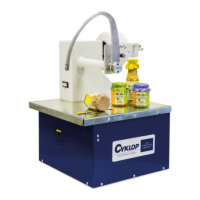
CYKLOP EMT-Axro - User Manual

CYKLOP EMT-Axro
39 pages
Print Icon
To Next Page IconTo Next Page
Loading...
Ope
ration Manual Axro binder Pa
ge 1
Contents
Contents...................................................................................................................................... 1
1. Introduction ...................................................................................................................... 3
1.1. General...................................................................................................................................... 3
1.2. Versions .................................................................................................................................... 4
2. Safety precautions ............................................................................................................ 6
2.1. Explanation of the pictograms .................................................................................................. 6
2.2. General warnings ...................................................................................................................... 6
2.3. Using the machine .................................................................................................................... 7
2.4. Cleaning and maintenance ........................................................................................................ 7
2.5. Noise level ................................................................................................................................ 8
3. Transport, installation, dismantling..................................................................................
9
3.1. Transport................................................................................................................................... 9
3.2. Installing the machine............................................................................................................... 9
3.3. Connecting the machine to the power supply ........................................................................... 9
3.4. Dismantling............................................................................................................................... 9
4. Description of the machine ............................................................................................ 10
4.1. Safety warnings....................................................................................................................... 10
4.2. Brief description of the machine's principle ........................................................................... 10
4.3. Main parts ............................................................................................................................... 11
Description ............................................................................................................................... 12
4.4. Operating controls................................................................................................................... 13
4.4.1. Mains switch........................................................................................................................... 13
4.4.2. Start switch ............................................................................................................................. 13
4.4.3. Safety cut-out.......................................................................................................................... 14
5. Using the machine..........................................................................................................
15
5.1. Safety warnings....................................................................................................................... 15
5.2. Switching on the power supply............................................................................................... 15
5.3. Fitting and threading the elastic cord...................................................................................... 16
5.4. Adjusting the cord tension ...................................................................................................... 16
5.5. Using the machine .................................................................................................................. 17
5.6. Starting points and switching options ..................................................................................... 18
5.6.1. Pre-switching .......................................................................................................................... 18
5.6.2. Post-switching......................................................................................................................... 18
5.6.3. Pulse-switching....................................................................................................................... 18
5.6.4. Changing the switching option. .............................................................................................. 18
5.7. Emergency stop....................................................................................................................... 18
5.8. Stopping the machine and switching off the power supply .................................................... 18
6. Cleaning and simple maintenance.................................................................................. 19
6.1. Cleaning the interior of the machine....................................................................................... 19
6.2. Weekly maintenance............................................................................................................... 20
7. Maintenance ................................................................................................................... 21
7.1. Safety warnings....................................................................................................................... 21
7.2. Turning the machine by hand ................................................................................................. 21
7.3. Basic settings .......................................................................................................................... 22
7.3.1. Alignment at the reference point............................................................................................. 22
7.3.2. Checking the setting of the rotor............................................................................................. 22
For Parts & Service 1-877-862-6699

WWW.TRADITIONALTOOL.COM

Table of Contents

Questions and Answers

  • W
    wreyesAug 5, 2025
    What to do if the cord flies off the product or out of the CYKLOP Binding Machine?
    • W
      William MillerAug 5, 2025
      If the cord flies off the product or out of the CYKLOP Binding Machine, use a 6 mm Allen key to turn the machine by hand and check if the cord is clamped properly by the rotor at the right time. Also, pull on the clamped cord to ensure it cannot be easily drawn out of the rotor and stator. Check that the rotor does not release the cord too early; the cord should only be released from the clamping mechanism once the tying unit is completely closed and the releaser moves forward.
  • D
    davidmorrisAug 9, 2025
    Why does the needle stop mid-way or irregularly on my CYKLOP EMT-Axro?
    • D
      Dr. Ann ChaseAug 9, 2025
      If the needle on your CYKLOP Binding Machine stops mid-way or irregularly, try activating the start switch again. If the issue persists, check the switching cam next to the conical gear wheels to ensure it's not loose. Additionally, inspect the adjustment of the motor brake, blow the brake air gap clean, and adjust it to a gap of 0.2 mm. Also, verify the needle's safety clutch to ensure the force isn't set too low. Adjust the safety clutch force by turning the two socket screws in the needle's pivoting point anticlockwise as far as they go (against the disc), and then clockwise through one turn. The top plate may be fitted incorrectly.
  • B
    Brenda MclaughlinAug 14, 2025
    What to do if the cord is not released from the tying unit of the CYKLOP EMT-Axro Binding Machine?
    • J
      Justin RobinsonAug 14, 2025
      If the cord is not released from the tying unit of your CYKLOP Binding Machine, try increasing the cord tension. If the problem persists, replace the cutting blade. Additionally, reduce the pressure on the tying unit and check that the tying jaw hinges smoothly; if not, adjust the locking nut.
  • B
    blackwelljamesAug 19, 2025
    What should I do if the cord is jammed between the rotor and stator in my CYKLOP EMT-Axro?
    • K
      Kevin CuevasAug 19, 2025
      If the cord is jammed between the rotor and stator of your CYKLOP Binding Machine, you can dismantle the rotor easily after removing the hexagonal M8 nut. Remove the cord and fit the rotor back on the key. Ensure you do not overtighten the M8 nut, as it will not come loose due to the direction of rotation of the rotor.
  • J
    John HesterAug 25, 2025
    How to troubleshoot a CYKLOP EMT-Axro that does not work at all?
    • B
      Barbara DavisAug 25, 2025
      If the CYKLOP Binding Machine does not work at all, check the power supply. Also, ensure that the top plate is fitted correctly to the machine and that the safety cut-out is pressed in.
  • L
    Louis GonzalezAug 29, 2025
    What to do if the cord is not taken up by the clamping mechanism in CYKLOP EMT-Axro Binding Machine?
    • P
      patty03Aug 29, 2025
      If the cord is not taken up by the clamping mechanism of your CYKLOP Binding Machine, check that the needle movement is correct relative to the rotation of the rotor. If it is not correct, adjust the clamping mechanism in accordance with the basic settings.

Summary

Introduction to the Axro Binder

General Description and Purpose

Describes the Axro binder's use for binding products like bunches of flowers with elastic cord.

Axro Binder Versions and Specifications

Details the different versions and article numbers of the EMT-Axro binder available, including options.

Safety Precautions for Machine Operation

Pictogram Explanations

Explains the meaning of warning symbols used in the manual, such as urgent, serious, and electrical hazard warnings.

General Operational Safety Warnings

Provides essential safety rules for machine operation, including operator qualifications and general conduct.

Safety During Machine Use

Outlines safety rules for operating the machine, emphasizing awareness of moving parts and keeping hands clear of the needle.

Safety During Cleaning and Maintenance

Details safety precautions during cleaning and maintenance, including disconnecting power and avoiding high-pressure sprays.

Machine Noise Level Information

States the machine's noise level is 75 dB(A).

Transport, Installation, and Dismantling Procedures

Machine Transport Guidelines

Covers the weight of the machine and the use of a transport frame with castors for moving.

Machine Installation Requirements

Specifies that the machine should be set up in a dry production area and basic settings are factory-adjusted.

Connecting to Power Supply

Details the procedure for connecting the machine to the power supply, including voltage verification and safety checks.

Dismantling Advice

Advises on considering heavy and sharp parts during dismantling and proper disposal according to regulations.

Machine Description and Components

Safety Warnings for Machine Description

Reinforces safety rules regarding keeping hands clear of the needle and handling unexpected malfunctions.

Principle of Machine Operation

Explains the automatic binding process: product pushes switch, needle lowers, ties knot, cuts cord, and returns.

Identification of Main Parts

Illustrates and lists the main components of the Axro binder with diagrams.

Operating Controls Overview

Details the various operating controls, including the mains switch, start switch, and safety cut-out.

Mains Switch Functionality

Describes the orange mains switch for turning the power supply on (1) or off (0) and emergency procedures.

Start Switch Operation and Location

Explains the location and function of the start switch for RLC and FQC versions.

Safety Cut-Out Mechanism

Explains the safety cut-out mechanism under the top plate that isolates power when the plate is removed.

Using the Axro Binder

Safety Guidelines for Operation

Reiterates critical safety precautions for operating the machine, emphasizing machine status and operator awareness.

Powering On the Machine

Instructs to set the mains switch to '1' to turn on the power supply and warns against operating with the top plate removed.

Fitting and Threading Elastic Cord

Provides a step-by-step guide with diagrams on how to fit and thread the elastic cord into the machine.

Adjusting Cord Tension

Explains how to adjust the cord tension using the tensioner (C) for proper knot tying and product binding.

Standard Machine Operation Procedure

Details the operational steps for using the binder, including pushing the product and the needle's automatic cycle.

Starting and Switching Options

Describes three switching options: Pre-switching, Post-switching, and Pulse-switching, and how to change them.

Emergency Stop Procedure

Provides instructions for emergency situations, including removing the plug or switching the mains to '0'.

Stopping and Powering Off the Machine

Instructs how to stop the machine and switch off the power supply by setting the mains switch to '0'.

Cleaning and Simple Maintenance Tasks

Cleaning the Machine Interior

Provides instructions for cleaning the machine's interior, including removing the top plate and using a brush or damp cloth.

Weekly Maintenance Procedures

Outlines the steps for weekly maintenance, including switching off power, cleaning, and oiling specific points.

Detailed Machine Maintenance

Maintenance Safety Warnings

Emphasizes that maintenance must be done by qualified personnel, with power disconnected, and highlights sharp blades and safety clutch.

Manually Turning the Machine

Explains how to turn the machine by hand using an Allen key to position components for maintenance tasks.

Basic Machine Settings Adjustment

Covers essential basic settings for proper knot tying, including alignment and rotor setting checks.

Aligning at the Reference Point

Details the procedure for aligning the binder at the reference point for correct knot tying, especially after maintenance.

Checking and Setting the Rotor

Explains how to check and adjust the rotor setting by aligning reference marks on the rotor and stator.

Checking Needle Position

Describes how to check and adjust the needle position by aligning reference marks on the needle carrier and intermediate ring.

Adjusting Rotor-Stator Clamping Pressure

Explains how to check and adjust the clamping pressure between the rotor and stator based on the binding material used.

Six-Monthly Maintenance Procedures

Outlines procedures for six-monthly maintenance, including cleaning the motor brake and adjusting the knot release.

Motor Brake Cleaning and Adjustment

Details steps for dismantling, cleaning, and adjusting the motor brake and its air gap.

Knot Release Adjustment

Explains how to adjust the knot release mechanism for proper pressure piece movement.

Needle Drive System Check

Instructs to check the needle drive belt for damage and the automatic tensioner for correct operation.

Tying Unit Inspection and Maintenance

Provides steps for dismantling, checking, and reassembling the tying unit, including wear checks and alignment.

Cutting Blade Inspection and Adjustment

Describes methods to check the cutting blade's sharpness and cutting ability, with advice on reserve blades.

Blade Adjustment Procedure

Details how to fit and adjust the cutting blade, ensuring it does not contact the counter blade and maintains a correct cutting angle.

Safety Clutch Verification

Explains how to check the safety clutch operation, its force setting, and the correct adjustment for pulling the needle out.

Recommended Lubricants

Lists the recommended lubricants (oil and grease) for standard and marine/food-version binders.

Troubleshooting Common Issues

Binder Fails to Operate

Addresses issues where the binder is unresponsive, suggesting checks for power supply, top plate, and safety cut-out.

Needle Stops Mid-Cycle

Covers problems with the needle stopping incorrectly, suggesting checks for start switch, top plate fit, and brake adjustment.

Cord Not Released from Tying Unit

Troubleshoots issues with cord release, recommending checks on cord tension, cutting blade, and tying unit pressure.

Cord Not Picked Up by Clamping Mechanism

Addresses problems with the cord not being taken up, suggesting checks on needle movement relative to rotor and clamping mechanism settings.

Cord Flying Off Product or Machine

Troubleshoots cord flying off, recommending checks on cord clamping by the rotor and early release.

Cord Jammed Between Rotor and Stator

Provides steps for dealing with cord jamming, including dismantling the rotor and checking the M8 nut.

Annex 1: Machine Data and General Drawings

Axro Binder Technical Specifications

Presents technical specifications of the Axro binder, including capacity, dimensions, power, weight, and noise level.

General Dimensional Drawings

Includes general dimensional drawings for the RLC-Binder and FQC-Binder models.

Annex 2: Diagrams

Control Circuit Diagrams List

Lists available control circuit diagrams for different Axro binder models.

CYKLOP EMT-Axro Specifications

General IconGeneral
BrandCYKLOP
ModelEMT-Axro
CategoryBinding Machine
LanguageEnglish