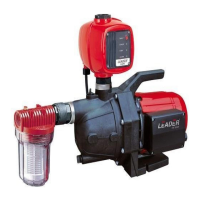
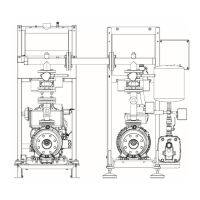
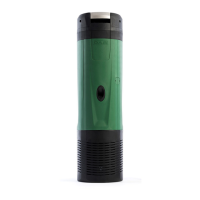
This document provides installation and maintenance instructions for a range of Leader pumps, including ECOTRONIC, ECOPLUS, INOXPLUS, and INOXTRONIC models, which are distributed by DAB Water Technology. These pumps are designed for various domestic water supply and irrigation applications.
Function Description
The pumps covered in this manual are primarily self-priming multi-impeller surface pumps and electronic boosters. Their main function is to move water, providing domestic water supplies, irrigating small to medium gardens, and emptying small tanks.
- Self-Priming Multi-Impeller Surface Pumps (ECOPLUS & INOXPLUS): These pumps are available with 2, 3, or 4 impellers and come with either stainless steel or plastic casings. They are suitable for domestic water supplies, small to medium gardens, and emptying small tanks. They are made of chlorine-resistant materials, making them suitable for drawing from water collection tanks for irrigation.
- Electronic Boosters with External Electronic Devices (ECOTRONIC & INOXTRONIC): These models are ideal for domestic water supplies. They are equipped with an incorporated non-return valve and feature automatic stop and start when a tap is opened or closed. They offer both manual and automatic reset functions and are characterized by constant pressure and flow-rate.
- Boosters with Integrated Electronics: These pumps are designed for domestic water supplies and are equipped with an incorporated non-return valve. They automatically stop and start when a tap is opened or closed, offering both manual and automatic reset. They also provide constant pressure and flow-rate.
- Boosters with Tank for Domestic Water Supplies: These systems are designed to ensure a constant water supply for domestic use.
Important Technical Specifications
While specific model-by-model specifications are not detailed, the manual provides general technical requirements and limitations for safe and effective operation:
- Fluid Temperature: The temperature of the fluid being pumped must never exceed 95°C (203°F).
- Fluid Type: The pumps must not be used to pump salt water, sewage, flammable, corrosive, or explosive liquids (e.g., petroleum oil, petrol, thinners), grease, oils, or foodstuffs.
- Electrical Safety: The pump system must comply with local electrical safety regulations. It requires a residual current circuit-breaker (1 An S 30 mA) and an efficient earthing connection.
- Power Supply: The voltage and frequency specified on the pump's nameplate must match the available power supply.
- Overload Protection: All pumps are equipped with a thermal overload safety device that automatically switches off the pump in case of motor overheating. The cooling time is approximately 15 to 20 minutes before the pump restarts.
- Suction Height: The maximum suction height is a critical factor, with a general indication that it cannot be more than 26 feet deep for some models. For suction heights exceeding 12 feet, a hose with a greater diameter is ideally fitted to the suction inlet.
- Hose Diameter: The diameter of the suction and delivery hoses must not be less than the relative inlet or outlet of the pump (recommended 1" for delivery hose for best performance).
- Pump Inlet Pressure (for electronic boosters): Must not exceed 28 psi.
- Highest Point of Use (for electronic boosters): The electronic device does not work if the highest point of use is over 50 feet above the controller.
- Current Absorption (for electronic boosters): The pump used with an electronic device must not absorb more than 10 Amps (15 Amps for USA versions).
- Maximum Pressure (for electronic boosters): Must have a maximum pressure between 50 psi (115 feet) and 110 psi (250 feet).
Usage Features
The pumps are designed for user-friendly operation with several features:
- Automatic Operation (Electronic Boosters): These pumps automatically start when a tap is opened and stop approximately 15 seconds after the tap is closed, ensuring water on demand.
- Dry-Running Protection (Electronic Boosters): A special safety device automatically deactivates the pump when there is no water being sucked, preventing damage. This condition is signaled by a red LED on the display.
- Manual and Automatic Reset (Electronic Boosters): After a dry-running event, the pump can be restarted manually via a RESET button or automatically. The automatic reset attempts to restart the pump three times: after 1 hour, after 5 hours, and after 20 hours. If it fails, the device permanently blocks, requiring a power cycle.
- LED Display (Electronic Boosters): Equipped with three LEDs to indicate operating status:
- GREEN LED: Lights when the device is connected to the mains power supply.
- YELLOW LED: Lights when the pump is running and turns off when it stops.
- RED LED: Lights when running is prevented due to lack of suction water or a malfunction.
- Self-Priming: The pumps are designed to self-prime, but initial filling of the pump casing and suction hose with clean water is crucial for the first start-up, especially if installed above the water level.
- Foot Valve Requirement: For use in wells or when the water level is lower than the pump, a suction hose equipped with a foot valve is necessary to keep the hose filled with water and prevent emptying when the pump shuts off.
- Installation Guidelines:
- The pump should be placed in a level, stable, and dry location, away from flammable or explosive substances.
- Avoid exposing the pump to rain or direct jets of water.
- A filter should be fitted to the suction inlet to prevent damage to the electronic device and operating problems.
- Suction hoses should be mounted without mechanical stress, counterslopes, traps, goosenecks, or kinks.
- The foot valve should be placed at least 12 inches below the minimum water level.
- For boosters with tanks, the preloading pressure of the tank must match the pump's rating plate data.
Maintenance Features
The pumps are generally described as "maintenance-free," but certain actions are required for proper function and longevity:
- Pre-Operation Checks: Before starting, ensure the pump and power cord are free of damage, and electrical connections are dry and protected.
- Winterization/Freezing Prevention: It is absolutely essential to prevent the pump from freezing. In freezing temperatures, the pump must be removed from the liquid, emptied, and stored in a place where it cannot freeze.
- Cleaning: The pump must be disconnected from the mains before any cleaning operation.
- Troubleshooting: The manual provides a detailed troubleshooting guide for common issues like the pump not turning on, running but not delivering water, or stopping due to overheating. Solutions often involve checking power supply, clearing blockages, ensuring proper priming, and inspecting hoses for air leaks.
- Electronic Device Cleaning (for blockages): If the electronic device is blocked by impurities, it can be dismantled from the pump and rinsed by spraying water from the inlet. For limescale blockages, filling the device with vinegar or another descaler through the outlet is recommended.
- Professional Repair: If the power supply cord or pump is damaged, or if issues persist after troubleshooting, repairs or replacements must be handled by the manufacturer or an authorized customer support service to avoid risks. Unauthorized repairs or technical changes will void the guarantee.

 Need help?
 General

 To Next Page