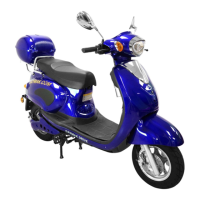
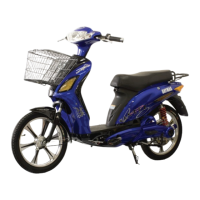
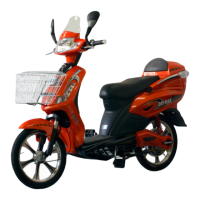
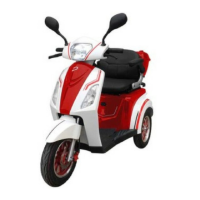
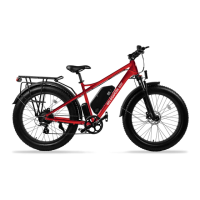
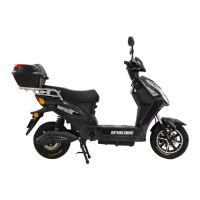
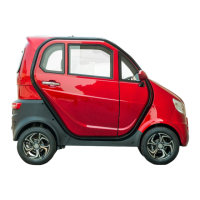
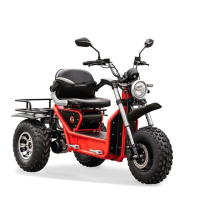
The Austin 72V Electric Bike is a motor-assisted bicycle designed for urban transportation, offering an energy-efficient and eco-friendly alternative to traditional vehicles. It combines the convenience of a scooter with the benefits of an electric bicycle, allowing riders to navigate city streets easily and affordably.
Function Description
The Austin 72V Electric Bike operates as a power-assisted bicycle, meaning it can be propelled by muscular power (pedaling) or by its electric motor. The motor assists the rider, making it easier to climb hills, ride against the wind, and cover longer distances with less effort. This dual-propulsion system allows for flexibility in usage, enabling riders to conserve battery power by pedaling or rely solely on the motor for assistance. The bike is equipped with a 500 Watt magnetic DC brushless motor located in the rear wheel hub, providing excellent low-end torque and high efficiency. A key component of the electrical system is the "D-Drive" technology controller, which intelligently regulates speed, allows for stepless speed adjustment, and efficiently manages power. It also includes safety features like automatically shutting off the motor when brakes are activated and low voltage protection. The bike features a governor that limits the motor's assistance to a maximum speed of 32 km/h, in compliance with government regulations.
For stopping, the Austin 72V Electric Bike utilizes hydraulic-disc brakes, similar to those found on gas scooters and motorcycles, offering fine stopping power and control. These brakes are designed to automatically cut power to the engine when activated, ensuring safe deceleration. The bike also includes essential signaling and lighting features for safety, such as a horn, turn signal lights (which emit both visual and auditory signals), a headlight, and a taillight. These features are crucial for visibility and communication in mixed traffic and during nighttime riding.
The bike is designed with a freewheel mechanism, allowing it to coast without motor assistance, which helps conserve electrical power when traveling downhill or on flat surfaces. This also enables faster speeds when coasting with momentum.
Usage Features
Operating the Austin 72V Electric Bike is straightforward. To turn the bike on, the key is inserted into the ignition (located below the dashboard) and turned to the right. This activates the electrical system, illuminating the power indicator and showing the battery charge level. To turn it off, the key is simply turned to the left and removed. Acceleration is controlled via a throttle on the right-side hand grip; turning it forward accelerates, and releasing it decelerates. Riders are advised not to over-rotate the accelerator to prevent damage.
The bike is equipped with a rear storage compartment, accessible with a key, which is ideal for storing the charger, cables, and a lock. Additionally, there is a seat trunk that opens by turning a key in a lock located on the left side of the bike, just below the seat. This compartment provides additional storage space.
When parking, the bike can be secured using its kickstand. For added security, it can be locked to a bicycle locking post or other secure object through the rear wheel frame or other metal frame components. For long-term storage or servicing, the circuit breaker can be disconnected by opening the seat compartment and activating the switch, which completely blocks power from the battery to the e-bike.
Riding the Austin 72V Electric Bike requires familiarity with standard bicycle operation. Riders are encouraged to practice safe riding habits, including obeying all traffic laws, using caution in mixed traffic, and being courteous to other road and trail users. The bike is capable of higher speeds than many traditional bicycles, so awareness of surroundings and driving conditions is crucial.
The bike's battery provides a range of 35 to 50 km on a single charge, depending on factors such as rider weight, wind resistance, driving habits, terrain, and tire pressure. Riders can extend this range by employing power-saving techniques like coasting, avoiding frequent stop-and-go movements, reducing unnecessary weight, maintaining proper tire pressure, and turning off lights when safe to do so. Pedaling, especially when accelerating from a full stop, also helps conserve battery power.
Maintenance Features
Regular maintenance is essential for the longevity and optimal performance of the Austin 72V Electric Bike. Weekly cleaning is recommended, using gentle methods to avoid aggressive power jets or water sprays, especially near the battery. After cleaning, it's important to dry all outer casings of electrical parts. This cleaning routine also provides an opportunity to inspect for worn, loose, cracked, rusted, or damaged parts.
Lubricating the chain, levers, derailleur, and cables is also advised to ensure smoother and quieter operation. Excess lubricant should be wiped off after a few minutes, and a degreaser can be used periodically to remove accumulated dirt.
Tire pressure maintenance is critical; riders should check and adjust tire pressure to the recommended level (indicated on the tire rim) regularly. Proper tire pressure improves performance and efficiency, reducing the motor's workload and extending travel distance. Replacing flat tires, particularly the rear wheel due to its connection to the hub motor, is a more complex task and may require professional assistance from a Daymak dealer.
Brake maintenance is also important. The hydraulic-disc brakes require periodic servicing, including checking and potentially replacing brake pads as they wear down. If the brakes feel "spongy" or lose stopping power, professional service is needed to address issues like air in the brake line. For drum brakes (if applicable), tension adjustments can be made using a wing nut on the brake cable, but excessive loosening should be avoided as brakes are a critical safety feature.
The motor itself is a complex component and should not be serviced by the user. Daymak recommends professional maintenance every 100 running hours. If the bike experiences performance issues, the circuit breaker should be disconnected, and the bike brought to a Daymak dealer for service.
Battery care is paramount for optimal performance and lifespan. The battery should be charged immediately after riding and not allowed to run down completely and remain uncharged, as this significantly reduces its lifespan. For storage, the battery should be charged occasionally (e.g., once every 21 days) to prevent power depletion. It should be stored on a flat, cool, dry surface, with temperatures kept above 10 degrees Celsius. Crucially, lead-acid batteries should never be placed on concrete, as this can drain their power. When replacing a battery, it is vital to use an identical or very similar battery type, as using the wrong type can damage electrical systems and void the warranty. Old batteries should be disposed of at a proper municipal recycling facility.
The Austin 72V Electric Bike is designed to operate year-round, but cold weather can affect battery performance. Both Lithium-Ion and Lead-Acid batteries experience reduced performance below 10 degrees Celsius, and repeated riding in cold temperatures may necessitate earlier battery replacement. Handling the battery requires caution due to its significant electrical charge; it should always be lifted with both hands, never dropped, punctured, or opened. Contact with the metal poles should be avoided to prevent short-circuits, and the battery should not be handled if wet.


 To Next Page
 General