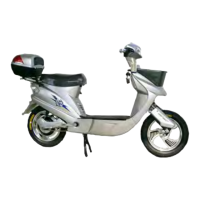
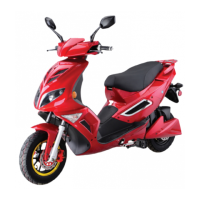
This document is a user manual for the Daymak Paris 48V electric bicycle. It provides information on the device's function, technical specifications, usage, and maintenance.
Function Description:
The Daymak Paris 48V is an electric bicycle designed as an energy-efficient and eco-friendly alternative for urban transportation. It assists the rider with an electric motor, making city travel more convenient and less strenuous. The bicycle is rain and splash-proof, allowing for use in various weather conditions. It is intended for individuals aged 14 years or older and is considered a serious mode of transport, with a strong recommendation to wear a cycle helmet and attend a Cycle proficiency course for open road use. The e-bike is designed to reduce carbon pollution and offers a cost-effective means of travel, costing only a few cents to charge.
Important Technical Specifications:
- Type: Electric bicycle
- Max Speed: 32 km/h
- Net Weight: 24.5 kgs
- Max Range: 60 km
- Carrying Load: 100 kgs
- Wheelbase: 1200 mm
- Dimension: 1820 x 620 x 1000 cm
- Traveling Noise: <60 db
- Energy Consumption per 100 km: <1.2 kw/h
- Battery Type: Lithium ion
- Battery Capacity: 20 Ah (subject to change)
- Battery Rate Voltage: 48 V
Usage Features:
- Pre-ride Checklist: Before setting off, users must ensure handlebars are properly tightened, the brake isolator is functioning, tire pressures are correct, and the battery is fully charged. The battery should be loaded into the bicycle, and the power key turned on.
- Power Modes: The bicycle supports pedal assist (1:1) and twist throttle. To preserve battery life, it is recommended to use pedal assist when setting off or climbing hills.
- Battery Charging: The battery charger has a red lamp that turns green when fully charged. The first three charges may take up to 6 hours. Charging should always be done in a ventilated area.
- Safety Precautions: Users are advised to observe traffic regulations, not lend the bicycle to unfamiliar individuals, and turn off the power key when stopped or walking the bike. The electrical components (motor, battery, controller) must not be submerged in water.
- Battery Unloading: To unload the battery, first raise the saddle and then use the battery's handle.
- Power Saving Tips: Having a fully charged battery before any journey is always better. Setting off under twist throttle or riding up steep hills uses up to three times more power.
- Environmental Considerations: The manual emphasizes that using an electric bike helps safeguard the environment by reducing carbon pollution.
Maintenance Features:
- General Maintenance: Do not attempt to open the casing of the battery, motor, or regulator, as this will void all warranties. Contact the service department for problems.
- Wheel Spokes: Should be adjusted after 6 months.
- Handlebar and Saddle Tubes: The minimum torque on the nuts positioning the handlebar, handlebar vertical tube, bicycle saddle, saddle tube, and front wheels is 18 NM.
- Pedal Bearing Axle and Rear Wheel: The minimum torque on the nuts is 30 NM.
- Chain Tension: If the chain becomes loose or frequently comes off the front cog, adjust the chain tension by loosening the rear axle nuts slightly, adjusting the tension bolts, and then re-tightening the axle nuts. Ensure the chain runs freely.
- Brake Adjustment: Brake levers should lock the wheels when compressed halfway between their open position and touching the handlebars.
- Front Brake: Loosen nuts on the cable clamp, then tension or release the steel cable until the gap between the wheel and brake rubber is 1.5 to 2.0 mm.
- Rear Brake: Loosen nuts on the cable clamp, then tension or release the steel cable until the brake lever's motion is fluid and does not lock the back wheel until it is in the correct position.
- Warning: Braking distances increase on wet or icy roads.
- Lubrication: Regularly lubricate the gears and chain with light oil and the brake bushes (not the rubber brake shoes) with a little grease.
- Battery Care:
- Do not expose the battery to fire, extreme heat sources, or alkaline substances.
- When leaving the bicycle in hot weather, try to leave it in a shaded, well-ventilated area.
- Recharge the battery at room temperature for best results.
- To maximize battery life, leave it fully charged when not in use and recharge once every 4 weeks if possible.
- Worn-out batteries should be disposed of properly or returned for credit towards a replacement.
- Troubleshooting Guide: The manual includes a table for common problems, their reasons, and troubleshooting steps.
- Top speed too slow: Low battery voltage, handlebar control problem, damage to motor driveline. Solutions: recharge battery, call service.
- Power on but motor not working: Battery not connected, fused, motor connection damaged, handlebar control problem. Solutions: reinstall battery, replace fuse, call service.
- Driving shorter distance per charge: Tire pressure too low, undercharge or charger fault, battery capacity loss or damage, hill climbing, frequent stop/start riding, strong wind, or weight overload. Solutions: check pressures/pump tires, recharge/inspect charger, replace battery, use 1:1 power assist.
- Charger not working: Charger fuse blown, charger damage. Solutions: replace fuse, call service.
- Two Years Warranty: Welds on the main frame, front forks, splashboard, wheel rims, gears, bearings, motor shell, hub motor.
- One Year Warranty: Handlebar controls, brakes (excluding rubber brake shoes), controller, charger, battery capacity.
- Six Months Warranty: Paintwork (excluding deliberate damage or scratching), front and rear axle, flywheel, chain wheel, driveline.
- Three Months Warranty: Electro plating on handlebars, wheel rims, crank, bracket, kickstand.
- Battery Casing/Leak/Capacity: One year warranty for battery casing, battery leak, or battery capacity step-down more than 40%.
- Additional Warranties:
- Quality fault within 15 days of sale allows for repair or replacement.
- Warranty period starts from the date of sale.
- Lifelong repair is offered beyond the warranty period, but labor, parts, and delivery costs will be charged.
- Exceptions to Limited Warranties: Damage from misuse, not maintaining the vehicle, not following user guide guidelines, accidental or deliberate damage, damage due to private repair by user or unauthorized service center, failure to produce invoice or proof of purchase, and spare parts/components worn in normal use.

 Need help?

 To Next Page
 General