Manuale d’istruzioni PM1750 MACCHINA PER LA PASTA
dcg16.it
17
The noodles that came out were hot. It
will stick together at a certain length. Is
there a solution?
After the noodles come out, sprinkle some
dry flour to make the noodles more gluten
and not sticky.
What is the situation of the face meeting
when I come out and how to solve it?
The face will be broken, mostly because
there is less water added, please strictly
follow the proportion of the instructions.
Please cut it in time, not too long.
The noodles are too dry:
Add proper amount of water and press the
automatic button again.
If you re-make the noodles, add 10-20mL of
water appropriately.
T
he dough is too wet:
Add dry flour in an appropriate amount and
press the automatic button again.
If you re-make the noodles, you need to
reduce 10-20mL of water appropriately.
Treatment method of dry or wet noodles.
Too wet or dry noodles may cause the
noodles to stick or break easily, or even stop
the machine.
At this time, you can refer to the following
solutions:
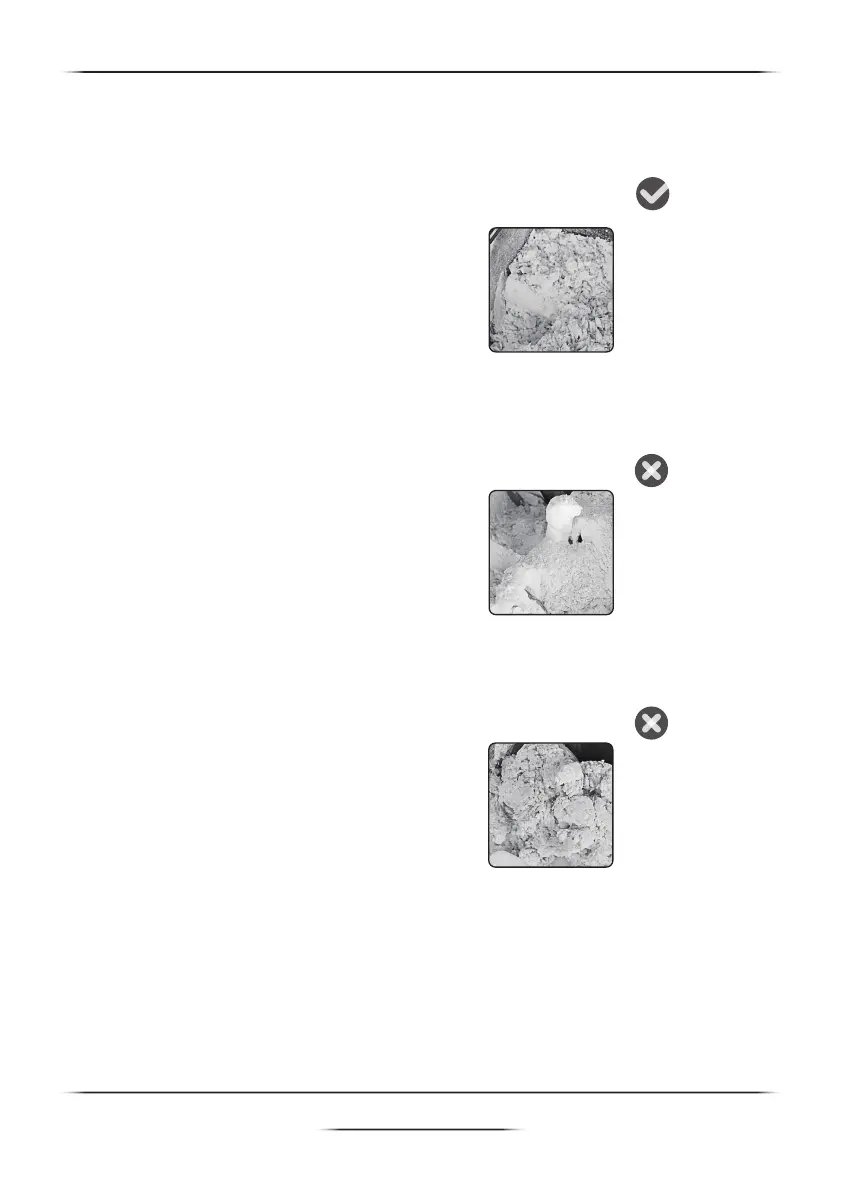
The surface
water ratio is
appropriate,
and the flour
is loose and
large flocculent
If the flour is too
dry, add proper
amount of water,
and then press
the automatic
button
The dough is too
wet, after adding
a proper amo
unt
of dry flour, press
the automatic
button again.
0
Packing list
Product name
Product model
Rated voltage
Rated frequency
Rated power
Pasta maker
H8
Product specification
Packing list
Pasta maker Manul book
Measuring
water cup
Measuring
flour cup
Clean scraper
1 pcs
Discs
2 set
1 pcs 1 pcs 1 pcs 1 pcs
Common usage problems
17
18
The noodles that came out were hot. It
will stick together at a certain length. Is
there a solution?
After the noodles come out, sprinkle some
dry flour to make the noodles more gluten
and not sticky.
What is the situation of the face meeting
when I come out and how to solve it?
The face will be broken, mostly because
there is less water added, please strictly
follow the proportion of the instructions.
Please cut it in time, not too long.
The noodles are too dry:
Add proper amount of water and press the
automatic button again.
If you re-make the noodles, add 10-20mL of
water appropriately.
T
he dough is too wet:
Add dry flour in an appropriate amount and
press the automatic button again.
If you re-make the noodles, you need to
reduce 10-20mL of water appropriately.
Treatment method of dry or wet noodles.
Too wet or dry noodles may cause the
noodles to stick or break easily, or even stop
the machine.
At this time, you can refer to the following
solutions:
The surface
water ratio is
appropriate,
and the flour
is loose and
large flocculent
If the flour is too
dry, add proper
amount of water,
and then press
the automatic
button
The dough is too
wet, after adding
a proper amo
unt
of dry flour, press
the automatic
button again.
0
Packing list
Product name
Product model
Rated voltage
Rated frequency
Rated power
Pasta maker
H8
Product specification
Packing list
Pasta maker Manul book
Measuring
water cup
Measuring
flour cup
Clean scraper
1 pcs
Discs
2 set
1 pcs 1 pcs 1 pcs 1 pcs
Common usage problems
17
18
The noodles that came out were hot. It
will stick together at a certain length. Is
there a solution?
After the noodles come out, sprinkle some
dry flour to make the noodles more gluten
and not sticky.
What is the situation of the face meeting
when I come out and how to solve it?
The face will be broken, mostly because
there is less water added, please strictly
follow the proportion of the instructions.
Please cut it in time, not too long.
The noodles are too dry:
Add proper amount of water and press the
automatic button again.
If you re-make the noodles, add 10-20mL of
water appropriately.
T
he dough is too wet:
Add dry flour in an appropriate amount and
press the automatic button again.
If you re-make the noodles, you need to
reduce 10-20mL of water appropriately.
Treatment method of dry or wet noodles.
Too wet or dry noodles may cause the
noodles to stick or break easily, or even stop
the machine.
At this time, you can refer to the following
solutions:
The surface
water ratio is
appropriate,
and the flour
is loose and
large flocculent
If the flour is too
dry, add proper
amount of water,
and then press
the automatic
button
The dough is too
wet, after adding
a proper amo
unt
of dry flour, press
the automatic
button again.
0
Packing list
Product name
Product model
Rated voltage
Rated frequency
Rated power
Pasta maker
H8
Product specification
Packing list
Pasta maker Manul book
Measuring
water cup
Measuring
flour cup
Clean scraper
1 pcs
Discs
2 set
1 pcs 1 pcs 1 pcs 1 pcs
Common usage problems
17
18
The noodles that came out were hot. It
will stick together at a certain length. Is
there a solution?
After the noodles come out, sprinkle some
dry flour to make the noodles more gluten
and not sticky.
What is the situation of the face meeting
when I come out and how to solve it?
The face will be broken, mostly because
there is less water added, please strictly
follow the proportion of the instructions.
Please cut it in time, not too long.
The noodles are too dry:
Add proper amount of water and press the
automatic button again.
If you re-make the noodles, add 10-20mL of
water appropriately.
T
he dough is too wet:
Add dry flour in an appropriate amount and
press the automatic button again.
If you re-make the noodles, you need to
reduce 10-20mL of water appropriately.
Treatment method of dry or wet noodles.
Too wet or dry noodles may cause the
noodles to stick or break easily, or even stop
the machine.
At this time, you can refer to the following
solutions:
The surface
water ratio is
appropriate,
and the flour
is loose and
large flocculent
If the flour is too
dry, add proper
amount of water,
and then press
the automatic
button
The dough is too
wet, after adding
a proper amo
unt
of dry flour, press
the automatic
button again.
0
Packing list
Product name
Product model
Rated voltage
Rated frequency
Rated power
Pasta maker
H8
Product specification
Packing list
Pasta maker Manul book
Measuring
water cup
Measuring
flour cup
Clean scraper
1 pcs
Discs
2 set
1 pcs 1 pcs 1 pcs 1 pcs
Common usage problems
17
18
Quando esce dalla macchina, la pasta è calda
e, raggiunta una certa lunghezza, appiccicosa.
C’è una soluzione?
All’uscita della pasta, spolverizzarla con
della farina asciutta, in modo da renderla più
resistente e non appiccicosa.
Tagliarla prima che diventi troppo lunga!
Come risolvere i problemi delle estremità
della pasta?
Se le estremità si rompono, è principalmente
per mancanza di acqua. Seguire precisamente
le proporzioni indicate nella tabella.
Come gestire pasta secca o bagnata?
Se l’impasto è troppo bagnato o troppo secco, la
pasta potrebbe risultare appiccicosa o rompersi
facilmente, o anche bloccare la macchina.
Fare riferimento alle indicazioni che seguono:
Se l’impasto è troppo secco:
Aggiungere la quantità corretta di acqua
e proseguire la lavorazione in modalità
automatica.
Se si sceglie di rifare la pasta, aggiungere 10-20
ml di acqua.
Se l’impasto è troppo bagnato:
Aggiungere la quantità corretta d farina
e proseguire la lavorazione in modalità
automatica.
Se si sceglie di rifare la pasta, aggiungere 10-20
ml di acqua.
La proporzione
di acqua e farina
è corretta, e
l’impasto risulta
morbida ed
elastica.
Se la farina è troppo
asciutta, aggiungere
acqua e proseguire
la lavorazione in
modalità automatica.
Se l’impasto è
troppo bagnato,
aggiungere farina
asciutta e proseguire
la lavorazione in
modalità automatica.


 To Next Page
 Loading...