This document provides the instruction manual for the Deerma Vacuum Cleaner, Model No.: DX700. It covers important safety instructions, electrical power considerations, main parts, assembly, use instructions, cleaning, maintenance, and storage.
Function Description
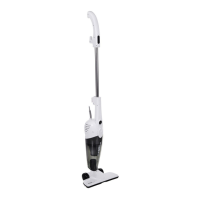
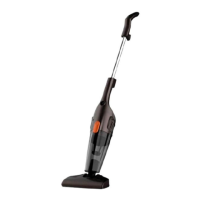
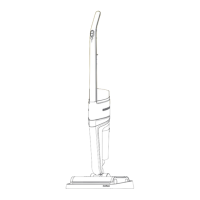
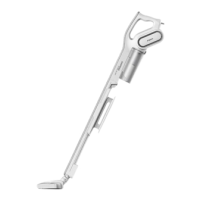
The Deerma DX700 is a vacuum cleaner designed for household use. Its primary function is to clean dry surfaces by picking up dust, lint, hair, and other small debris. The vacuum cleaner operates by creating suction to draw in dirt, which is then collected in a dust collection container equipped with a HEPA filter and foam filter. It can be used as a full-size stick vacuum with a connecting tube and floor brush, or as a handheld vacuum by removing the connecting tube and attaching the floor brush directly to the main body.
Usage Features
The vacuum cleaner is designed for ease of use and versatility in various cleaning scenarios within a household.
Assembly and Setup:
- Dust Collection Container: The dust collection container is easily released by pressing a button on the bottom of the main body. It can be removed for emptying and cleaning.
- Filter System: It includes a HEPA filter and a foam filter, which need to be firmly positioned in place before use. These filters are crucial for trapping dust and ensuring efficient operation.
- Connecting Tube and Floor Brush: The connecting tube assembly attaches to the main body, and the floor brush then connects to the tube. This configuration allows for floor cleaning.
- Handheld Mode: For more focused cleaning or smaller areas, the connecting tube can be removed, and the floor brush can be inserted directly into the machine, converting it into a handheld vacuum.
- Power Connection: The vacuum cleaner connects to a standard power socket. Users must ensure the connection is secure before operation.
Operation:
- Power Switch: The device features an ON/OFF switch located on the front of the main body near the top. Sliding it forward turns the vacuum ON, and sliding it back turns it OFF.
- Corded Operation: As a corded vacuum, it requires a continuous power supply during use. The power cord can be wrapped around a cord bracket for storage when not in use.
- Indoor Use: The DX700 is specifically designed for indoor, household use and should not be used outdoors.
- Dry Cleaning: It is intended for picking up dry debris only. Users must avoid picking up liquids, using it on wet floors, or picking up burning/smoking items like cigarettes, matches, or hot ashes.
- Obstruction Avoidance: To maintain optimal performance, users should avoid putting any objects into the openings and ensure openings are not blocked by dust, lint, hair, or anything that might reduce airflow. It is also advised not to pick up pieces of string or fabrics that could fray carpets.
- Surface Compatibility: The vacuum cleaner should not be used on concrete, tar, or similar rough surfaces.
Safety Precautions during Use:
- Supervision: The appliance should not be used by persons with reduced physical, sensory, or mental capabilities, or lack of experience and knowledge, unless supervised. Children should also be supervised and prevented from playing with the appliance.
- Cord Handling: Users should avoid carrying the vacuum by the power cord, pulling the cord to disconnect from an outlet, closing doors on the cord, pulling the cord around sharp edges or corners, or running the appliance over the cord. Instead, the plug should be grasped directly to disconnect.
- Wet Hands: The plug or the vacuum cleaner should not be handled with wet hands.
- Overheating Prevention: If the appliance stops working due to overheating, it should be turned off, unplugged, and allowed to cool down completely before reconnecting to power.
- Unattended Operation: The appliance should not be left plugged in when unattended. It should be unplugged when not in use and before servicing.
- Accessory Changes: Accessories should not be changed while the vacuum cleaner is running.
- Filter Presence: The vacuum cleaner should never be used without the dust collection box and HEPA filter in place.
- Flammable Liquids: It should not be used to pick up flammable or combustible liquids, such as gasoline, or in areas where such liquids may be present.
- Stair Cleaning: Extra care should be taken when cleaning stairs.
Maintenance Features
Regular cleaning and maintenance are essential to ensure the longevity and optimal performance of the Deerma DX700 vacuum cleaner.
General Maintenance:
- Power Disconnection: Always ensure the vacuum cleaner is turned OFF and UNPLUGGED before performing any cleaning or maintenance tasks, or before storing it.
- Motor Protection: The motor should NEVER be immersed in water or any other liquid.
- Storage: Store the vacuum cleaner indoors in a dry location. Avoid placing heavy items on top of it during storage to prevent damage.
Dust Collection Container Cleaning:
- Removal: The dust collection container is easily removed by pressing its release button.
- Emptying: After removal, the HEPA filter should be taken out, and the dirt from the container should be emptied into a trash receptacle.
- Washing: The dust collection container (without the HEPA filter) can be immersed in water for cleaning. However, abrasive cleaners or dishwashers should not be used. It must be allowed to dry completely before being re-attached to the main body.
Filter Cleaning:
- HEPA Filter: The HEPA filter should be shaken over a trash receptacle to remove dirt. If necessary, the HEPA filter can be rinsed with water. It must be allowed to dry completely before being re-inserted into the dust collection box.
- Foam Filter: While not explicitly detailed for washing, it is part of the filter system and should be checked for cleanliness when maintaining the dust collection container.
- Filter Placement: After cleaning, both the HEPA filter and foam filter must be securely replaced in the dust collection container, and the container then re-attached to the main body.
Vacuum Cleaner Body Cleaning:
- Exterior: The outside of the main body and handgrip can be wiped with a damp soft cloth.
Clog Clearing:
- Detection: A change in motor sound or a reduction in performance may indicate a clog.
- Procedure: Before attempting to clear a clog, ensure the vacuum is switched OFF and unplugged.
- Empty the dust collection container.
- Check the dust collection container for any buildup.
- Inspect the vacuum head for clogs.
- Check the floor tool for obstructions.
- Professional Repair: If the appliance does not work after troubleshooting or if the supply cord is damaged, it must be returned to the manufacturer, its service agent, or similarly qualified persons for examination, repair, or adjustment to avoid hazards.
Environmental Protection:
- If the appliance is no longer functional, it should be disposed of in an environmentally friendly manner.


 To Next Page

 General