When the microprocessor or a program addresses a location within the upper memory area, it is physically addressing a location within one of these
devices.
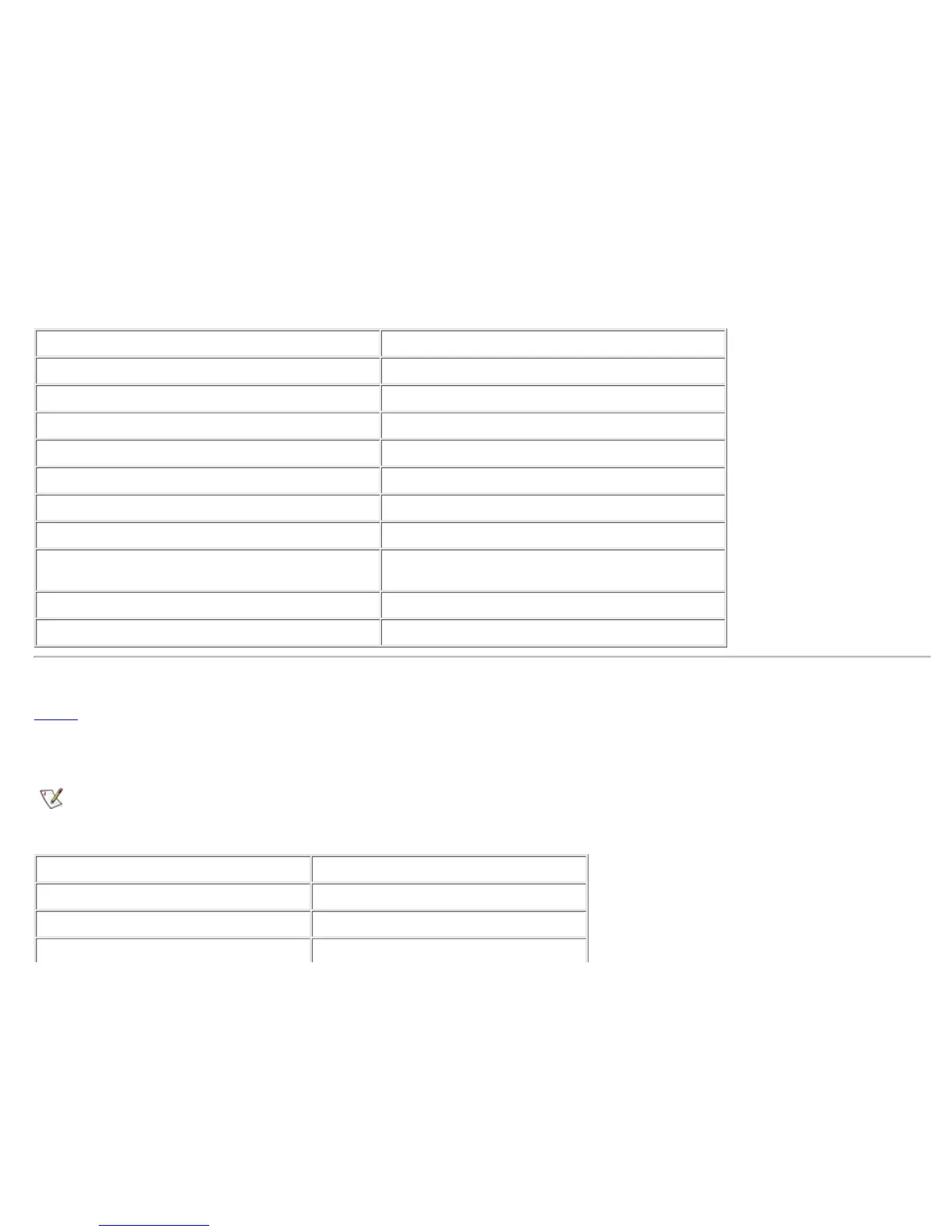
Table 4. Upper Memory Map
Address Range Use
0009FC00-0009FFFF PS/2-mouse data area
000A0000-000BFFFF Video RAM
000C0000-000CBFFF Video BIOS
000CC000-000CD7FF 3Com boot ROM
000DC000-000DFFFF SMBIOS data area
000E8000-000FFFFF System BIOS
00100000-03FFFFFF High memory area
FD000000-FDFFFFFF (approximate; not a fixed
location)
Video RAM
FF200000-FF2FFFFF (approximate; not a fixed location) Video RAM
FFF80000-FFFFFFFF BIOS ROM
I/O Memory Map
Table 5 provides a map of memory addresses reserved by the computer for peripheral input/output (I/O) devices. Use the information in Table 5 to
determine if the memory address of an external device (such as a PC Card) conflicts with a memory address reserved by the computer.
Check the documentation of the external I/O device to determine its memory address. If a device's memory address conflicts with a memory address
reserved by the computer, change the address of the device.
NOTE: To view I/O addresses in Windows 95 and Windows 98, click the Start button, point to Settings, and click Control Panel. Double-click
the System icon. Click the Device Manager tab, and then double-click Computer.
Table 5. I/O Memory Map
Address Device
0000-001F DMA controller #1
0020-003F Interrupt controller #1
0040-005F System timers
Error Messages, IRQs, and Memory Assignments: Dell Latitude LS Portable Computers User's Guide
file:///C|/Documents and Settings/Administrator/Desktop/New Web/Documentation/LS/LS User's Guide/error.htm (6 of 7) [5/31/2000 9:49:18 AM]




 To Next Page