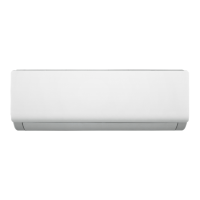
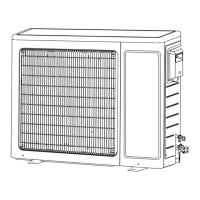
This document is a user manual for Della Mini-Split Air Conditioners, covering models with BTU ratings of 9000, 12000, 18000, 24000, and 36000. It provides comprehensive information on safety, installation, operation, and maintenance.
Function Description
The Della Mini-Split Air Conditioner is designed for domestic air conditioning, offering cooling, heating (for heat pump models), dehumidification (dry mode), and fan-only operation. It aims to provide a comfortable indoor environment by regulating temperature and humidity.
Important Technical Specifications
Refrigerant Type: R410A is used across all models.
Pipe Diameters:
- Liquid Pipe: 1/4" (Φ6.35) for all models (9K to 36K BTU).
- Gas Pipe:
- 3/8" (Φ9.52) for 9K, 12K, 18K BTU models.
- 1/2" (Φ12.7) for 24K BTU models.
- 5/8" (Φ15.88) for 36K BTU models.
Pipe Lengths and Refrigerant Charge (North American INVERTER TYPE):
- Standard Charge Pipe Length: 7.5m / 25ft for all models.
- Maximum Distance (Indoor to Outdoor Unit):
- 15m / 49ft for 9K, 12K BTU models.
- 20m / 65ft for 18K, 24K BTU models.
- 30m / 98ft for 36K BTU models.
- Additional Refrigerant Charge:
- 20g/m (0.22oz/ft) for 9K, 12K, 18K, 24K BTU models.
- 30g/m (0.32oz/ft) for 36K BTU models.
- Maximum Difference in Level (Indoor to Outdoor Unit):
- 10m / 33ft for 9K, 12K BTU models.
- 15m / 49ft for 18K, 24K BTU models.
- 20m / 65ft for 36K BTU models.
Pipe Lengths and Refrigerant Charge (Latin American INVERTER TYPE):
- Standard Charge Pipe Length: 5m for all models.
- Maximum Distance (Indoor to Outdoor Unit):
- 15m for 9K, 12K BTU models.
- 20m for 18K, 24K BTU models.
- 30m for 36K BTU models.
- Additional Refrigerant Charge:
- 20g/m for 9K, 12K, 18K, 24K BTU models.
- 30g/m for 36K BTU models.
- Maximum Difference in Level (Indoor to Outdoor Unit):
- 10m for 9K, 12K BTU models.
- 15m for 18K, 24K BTU models.
- 20m for 36K BTU models.
Pipe Lengths and Refrigerant Charge (ON-OFF Fixed Speed TYPE):
- Standard Charge Pipe Length: 5m for all models.
- Maximum Distance (Indoor to Outdoor Unit): 10m for all models.
- Additional Refrigerant Charge:
- 20g/m for 9K, 12K, 18K, 24K BTU models.
- 30g/m for 36K BTU models.
- Maximum Difference in Level (Indoor to Outdoor Unit): 5m for all models.
Operating Temperature Conditions:
- Fixed Air Conditioner:
- Room Temperature: 32°F~81°F (Heating), 63°F~90°F (Cooling/Dry).
- Outdoor Temperature: -45°F~75°F (Heating), 59°F~109°F (Cooling T1 climate), 59°F~126°F (Cooling T3 climate).
- Inverter Air Conditioner:
- Room Temperature: 32°F~81°F (Heating), 63°F~90°F (Cooling/Dry).
- Outdoor Temperature: -59°F~75°F (Heating), -68°F~75°F (Low temperature heating), -59°F~122°F (Low temperature cooling), 59°F~122°F (Cooling T1 climate), 59°F~131°F (Cooling T3 climate).
Installation Clearances:
- Indoor Unit: ≥20cm from ceiling, ≥13cm from side walls, ≥250cm from floor.
- Outdoor Unit: Over 50cm from top, over 30cm from front, over 30cm from left, over 50cm from right, over 200cm from back.
Tightening Torque for Connections:
- 1/4" (Φ6.35) Pipe: 15-20 N·m (wrist strength).
- 3/8" (Φ9.52) Pipe: 31-35 N·m (arm strength).
- 1/2" (Φ12.7) Pipe: 35-45 N·m (arm strength).
- 5/8" (Φ16) Pipe: 75-80 N·m (arm strength).
- Service Port Nut: 7-9 N·m.
- Protection Caps: 25-30 N·m.
Usage Features
Remote Control Functions:
- Modes: Auto, Cool, Dry, Fan, Heat.
- Temperature Adjustment: Increase/decrease temperature.
- Fan Speed: Auto, low, low-mid, mid, mid-high, high, turbo.
- Timer: Set automatic on/off times.
- Sleep Mode: Pre-setting automatic operating program for comfortable sleep.
- Display ON/OFF: Control LED display on the indoor unit panel.
- Swing Function: Horizontal louver movement (up/down) and vertical deflector movement (left/right) for airflow direction control.
- Mute Function: Operates at the lowest fan speed for quiet operation.
- ECO Function: Automatically sets operation to save energy (available in cooling and heating modes).
- I FEEL Function (Optional): Measures temperature at the remote control's location to optimize comfort.
- Anti-Mildew Function (Optional): Dries inner parts to prevent mildew after cooling/drying operation.
- Gentle Wind Function (Optional): Auto-closes vertical flaps for a comfortable gentle wind feeling.
- Health Function (Optional): Activates Ionizer/Plasma/Bipolar Ionizer/UVC Lights (depending on models).
- 8°C Heating Function (Optional): Automatically starts heating if room temperature drops below 8°C (46°F).
- Child-Lock Function: Locks all remote control buttons.
- Self-Clean Function (Optional): Cleans accumulated dirt and bacteria from the indoor evaporator.
Indoor Display:
- LED Indicators: Timer, temperature, error codes, Timer operation, SLEEP mode, unit on/off, power on.
- Emergency Button: Allows basic operation (Cooling/Heating/Off) if the remote control fails.
Heating Operation Specifics (Heat Pump Models):
- Preheating: Indoor unit preheats for 2-5 minutes before blowing warm air.
- Defrosting: Automatic defrost cycle to remove frost from the outdoor unit, improving heating efficiency. Indoor and outdoor fans stop during defrosting. Forced defrosting can be initiated by pressing the ECO button 10 times within 8 seconds in heating mode (North American market).
Maintenance Features
General Cleaning (Clean the unit):
- Shut down the machine and cut off power for at least 5 minutes before cleaning.
- Do not flush the air conditioner with water.
- Use a soft dry cloth or a wet cloth dipped in neutral detergent.
- Wring out the cloth thoroughly before wiping the unit surface.
- Avoid volatile liquids (thinner, gasoline) as they can damage the unit.
Filter Cleaning (Clean the filter):
- Regularly clean the air filter screen to prevent dust accumulation, which affects performance.
- Remove the filter from the unit.
- Clean with soapy water (temperature <40°C).
- Air dry the filter before reinstalling.
- Do not touch the fins of the indoor unit after removing the filter to avoid scratching.
Long-Term Storage:
- Remove batteries from the remote controller.
- Disconnect the power supply to the air conditioner.
Restarting After Long-Term Shutdown:
- Clean the unit and filter screen.
- Check for obstacles at the air inlet and outlet of both indoor and outdoor units.
- Ensure the drain pipe is unobstructed.
- Install batteries in the remote controller and check power.
Troubleshooting:
The manual provides a comprehensive troubleshooting guide for common malfunctions, including:
- Appliance not operating (power failure, damaged motor, faulty circuit breaker, loose connections, voltage issues, active timer, damaged control board).
- Strange odor (dirty air filter).
- Noise of running water (refrigerant circulation).
- Fine mist from air outlet (cold room in cooling/dehumidifying modes).
- Strange noise (expansion/contraction of front panel).
- Insufficient airflow (unsuitable temperature, obstructed intakes/outlets, dirty filter, low fan speed, external heat sources, no refrigerant).
- Appliance not responding to commands (remote control distance, dead batteries, obstacles).
- Display off (active display function, power failure).
- Immediate shutdown required for safety (strange noises, faulty control board, faulty fuses/switches, spraying water/objects, overheated cables/plugs, strong smells).
Error Codes:
The display shows specific error codes for various faults, such as:
- E1: Indoor room temperature sensor fault.
- E2: Indoor pipe temperature sensor fault.
- E3: Outdoor pipe temperature sensor fault.
- E4: Refrigerant system leakage or fault.
- E5: Malfunction of indoor fan motor.
- E6: Outdoor ambient temperature sensor fault.
- E7: Indoor and outdoor communication fault.
- E8: Outdoor discharge temperature sensor fault.
- E9: Outdoor IPM module fault.
- EA: Outdoor current detect fault.
- EE: Outdoor PCB EEPROM fault.
- EH: Outdoor fan motor fault.
- EF: Outdoor suction temperature sensor fault.
Disposal Guideline (European):
The appliance contains refrigerant and other potentially hazardous materials. It must be disposed of according to special collection and treatment regulations. It should not be disposed of as unsorted municipal waste. Options include:
- Disposing of the appliance at a designated municipal electronic waste collection facility.
- Returning the old appliance to the retailer when buying a new one.
- Having the manufacturer take back the old appliance free of charge.
- Selling the appliance to certified scrap metal dealers.
- Disposing of the appliance in the forest or other natural surroundings is prohibited due to environmental hazards.


 To Next Page
 General