EasyManua.ls Logo

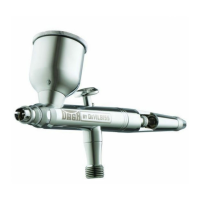
DeVilbiss DAGR - User Manual

DeVilbiss DAGR
10 pages
Print Icon
To Next Page IconTo Next Page
Loading...
AIRBRUSH INSTRUCTIONS AND MAINTENANCE
by
Service Bulletin
SB-2-055-B
Replaces SB-2-055-A
Thank you for purchasing your DeVilbiss
DAGR airbrush! You will find that this
high quality, versatile airbrush gives the
demanding professional artist the full
range of performancefrom spraying fine
lines to wide backgrounds—with a wide
range of materials—from solvent-based
automotive paints to waterbase inks.
DAGR airbrushes are precision made
with micro machining and high quality
materials. Each airbrush is spray tested
before being packaged in its collectorʼs
tin, assuring that it meets the tough quality
standards you have come to expect from
DeVilbiss. With proper care, your DAGR
airbrush will provide you with excellent
performance to express your creativity.
SPECIFICATIONS
Operating Pressures:
20 to 50 psi
Maximum Inlet Pressure:
175 psi
Airbrush Plating:
Nickel, copper, chrome
Needle Packing:
Teflon
®
(solvent-proof)
GET READY TO SPRAY
SAFETY FIRST
Please read all safety information on
pages 8 and 9.
Connect to Compressed Air
Connect your DAGR airbrush to a
regulated air line or select an appropriate
compressor. The DeVilbiss Airblade
single piston compressor is a compact,
economical choice for the beginner and
will provide approximately 25-30 psi of air
pressure to the DAGR airbrush. The two-
piston DeVilbiss Airblade Deuce can
provide up to 50 psi to the DAGR airbrush
and will give you complete versatility.
At 35-40 psi, the DAGR will produce a
high paint flow for shadow, fade, and
background spray, as well as for detail
work and fine lines.

Questions and Answers

Summary

Airbrush Specifications

Operating Pressures

Details the recommended pressure range for airbrush operation.

Maximum Inlet Pressure

Specifies the maximum allowable air pressure for the airbrush.

Airbrush Plating

Lists the types of plating used on the airbrush components.

Needle Packing

Identifies the material used for needle packing as solvent-proof.

Getting Ready to Spray

Safety First

Directs users to read safety information on subsequent pages.

Connecting to Compressed Air

Instructions on connecting the airbrush to a regulated air line or compressor.

Airbrush Operation Guide

Assemble Airbrush to Compressor

Steps for connecting the air hose to the compressor and airbrush.

Mix Paint and Fill the Removable Cup

Guidance on thinning, filtering paint, and filling the airbrush cup.

General Operation Principles

Explains the double-action trigger for air and paint flow control.

Spraying Techniques

Covers fine lines, wide lines, fades, and avoiding heavy ends.

Airbrush Maintenance and Cleaning

Specialized Spraying Techniques

Details on stippling effects and clearing clogs from the airbrush.

Component Functions

Explanation of the Crown Cap and Pre-Set Handle functions.

Cleaning Procedures

Covers pre-session, between-color, and post-session cleaning methods.

Needle Cleaning and Care

Instructions for cleaning, inspecting, and reinserting the airbrush needle.

Parts, Lubrication, and Accessories

Lubrication Guidelines

Proper lubrication for smooth trigger action and avoiding material issues.

Replacement Parts and Accessories

Information on parts replacement and available accessories like hoses.

Troubleshooting Common Issues

Spray Pattern Problems

Solutions for skipping, spitting, and double lines.

Airflow and Trigger Issues

Addresses causes for no spray, bubbling, and sticky triggers.

Safety Warnings and Precautions

General Hazards

Highlights risks like solvent spray, fire, toxic inhalation, and explosions.

Cumulative Trauma Disorders (CTDs)

Discusses risks of repetitive strain injuries and prevention methods.

Summary

Airbrush Specifications

Operating Pressures

Details the recommended pressure range for airbrush operation.

Maximum Inlet Pressure

Specifies the maximum allowable air pressure for the airbrush.

Airbrush Plating

Lists the types of plating used on the airbrush components.

Needle Packing

Identifies the material used for needle packing as solvent-proof.

Getting Ready to Spray

Safety First

Directs users to read safety information on subsequent pages.

Connecting to Compressed Air

Instructions on connecting the airbrush to a regulated air line or compressor.

Airbrush Operation Guide

Assemble Airbrush to Compressor

Steps for connecting the air hose to the compressor and airbrush.

Mix Paint and Fill the Removable Cup

Guidance on thinning, filtering paint, and filling the airbrush cup.

General Operation Principles

Explains the double-action trigger for air and paint flow control.

Spraying Techniques

Covers fine lines, wide lines, fades, and avoiding heavy ends.

Airbrush Maintenance and Cleaning

Specialized Spraying Techniques

Details on stippling effects and clearing clogs from the airbrush.

Component Functions

Explanation of the Crown Cap and Pre-Set Handle functions.

Cleaning Procedures

Covers pre-session, between-color, and post-session cleaning methods.

Needle Cleaning and Care

Instructions for cleaning, inspecting, and reinserting the airbrush needle.

Parts, Lubrication, and Accessories

Lubrication Guidelines

Proper lubrication for smooth trigger action and avoiding material issues.

Replacement Parts and Accessories

Information on parts replacement and available accessories like hoses.

Troubleshooting Common Issues

Spray Pattern Problems

Solutions for skipping, spitting, and double lines.

Airflow and Trigger Issues

Addresses causes for no spray, bubbling, and sticky triggers.

Safety Warnings and Precautions

General Hazards

Highlights risks like solvent spray, fire, toxic inhalation, and explosions.

Cumulative Trauma Disorders (CTDs)

Discusses risks of repetitive strain injuries and prevention methods.

DeVilbiss DAGR Specifications

General IconGeneral
BrandDeVilbiss
ModelDAGR
CategoryAirbrushes
LanguageEnglish