Need help?
Do you have a question about the DeWalt DXAEC10 and is the answer not in the manual?
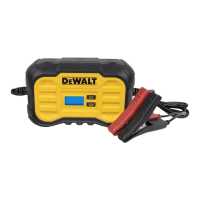
The DEWALT DXAEC10 is a 10 Amp Battery Charger/Maintainer designed for charging 6V/12V lead-acid batteries and 12V lithium batteries. It is intended for household use only and should be operated by adults.
Before operating the product, it is crucial to read and follow all instructions to prevent electric shock, fire, and serious injury. The device should be kept away from children, as it is not a toy. It must be stored indoors in a dry, high, or locked-up place when not in use. Always unplug the battery charger when not in use. Users should stay alert, use common sense, and avoid operating the equipment when tired or impaired.
Any damaged part should be properly repaired or replaced by the manufacturer unless otherwise specified in the instruction manual. Servicing is required if the apparatus has been damaged in any way, such as a damaged power-supply cord or plug, spilled liquid, fallen objects, exposure to rain or moisture, abnormal operation, or if it has been dropped. For more information or assistance, contact the manufacturer at 1-888-394-3392.
This equipment has been tested and complies with the limits for a Class B digital device, pursuant to Part 15 of the FCC Rules. These limits are designed to provide reasonable protection against harmful interference in a residential installation. If the equipment causes harmful interference to radio or television reception, users are encouraged to try to correct the interference by reorienting or relocating the receiving antenna, increasing the separation between the equipment and receiver, connecting the equipment to an outlet on a different circuit, or consulting a dealer or an experienced radio/TV technician. Changes or modifications to this equipment not expressly approved by DEWALT could void the user's authority to operate it.
Users must not abuse the power cord. It should be protected from being walked on or pinched, especially at plugs, convenience receptacles, and the point where it exits the apparatus. The apparatus should never be carried by the cord or yanked to disconnect from the receptacle. The cord must be kept away from heat, oil, and sharp edges. When unplugging the unit, pull by the plug rather than the cord. Ground fault circuit interrupter (GFCI) protection should be provided on the circuits or outlets used. Receptacles with built-in GFCI protection can be used for this safety measure.
An extension cord should only be used if absolutely necessary, as improper use can result in fire and electric shock, and will void the warranty. If an extension cord must be used, it should be in good condition and heavy enough to carry the current the product will draw. An undersized cord can cause a drop in line voltage, leading to power loss and overheating. The manual provides a table with recommended minimum AWG sizes for extension cords based on cord length and ampere rating. The smaller the gauge number, the heavier the cord.
This appliance has a polarized plug (one blade wider than the other) as a safety feature. This plug will fit into a polarized outlet only one way. If it does not fit fully, reverse the plug. If it still does not fit, contact a qualified electrician and do not attempt to defeat this safety feature.
This unit is designed for household use only. The use of accessories or attachments not recommended by the manufacturer could be hazardous. The battery charger should not be operated near flammable liquids or in gaseous or explosive atmospheres, as motors may spark and ignite fumes. Do not operate the battery charger if it has received a sharp blow, been dropped, or otherwise damaged. It should be returned to the manufacturer for repair. This unit is not for use by children and should only be operated by adults.
Do not use the unit for charging dry-cell batteries, as they may burst and cause injury or property damage. The unit is for charging/boosting 6V or 12V LEAD-ACID batteries only and is not intended to supply power to a low-voltage electrical system other than in a starter-motor application. Never attempt to charge non-rechargeable batteries. To reduce the risk of electric shock, never immerse the battery charger in water or any other liquid, or use it when wet.
Working near a lead-acid battery is dangerous, as batteries generate explosive gases during normal operation. It is crucial to read this manual and follow instructions exactly before using the battery charger. To reduce the risk of battery explosion, follow the instructions provided in this manual and those published by the battery manufacturer and the manufacturer of any equipment used near the battery. Review cautionary markings on these products and on the engine. This equipment employs parts that produce arcs or sparks; therefore, if used in a garage or enclosed area, the unit must be placed not less than 18 inches above the floor. To reduce the risk of fire, do not expose the unit to extreme heat or flames.
Never attempt to charge a frozen battery. Do not charge the battery while the engine is operating. Vehicles with on-board computerized systems may be damaged if the vehicle battery is jump-started; consult the vehicle's owner's manual before jump-starting. Be extra cautious to avoid dropping a metal tool onto the battery, as it might spark or short-circuit the battery or another electrical part, causing an explosion. Never allow battery acid to come into contact with this apparatus. Do not operate this apparatus in a closed area or restrict ventilation. Always turn the battery charger off by unplugging it when not in use. Do not open the battery charger, as there are no user-serviceable parts inside, and opening it will void the manufacturer's warranty. Operate the battery charger only as described in this Instruction Manual. Check the battery charger and components periodically for wear and tear, and return to the manufacturer for replacement of worn or defective parts immediately.
The 12V Lithium charge mode is designed for 12-volt lithium-ion batteries only, including iron phosphate. This mode should be used with extreme care and only with 12V Lithium-ion automotive batteries that have a built-in battery management system (BMS). Lithium-ion batteries vary in construction, and some may not contain a BMS. Consult the Lithium-ion battery manufacturers for recommended charging rates and voltages, as some Lithium-ion batteries may be unstable and unsuitable for charging.
Lithium batteries must be used and charged properly, as improper use can result in serious injury, fire, or death. Lithium-ion batteries can explode in the presence of an ignition source; do not use them near an open flame. Do not place this lithium-ion battery unit in fire or apply heat to it. Do not subject lithium batteries to strong impacts or shocks, as they may generate heat, rupture, or ignite. Do not expose lithium batteries to water or salt water, or allow them to get wet. Avoid storing lithium batteries in basements, bathrooms, or other wet or humid areas where moisture may concentrate. Do not leave lithium batteries in direct sunlight, or use or store them inside cars in hot weather, as this may cause them to generate heat, rupture, or ignite. Never charge lithium batteries near heat or flammable objects. NEVER THROW WATER ON A BURNING LITHIUM BATTERY! If a lithium battery catches fire, it will burn more violently if it comes into contact with water or even moisture in the air. A fire extinguisher must be used.
Only use the unit on a flat, level surface to avoid movement. Locate the charger as far away from the battery as cables permit. Never place the charger directly above the battery, as gases will corrode and damage it. Never allow battery acid to drip on the charger. Do not operate the charger in a closed-in area or restrict ventilation. Marine batteries must be removed and charged on shore. Do not set a battery on top of the charger.
Connect and disconnect output clamps only after removing the AC cord from the electric outlet. Never allow clamps to touch each other. Attach clamps to the battery and chassis as indicated in the "Follow these steps when the battery is installed in a vehicle" or "Follow these steps when the battery has been removed from a vehicle" sections.
Locate the charger as far away from the battery as cables permit. Never place the charger directly above the battery; gases will corrode and damage the charger. Never operate the charger in a closed-in area or restrict ventilation.
Connect and disconnect output clamps only after removing the AC Power Cord from the electric outlet. Never allow the clamps to touch each other. Attach the clamps to the lithium battery respecting the polarity.
Stay clear of fan blades, belts, pulleys, and other parts that can cause injury. When working with lead-acid batteries, ensure someone is close enough to provide immediate assistance in case of accident or emergency. Always wear protective eyewear; contact with battery acid can cause blindness and/or severe burns. Be aware of first aid procedures for accidental contact. Have plenty of fresh water and soap nearby. If battery acid contacts skin or clothing, wash immediately with soap and water for at least 10 minutes and seek medical attention. Never smoke or allow a spark or flame near the vehicle battery, engine, or battery charger. Remove personal metal items (rings, bracelets, necklaces, watches) when working with a lead-acid battery, as a short circuit current can weld metal to skin, causing severe burns.
Skin Contact with Battery Acid: Rinse immediately with water, then wash thoroughly with soap and water. Seek immediate medical attention if redness, pain, or irritation occurs. Eye Contact with Battery Acid: Flush eyes immediately for a minimum of 15 minutes and seek immediate medical attention. LCD Liquid Crystal Display: If liquid crystal contacts skin, wash the area completely with plenty of water and remove contaminated clothing. If liquid crystal gets into the eye, flush the affected eye with clean water and seek medical attention. If liquid crystal is swallowed, flush the mouth thoroughly with water, drink large quantities of water, induce vomiting, and seek medical attention.
A. LCD Screen B. 6V/12V Selection Button C. 12V Lithium Charging Button D. AC Plug E. Battery Clamps F. Cooling Fan
WARNING: Always follow the "SPECIFIC SAFETY INSTRUCTIONS FOR LITHIUM BATTERIES" section.
To reduce electric shock risk, unplug the charger from the outlet before maintenance or cleaning. Turning off controls will not reduce this risk. Store the unit in a clean, dry, cool place when not in use. Never submerge the unit in water. Clean the exterior with a cloth or soft non-metallic brush. Do not let liquid enter the unit. To maintain cord life, coil them loosely for storage; do not wrap them tightly around the unit. CAUTION (Injury/Property Damage Risk): Ensure the unit is completely disconnected from the battery and power source before cleaning.
WARNING: Using accessories not offered by DEWALT could be hazardous. Only DEWALT recommended accessories should be used. For assistance with accessories, contact the manufacturer at 1-888-394-3392 or CustomerService@dewalt12volt.com.
For technical advice, repair, or genuine factory replacement parts, contact the manufacturer at 1-888-394-3392 or CustomerService@dewalt12volt.com.
The manufacturer warrants this product against defects in material and workmanship for one (1) year from the date of retail purchase by the original end-user purchaser ("Warranty Period"). If a defect and valid claim are received within the Warranty Period, the product can be repaired, replaced, or refunded at the manufacturer's option. Proof of purchase may be required. Alternatively, the product can be returned to the retailer for an exchange (if a participating retailer) within their return policy (usually 30-90 days). Proof of purchase may be required. This warranty does not cover accessories, bulbs, fuses, batteries, normal wear and tear, accidents, shipping damages, alterations, unauthorized use or repair, neglect, misuse, abuse, or failure to follow care and maintenance instructions. This warranty provides specific legal rights, which may vary by state or province. This product is not intended for commercial use.
If not completely satisfied with the product's performance for any reason, it can be returned within ninety (90) days from the date of purchase with a receipt for a full refund. Register new Baccus Global LLC products and stay updated on new products and special offers at www.baccusglobal.com/register.
Manufactured and Imported by Baccus Global, LLC, 621 NW 53rd St., Suite 450, Boca Raton, FL 33487. www.dewalt12volt.com 1-888-394-3392. Made in China. Copyright © 2022 Baccus Global, LLC. DEWALT® and the DEWALT Logo are trademarks of the DEWALT Industrial Tool Co., or an affiliate thereof and are used under license. The yellow/black color scheme is a trademark for DEWALT power tools & accessories. www.dewalt12volt.com.
 General
| Brand | DeWalt |
|---|---|
| Model | DXAEC10 |
| Category | Automobile Battery Charger |
| Language | English |

 To Next Page