28
WARNING: practIce Is requIred to learn to engage and dIsengage the foot safely. untIl engagIng and
dIsengagIng the foot Becomes a reflex actIon, the technIque requIres concentratIon whIch can dIstract
your attentIon and cause you to lose control and fall. practIce engagIng and dIsengagIng clIpless
pedals In a place where there are no oBstacles, hazards or traffIc; and Be sure to follow the pedal
manufacturer’s setup and servIce InstructIons. If you do not have the manufacturer’s InstructIons, see
your dealer or contact the manufacturer.
F. Bicycle Suspension
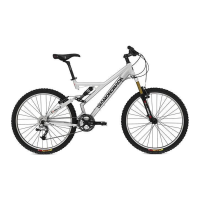
Many bicycles are equipped with suspension systems. There are many different types of
suspension systems — too many to deal with individually in this Manual. If your bicycle has a
suspension system of any kind, be sure to read and follow the suspension manufacturer’s setup
and service instructions. If you do not have the manufacturer’s instructions, see your dealer or
contact the manufacturer.
WARNING:
faIlure to maIntaIn, check and properly adjust the suspensIon system may result In suspensIon
malfunctIon, whIch may cause you to lose control and fall.
If your bike has suspension, the increased speed you may develop also increases your risk of
injury. For example, when braking, the front of a suspended bike dips. You could lose control
and fall if you do not have experience with this system. Learn to handle your suspension system
safely. See also Section 4.C.
WARNING:
changIng suspensIon adjustment can change the handlIng and BrakIng characterIstIcs of
your BIcycle. never change suspensIon adjustment unless you are thoroughly famIlIar wIth the suspensIon
system manufacturer’s InstructIons and recommendatIons, and always check for changes In the handlIng
and BrakIng characterIstIcs of the BIcycle after a suspensIon adjustment By takIng a careful test rIde In
a hazard-free area.
Suspension can increase control and comfort by allowing the wheels to better follow the terrain.
This enhanced capability may allow you to ride faster; but you must not confuse the enhanced
capabilities of the bicycle with your own capabilities as a rider. Increasing your skill will take time
and practice. Proceed carefully until you have learned to handle the full capabilities of your bike.
CAUTION:
not all BIcycles can Be safely retrofItted wIth some types of suspensIon systems. Before
retrofIttIng a BIcycle wIth any suspensIon, check wIth the BIcycle’s manufacturer to make sure that what you
want to do Is compatIBle wIth the BIcycle’s desIgn. faIlIng to do so can result In catastrophIc faIlure.
G. Tires and Tubes
1. Tires
Bicycle tires are available in many designs and specications, ranging from general-purpose
designs to tires designed to perform best under very specic weather or terrain conditions. If,
once you’ve gained experience with your new bike, you feel that a different tire might better
suit your riding needs, your dealer can help you select the most appropriate design.
The size, pressure rating, and on some high-performance tires the specic recommended
use, are marked on the sidewall of the tire (see g. 17). The part of this information which is
most important to you is Tire Pressure.


 To Next Page