NATURAL DRAFT
12
EXHAUST
OPEN
WINDOW
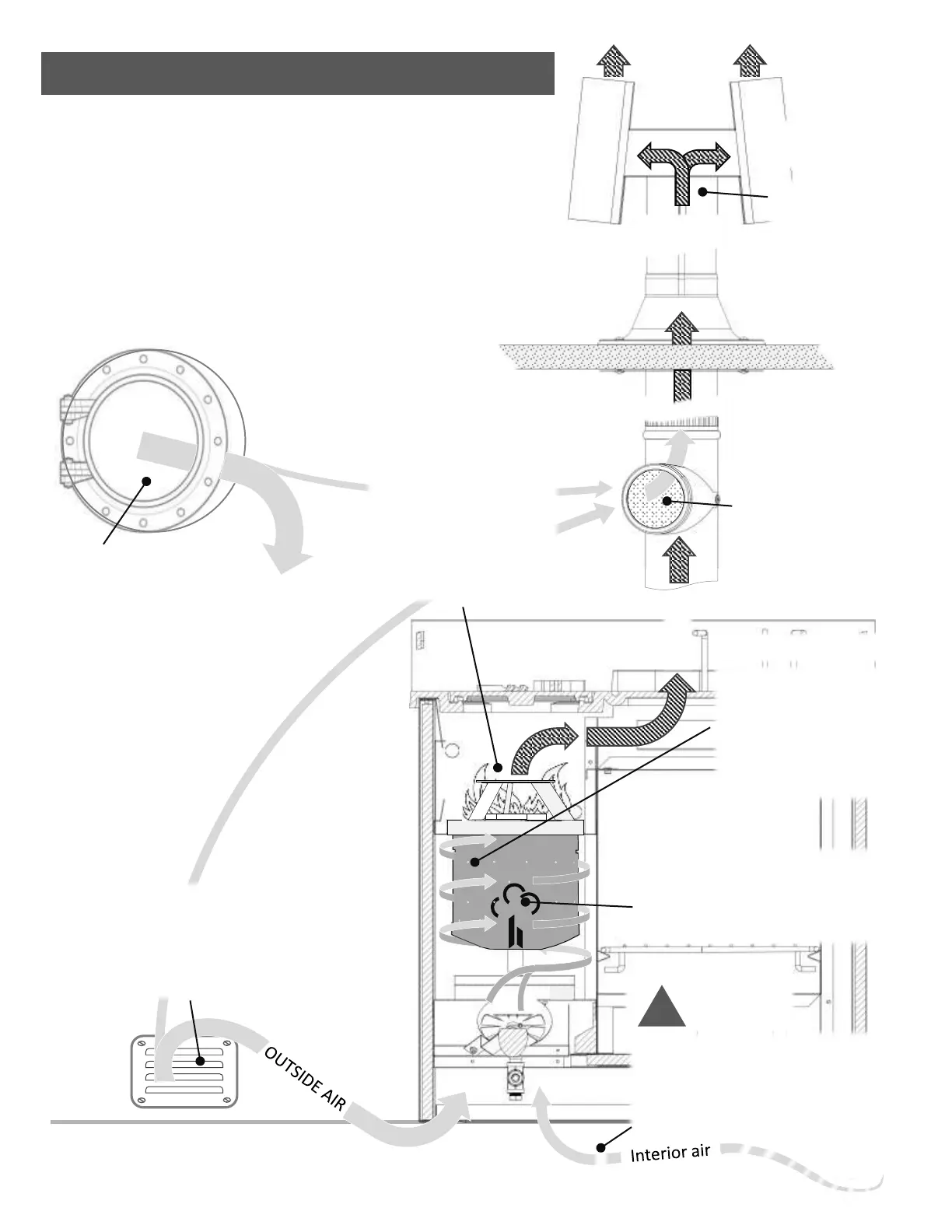
What is Natural Draft?
A natural draft appliance relies on the natural chain reaction kick started
by lighting an oil fire inside the burner. Creating heat in the burner
leaves it nowhere to go but up, heating up the cast iron stovetop and
the chimney. As the chimney gets hot, it begins to draft or suck the hot
exhaust from the flames upwards. As heat is drawn upwards, colder
fresh air is automatically drawn in through the bottom of the stove to
replace it. The cold air mixes with fuel vaporizing in the hot burner,
creating clean burning fuel and continuing the natural draft cycle (fig 11)
A constant, accessible source of
fresh air is mandatory for every
natural draft appliance which is
put into operation. An open
window will suffice if there’s no
dedicated vent installed to
supply the appliance.
A permanently open fresh air
vent is the best way to
support the appliance. An
open source of fresh air is a
mandatory part of every
natural draft appliance install.
PERMANENT VENT
The stove cannot be supplied with interior air
only. Fresh air from outside must be
accessible. Running the appliance with inside
air only will create negative pressure causing
the cabin to fill with exhaust.
NEGATIVE
PRESSURE
!
Fuel should be vaporizing as it enters the
burner. The burner must be both HOT and
CLEAN in order to make this happen. In a
burner that is not hot enough, liquid fuel
will burn unbalanced and sooty.
VAPORIZING FUEL
Circulating air mixes with the
vaporized fuel creating a mixture
that will burn cleanly. The amount
of air in the air fuel mixture can be
increased with the draft assist fan,
or decreased using the barometric
damper.
AIR/FUEL MIXTURE
If you have a lean burn,
Reducing air to the burner
can be accomplished by
adjusting the counterweight
on the barometric damper to
sit slightly open. Air will be
redirected into the chimney
this way, the farther it is
open, the more air will
bypass the burner.
BAROMETRIC DAMPER
Draft created
naturally inside the
chimney propels
exhaust upwards
and out of the
chimney cap which
is designed to resist
foul weather
CHIMNEY
TERMINATION
The fire itself should sit at
and above the ring that sits
atop the burner, but not
below. Fire inside the
burner pot may indicate
too much fuel (dark sooty
flames) or too little fuel
(yellow-blue flames sitting
beneath the ring)
FLAME QUALITY
FIG 11



 To Next Page