JTAG-HS2 Reference Manual
Doc: 502-249 page 2 of 5
V
IO
: 5V to 1.8V
USB2
Port
TMS
TDI
TDO
TCK
SS
MOSI
MISO
SCK
SPI DeviceJTAG-HS2
GND
VDD (VREF)
GND
VIO
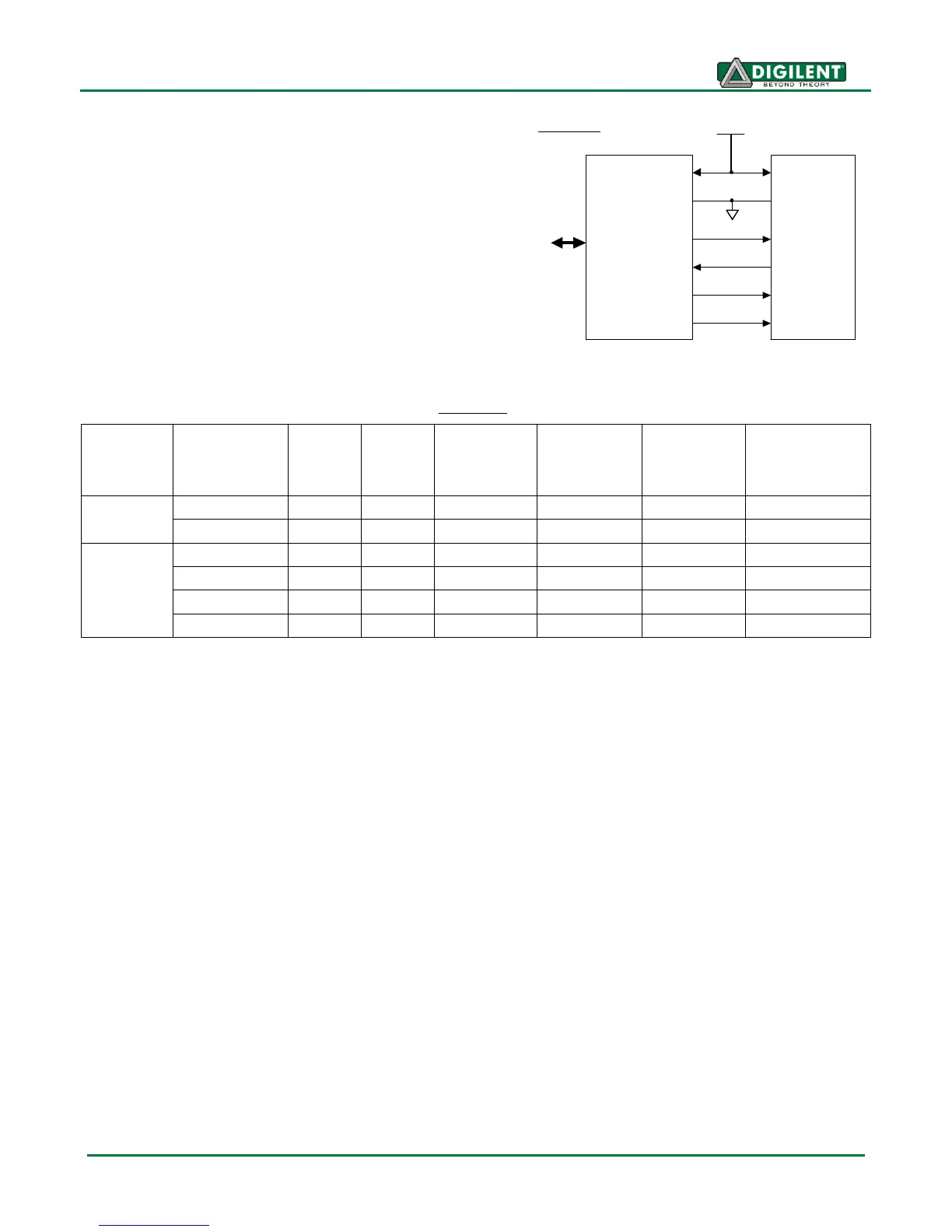
JTAG-HS2 SPI Device Connections
Figure 4
Software Support
In addition to working seamlessly with all Xilinx tools, Digilent’s Adept software and the Adept
software development kit (SDK) support the HS2 cable. For added convenience customers may
freely downloaded the SDK from Digilent’s website. This Adept software includes a full-featured
programming environment and a set of public application programming interfaces (API) that allow
user applications to directly drive the JTAG chain.
With the Adept SDK users can create custom applications that will drive JTAG ports on virtually any
device. Users may utilize the API’s provided by the SDK to create applications that can drive any SPI
device supporting those modes. Please see the Adept SDK reference manual for more information.
Digilent’s AVR programmer also supports the HS2 and the cable can be used to program any AVR
device.
In addition to supporting JTAG, the JTAG-HS2
also features two highly configurable Serial
Peripheral Interface (SPI) ports that allow
communication with virtually any SPI peripheral.
Both SPI ports share the same pins and only one
port may be enabled at any given time. (See
figure 3) The table in figure 4 summarizes the
features supported by each port. The HS2
supports SPI modes 0, 1, 2, and 3.


 To Next Page
 Loading...