
 Need help?
Do you have a question about the DIY CREW PAPER ROLL CUTTER and is the answer not in the manual?
Connects metal rods to the base using 4 screws (#1) and a screwdriver.
Attaches the blade to the arms using 2 small screws (#2), noting blade tab insertion.
Installs the dowel and paper roll, ensuring proper fit.
Addresses uneven cuts by checking blade installation in arm slots for correct positioning.
Specifies the blade's cutting edge should face downwards towards the table or wall.
Links blade bending to improper installation and suggests reviewing previous steps.
Explains correct paper installation for functionality, with the loose end wrapped around the top.
Describes feeding paper under the blade and pulling upwards for an energetic cut.
Provides contact information for support and mentions availability of assembly videos.
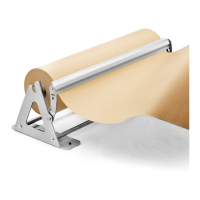
This document describes the "DIY CREW Paper Roll Cutter," a device designed for efficiently cutting paper from a roll.
The paper roll cutter is a tool designed to hold a roll of paper and facilitate clean, straight cuts. It consists of a base structure, a cutting blade, and a dowel to hold the paper roll. The primary function is to allow users to pull paper from a roll and cut it to the desired length with ease and precision. It appears to be suitable for various applications, including crafting, gift wrapping, or any task requiring dispensed paper from a large roll.
The packing list provides a detailed breakdown of the components, indicating the materials and quantities required for assembly:
The inclusion of spare screws and rubber feet is a thoughtful addition, ensuring replacements are available if needed.
The assembly instructions outline a straightforward three-step process:
The design appears to be versatile, allowing for both tabletop use (with rubber feet) and wall-mounting (with wall anchors and screws). The cutting action involves feeding the paper under the blade and pulling it in an "upward and energic movement" when ready to cut.
The troubleshooting section addresses common issues, which can be considered a form of user-level maintenance and problem-solving:
The manual also encourages users to contact DIY CREW for further assistance if issues persist or if parts are missing, indicating customer support for more complex problems or part replacements. This suggests that while the device is designed for user assembly and basic troubleshooting, professional support is available for more significant concerns. The mention of an assembly video further supports ease of use and maintenance by providing visual guidance.

 To Next Page
 General