Need help?
Do you have a question about the dji INSPIRE 1 Series and is the answer not in the manual?
Guidelines for safe and proper usage of the intelligent flight battery, covering liquid contact, non-DJI batteries, and damage.
Instructions for charging the intelligent flight battery safely, including temperature and unattended charging.
Recommendations for storing intelligent flight batteries safely, covering temperature, environment, and handling.
Guidelines for the proper disposal and recycling of intelligent flight batteries, emphasizing safety and regulations.
Procedures for maintaining intelligent flight battery health, including temperature limits and regular charging.
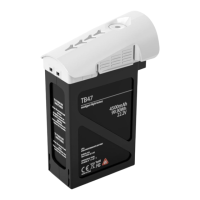
The DJI Inspire 1 Series Intelligent Flight Battery is a sophisticated power source designed for the Inspire 1 drone, providing the necessary energy for flight operations. These safety guidelines, version 1.2 from October 2015, outline critical information for the safe use, charging, storage, and maintenance of the TB47 and TB48 battery models. Adherence to these guidelines is paramount to prevent property damage, collateral damage, serious injury, or even superficial injury.
The Intelligent Flight Battery serves as the primary power unit for the Inspire 1 aircraft. It is designed to provide stable and reliable power during flight, ensuring the drone operates effectively. The battery incorporates intelligent features that manage its power output and monitor its status. It is crucial to use only DJI-approved batteries to ensure compatibility and prevent potential damage or malfunction. The battery's design includes a control board that, if compromised, could lead to serious accidents during flight. Therefore, proper handling and care are essential to maintain its integrity and functionality. The battery is designed to operate within specific temperature ranges, and exceeding these limits can lead to permanent damage, fire, or even explosion. It also features an automatic discharge mechanism to prevent swelling during prolonged storage, enhancing its lifespan and safety.
Safe and responsible operation of the Intelligent Flight Battery is emphasized throughout the guidelines. Before each flight, users must ensure the batteries are fully charged. It is recommended not to charge the Intelligent Flight Battery and the remote controller simultaneously. During flight, users should land the aircraft immediately upon activation of the low battery level warning in the DJI GO app to prevent unexpected power loss.
When handling the battery, it is critical to keep it away from all types of liquids. Exposure to water can lead to chemical decomposition, potentially causing the battery to catch fire or explode. Users should never install or remove the battery from the aircraft when the drone is powered on. Additionally, the battery should not be inserted or removed if its plastic cover is torn or compromised. The battery is designed for use in temperatures ranging from 14°F to 104°F (-10°C to 40°C). Operating outside this range can cause permanent damage or increase the risk of fire or explosion. Strong electrostatic or electromagnetic environments should be avoided, as they can interfere with the battery control board.
Users are warned against disassembling, piercing, or exposing the battery to fire or excessive heat. If the battery shows any signs of abnormality, such as swelling, leakage, or damage, it should not be used or charged, and DJI or an authorized dealer should be contacted. In the event of a crash or heavy impact, the battery should not be used. If the battery falls into water during flight, it must be removed immediately, placed in a safe, open area, and allowed to dry completely. Such a battery should never be used again and must be disposed of properly.
Direct connection of the battery to wall outlets or car cigarette lighter sockets is prohibited; only the provided battery charger should be used. The battery should not be placed in a microwave oven, a pressurized container, or on any conductive surfaces like metal tables. Loose battery cells should be kept separate to prevent short-circuiting. Dropping or striking the battery, or placing heavy objects on it, should be avoided. Battery terminals should be cleaned with a clean, dry cloth.
For air travel, the Intelligent Flight Battery must be fully discharged before being carried on an airline flight. This can be achieved by using the aircraft until the battery is depleted, and the discharge should occur in a fireproof location.
Proper charging, storage, and general maintenance are crucial for extending the battery's lifespan and ensuring safe operation. When charging, only DJI-approved adapters should be used. The battery should never be left unattended during charging, and charging near flammable materials or on flammable surfaces like carpet or wood is strictly prohibited. After flight, the battery should be allowed to cool down to near room temperature before charging, as high temperatures can lead to leakage, overheating, or damage. The recommended charging temperature range is 32°F to 104°F (0°C to 40°C).
The charger should be disconnected when not in use and regularly inspected for damage to the cord, plug, enclosure, or other parts. Damaged chargers should never be used, and cleaning the charger with denatured alcohol or other flammable solvents is not recommended. To optimize battery life, it is advised to completely charge and discharge the battery once every 10 charge/discharge cycles. This involves discharging the battery to 0% power or until it can no longer be turned on, then recharging it to maximum capacity.
For storage, batteries should be kept out of reach of children and pets. They should not be stored near heat sources such as furnaces or heaters, or left inside vehicles on hot days. The ideal storage temperature is 72°F to 82°F (22°C to 28°C). Batteries must be kept dry and never dropped into water. Physical damage such as dropping, striking, impaling, or manually short-circuiting the battery should be avoided. Batteries should be kept away from metal objects like glasses, watches, jewelry, and hairpins. Transporting a damaged battery or a battery with a power level higher than 50% is not recommended.
If the battery will not be used for 10 days or more, it should be discharged to 40%-65% to significantly extend its life. The battery automatically discharges to below 65% when idle for more than 10 days to prevent swelling, a process that takes approximately 3 days and may involve moderate heat emission. Users can set discharge thresholds in the DJI GO app. If a battery is depleted and stored for a long period, it may enter hibernation mode. To reactivate it, the battery must be recharged. Batteries should be removed from the aircraft when stored for extended periods.
Over-discharging the battery should be avoided, as it can lead to cell damage. Battery life may be reduced if not used for a long time. To maintain battery health, it is recommended to fully charge and discharge the battery at least once every 3 months. Intelligent Flight Batteries should be stored in a ventilated location.
For disposal, batteries should be placed in specific recycling boxes only after a complete discharge, in accordance with local regulations. If the power on/off button is disabled and the battery cannot be fully discharged, professional assistance for disposal/recycling should be sought. Disposal is recommended if battery life drops to 0%.
 General
| Model TB47 Capacity | 4500 mAh |
|---|---|
| Model TB47 Voltage | 22.2 V |
| Model TB47 Battery Type | LiPo 6S |
| Model TB47 Energy | 99.9 Wh |
| Model TB47 Weight | 595 g |
| Model TB47 Operating Temperature | -10°C to 40°C |
| Model TB47 Max Charging Power | 180 W |
| Model TB48 Capacity | 5700 mAh |
| Model TB48 Voltage | 22.8 V |
| Model TB48 Battery Type | LiPo 6S |
| Model TB48 Energy | 129.96 Wh |
| Model TB48 Operating Temperature | -10°C to 40°C |
| Storage Temperature Range > 3 months | 22°C to 28°C |
| Model TB47 Charging Temperature | 0° to 40°C (32° to 104°F) |

 To Next Page