Designed, engineered, and
manufactured in Springfield, MO
using U.S. and global components.
LT-1449 20085
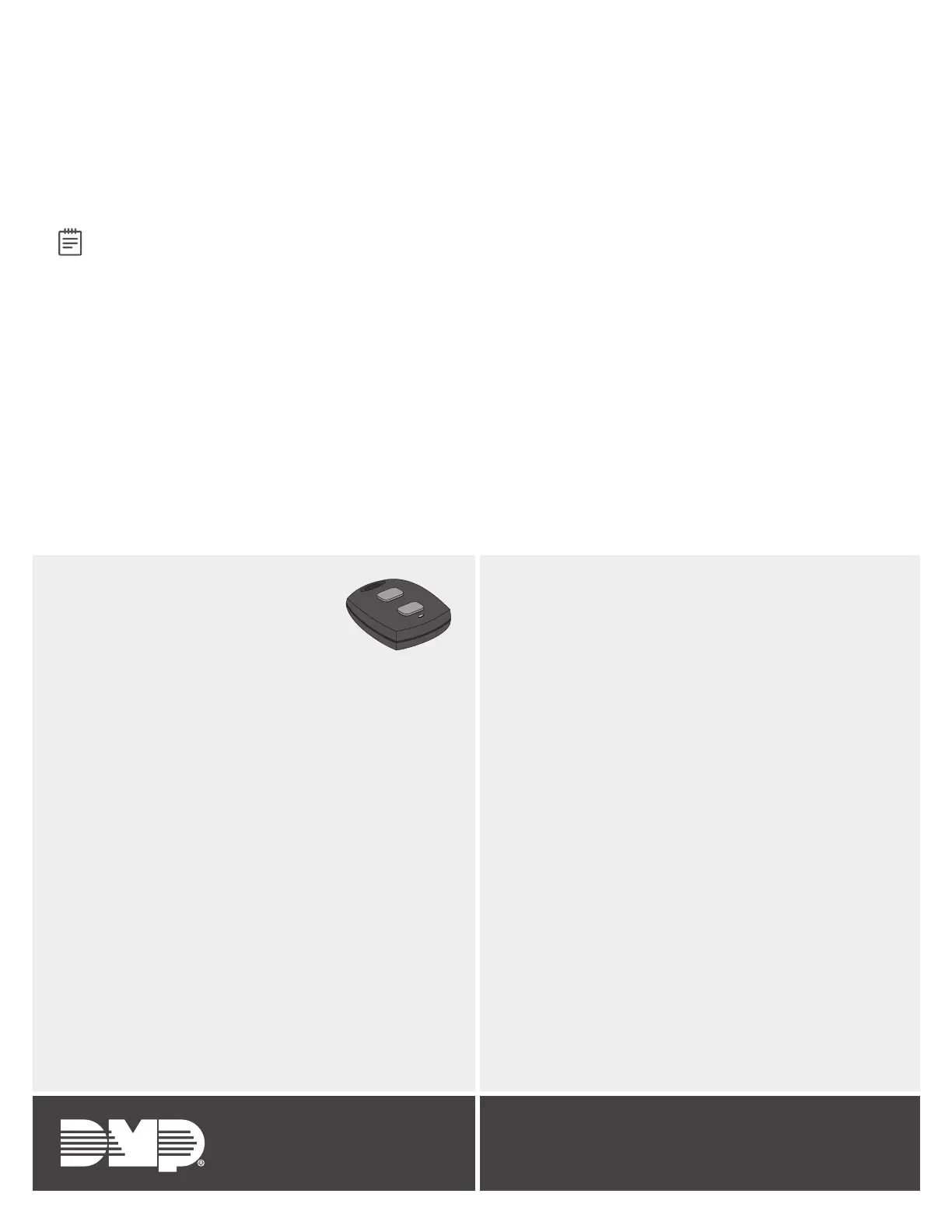
1144 SERIES KEY FOB
TRANSMITTERS
Specifications
Battery
Life Expectancy 2 years (normal operation)
Type 3V Lithium Sony CR2430
Dimensions 1.98” H x 1.53” W x 0.55” D
5.03 cm W x 3.89 cm H x 1.40 cm
Color Black
Housing Material ABS Plastic
Ordering Information
1144-D Dual-Button Key Fob
1144-1 One Button Key Fob
1144-1E One Button Key Fob with encryption
1144-1P One Button Key Fob with prox
1144-1P-PSV One Button Key Fob with prox and panic
supervision mode
1144-2 Two Button Key Fob
1144-2E Two Button Key Fob with encryption
1144-2P Two Button Key Fob with prox
1144-4 Four Button Key Fob
1144-4E Four Button Key Fob with encryption
Accessories
1144-HSG-B Key fob replacement housing, black
CR2430/10 Key fob replacement battery, 10 pack
Patents
U. S. Patent No. 7,239,236
Certifications
FCC Part 15 Registration ID CCKPC0098
INTRUSION • FIRE • ACCESS • NETWORKS
2500 North Partnership Boulevard
Springfield, Missouri 65803-8877
800.641.4282 | DMP.com
FCC INFORMATION
This device complies with Part 15 of the FCC Rules. Operation is subject to the following two conditions:
1. This device may not cause harmful interference, and
2. this device must accept any interference received, including interference that may cause undesired operation.
The antenna used for this transmitter must be installed to provide a separation distance of at least 20 cm (7.874 in.) from
all persons. It must not be located or operated in conjunction with any other antenna or transmitter.
Changes or modifications made by the user and not expressly approved by the party responsible for compliance could
void the user’s authority to operate the equipment.
Note: This equipment has been tested and found to comply with the limits for a Class B digital device, pursuant to
part 15 of the FCC Rules. These limits are designed to provide reasonable protection against harmful interference in
a residential installation. This equipment generates, uses and can radiate radio frequency energy and, if not installed
and used in accordance with the instructions, may cause harmful interference to radio communications. However,
there is no guarantee that interference will not occur in a particular installation. If this equipment does cause
harmful interference to radio or television reception, which can be determined by turning the equipment o and on,
the user is encouraged to try to correct the interference by one or more of the following measures:
1. Reorient or relocate the receiving antenna.
2. Increase the separation between the equipment and receiver.
3. Connect the equipment into an outlet on a circuit dierent from that to which the receiver is connected.
4. Consult the dealer or an experienced radio/TV technician for help.


 To Previous Page
 Loading...