DO7032
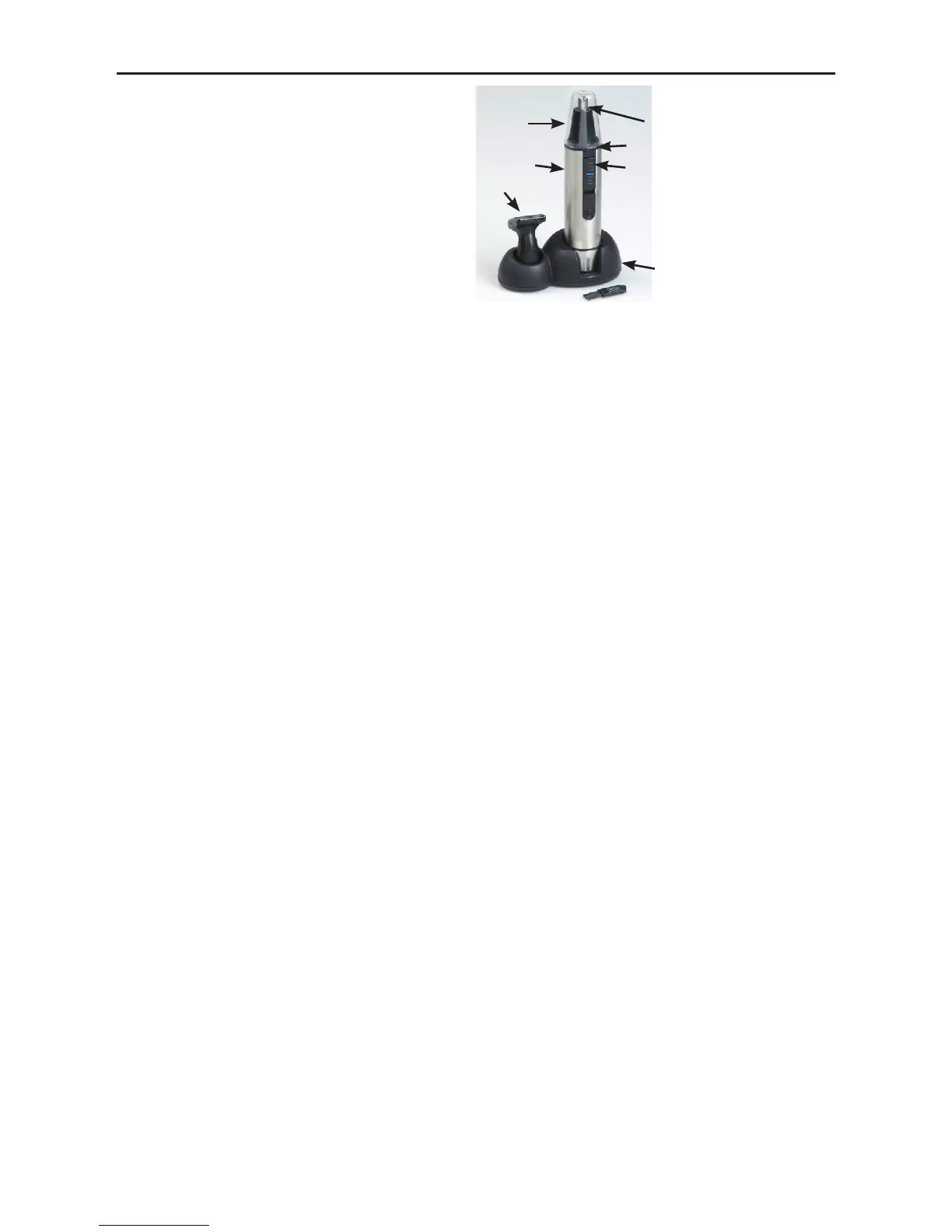
PARTS
1. Protective cap
2. Cutting head
3. On/off switch with travel lock
4. Contour attachment
5. Bottom of housing
6. Base station for storage
7. Integrated light
SAFETY REGULATIONS
- Read the operating instructions carefully and keep them in a safe place. If the
appliance is passed to another user, also pass on the instructions.
- This appliance is intended for trimming body hair in the nose and ears, sideburns and
hair in the nape of the neck.
- Make sure the batteries are always inserted with the correct polarity.
- Do not immerse the appliance in water or in any other liquid.
- Never use a defective appliance.
- Danger for small children.
- Keep the batteries away from small children so that they cannot swallow them.
- Keep the transport packaging away from children, danger for suffocation.
- Danger of injury due to cutting parts on the cutting head.
- Have repairs carried out solely by a specialist dealer or by the service centre of the
manufacturer.
- Do not use on open wounds or blisters.
- Keep the appliance away from your hair and eyes.
- After use, store the nose/ear hair trimmer in a safe place well away from the reach of
children.
Danger of injury:
- Do not introduce the trimmer more than 0,5 cm into the nose or ear, because
otherwise injury may be caused to the nose and ear.
- During use make sure the cutting head or contour attachment is rmly seated.
Warning:
- Risk of explosion and re. Do not short-circuit used batteries, throw them into a re,
take them apart or recharge them.
- Danger of corrosive burns due to battery acid on contact with the skin, eyes and
ear. Thoroughly rinse the affected places with plenty of water and immediately seek
medical advice.
- Do not use when the appliance or cutting parts become damaged or defective.
- This devise is not intended to be used by persons (including children) with restricted
physical, sensory or metal capabilities or a lack of experience and/or lack of
knowledge, unless they are supervised by a person responsible for safety or received
1
5
4
2
7
3
6
15



 To Next Page