the luff needs more tension, but if you over tense the luff, it can damage the sail
and if you lose the luff tension too much, the genoa halyard can be furled around
the forestay and damage the forestay and the furling system, which can in worst
case also cause the forestay to break. Thus, always keep tension on the jib
halyard. Basically, we recommend always to have a tight tension on the furling
genoa/jib halyard to avoid the halyard jamming around the forestay.
• NEVER tighten the genoa halyard with full load on the genoa sheets
• NEVER reef/furl the genoa with the genoa sheet tight, always ease off the
genoa sheet. For even easier furling, go deeper downwind.
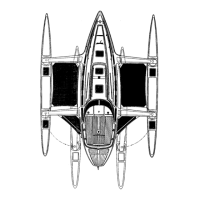
Under normal conditions, the genoa car on the cabin roof should be placed in the
almost aft end of the track, approx. in the center of the first aft cabin top hatch. If
the genoa “closes” in the aft leach, move the genoa car a bit aft, and if the genoa
"opens" further up in the aft leach, pull/move the genoa car a bit forward. You
can adjust the genoa car from the cockpit via the genoa track outhaul on the
halyard stopper. The genoa sheet goes through the halyard stopper marked as
GENOA. The “GENOA” sheet stopper is normally ALWAYS left open and ONLY
used and activated if the winch is needed for another purpose when sailing with
the genoa.
IMPORTANT – in case you need to put a reef in the genoa, you MUST ALLWAYS
also pull the genoa car forward for the right trim. The genoa itself has 3 marks on
the foot of the genoa, which is only to indicate 1 + 2 + 3 reef position on the
furling genoa.
For Ge
noa “Reef 1”, the genoa car is pulled approx. 50 to 60 cm = 2' forward on
the track, so the genoa car is approx. lining up with the center og the No.2
skylight hatch.
For Genoa “Reef 2”, the genoa car is pulled further forward approx. to the back
of the mast.
For “Reef 3 “, the traveler is pulled forward to the forward end of the track.
This is an indication only. You must always check if the sail sets well. But the main
information here is that you must always move the genoa car when
reefing/furling the genoa. If not, you can seriously damage the furling system and
the genoa as well.



 To Next Page