1
Section I
Introduction
1-1. General
a. This manual provides instructions for
operating, inspection, testing, and
maintenance, as well as an illustrated
parts list for the following Duff Norton
Air Motor Jacks:
528AMJ 528CMJ
536AMJ 536CMJ
126AMJ 126CMJ
132AMJ 132CMJ
144AMJ 144CMJ
b. This publication is written in accordance
with standards set forth in the current
ANSI B30.1. To ensure reliable and
long, satisfactory use of the air motor
jacks, the instructions contained in this
publication should be closely followed.
Safety precautions to protect against
accidental injury or property damage
should be observed at all times while
using the jacks. All personnel
concerned with the installation,
operation, inspection, and maintenance
of the jacks are urged to read the
American National Standard (ANSI
B30.1). That standard contains
important rules (some mandatory and
some of an advisory nature) designed to
prevent or minimize injury or otherwise
protect life, limp, and property. You
should especially be aware of the
mandatory rules pertaining to inspection
requirements and advisability of
maintaining written, dated, and signed
inspection reports and records.
NOTE
The air motor jacks are recommended for
general industrial use.
1-2. Construction
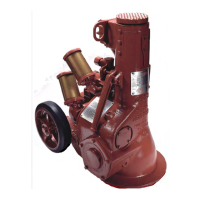
The Duff Norton Air Motor Jack
consists of a cast shell, a lifting mechanism
made up of gears, bearings, shafts, & pinions,
and a lifting screw. These jacks are driven by an
air motor and require a source of compressed air
for operation. Carrying handles, wheels, and
trundle handle for transporting and positioning
the jacks are provided.
1-3. Technical Specifications and
Operational Characteristics
a. The user should be aware of the
capabilities of air motor jacks, especially load
capacity.
WARNING
Overloading can be hazardous to the jack,
operating personnel, and the load in the event
of jack failure.
b. See Table 1-1 for technical
specifications of the jacks.
c. See Table 1-2 for operational
characteristics for the jacks.


 To Next Page